How Much Can a Body Contouring Machine Earn for a Beauty Studio?
Learn how to estimate body contouring machine ROI for a beauty studio using service price, paid appointments, variable costs, capacity, and payback time.
How Much Can a Body Contouring Machine Earn for a Beauty Studio?
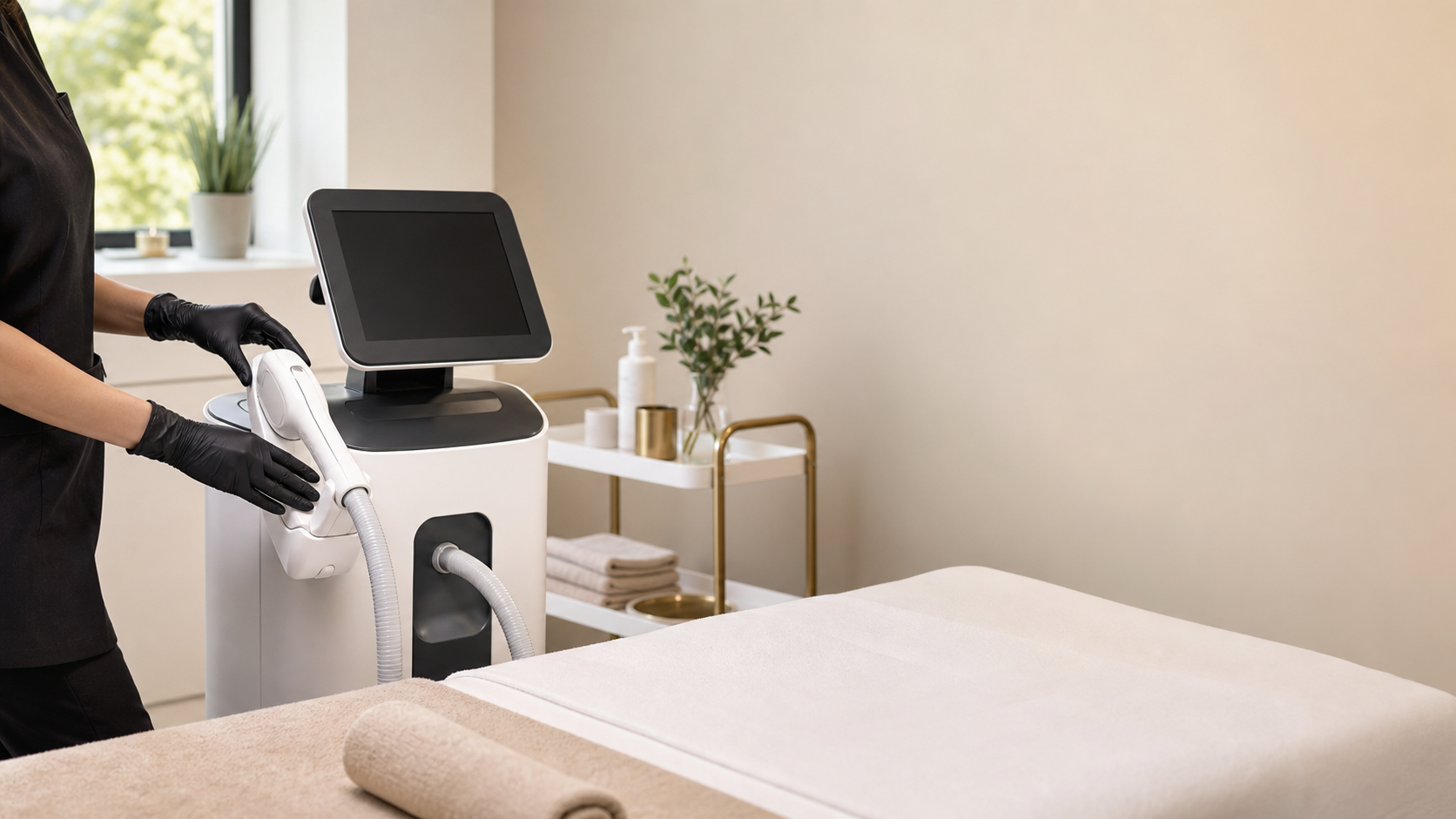
A body contouring machine earns money only when it fits a repeatable studio service.
Quick answer
A body contouring machine can earn a beauty studio money only when the studio can turn the equipment into repeatable, paid appointments. The right calculation is not “machine price divided by treatment price.” It is: (service price minus variable cost per appointment) multiplied by paid appointments, minus monthly equipment-related costs. Use a conservative appointment forecast, include training, shipping, maintenance, consumables, room time, staff time, taxes, and marketing, then compare the result with the full purchase cost. A lower-priced machine may recover faster if it fits your existing clients and is easy to schedule. A more expensive multi-handle or multifunction system may make sense only when your demand, staffing, and service menu can use its extra capacity.
This guide shows salon owners, aesthetic clinics, distributors, and private-label buyers how to make that calculation before ordering a body contouring machine.
What does “ROI” mean for a body contouring machine?
Return on investment is a way to compare the money a machine contributes with the money invested in it. In a beauty studio, the machine is not the revenue source by itself. Revenue comes from a service that has a clear client fit, a price clients accept, a trained operator, available appointment time, and a workflow the business can deliver consistently.
For an equipment purchase, separate three questions:
Can the service generate contribution? This is the service price minus the costs that rise when the appointment is delivered.
Can the studio sell enough paid appointments? A treatment room that is empty cannot produce the forecast shown in a supplier brochure.
How long does it take to recover the investment? Payback is a planning measure, not a guarantee of profit.
Do not treat a supplier’s “faster ROI” badge, a list price, or a testimonial as proof of your own expected return. Build a model from your local pricing, staffing, tax, rent, regulations, and actual booking capacity.
The simple body contouring machine ROI formula
Start with this monthly calculation:
Monthly contribution = (service price − variable cost per appointment) × paid appointments − monthly equipment-related costs
Variable costs may include disposable membranes, gels, protective materials, laundry, payment fees, appointment-specific supplies, and commission paid only when a service is delivered. Monthly equipment-related costs may include financing, maintenance reserves, software, insurance, room allocation, and a share of marketing used to sell the service.
Then calculate a simple payback estimate:
Payback months = total installed investment ÷ monthly contribution
Total installed investment should include the machine, shipping, import charges, local taxes, installation, training, accessories, initial consumables, and any room preparation. If the result is negative, there is no meaningful payback estimate yet. The studio must first improve the service price, reduce avoidable costs, increase paid bookings, or reconsider the purchase.
A worked example using replaceable assumptions
The following example is for planning only. It is not a market average or a promise of what any studio will earn.
Assume a studio plans to sell a body contouring appointment for $150. The variable cost is $25 per appointment. The studio expects 24 paid appointments per month after a ramp-up period. Monthly equipment-related costs are estimated at $400.
The calculation is:
($150 − $25) × 24 − $400 = $2,600 monthly contribution
If the total installed investment is $7,800, the simple payback estimate is:
$7,800 ÷ $2,600 = 3 months
This looks attractive, but it is only as reliable as the assumptions. If the studio sells 12 appointments rather than 24, the monthly contribution falls to $1,100 and the payback estimate becomes about 7.1 months. If the average realised price falls to $110 because of discounts, the same 24 appointments produce $1,640 before tax and owner compensation, extending payback to about 4.8 months.
The lesson is simple: booking volume and realised price usually matter more than a small difference in the machine’s headline price. Build a low, expected, and high case before ordering.
Planning case | Realised service price | Paid appointments/month | Monthly contribution* |
|---|---|---|---|
Conservative | $110 | 12 | $620 |
Expected | $150 | 24 | $2,600 |
Strong demand | $150 | 36 | $4,100 |
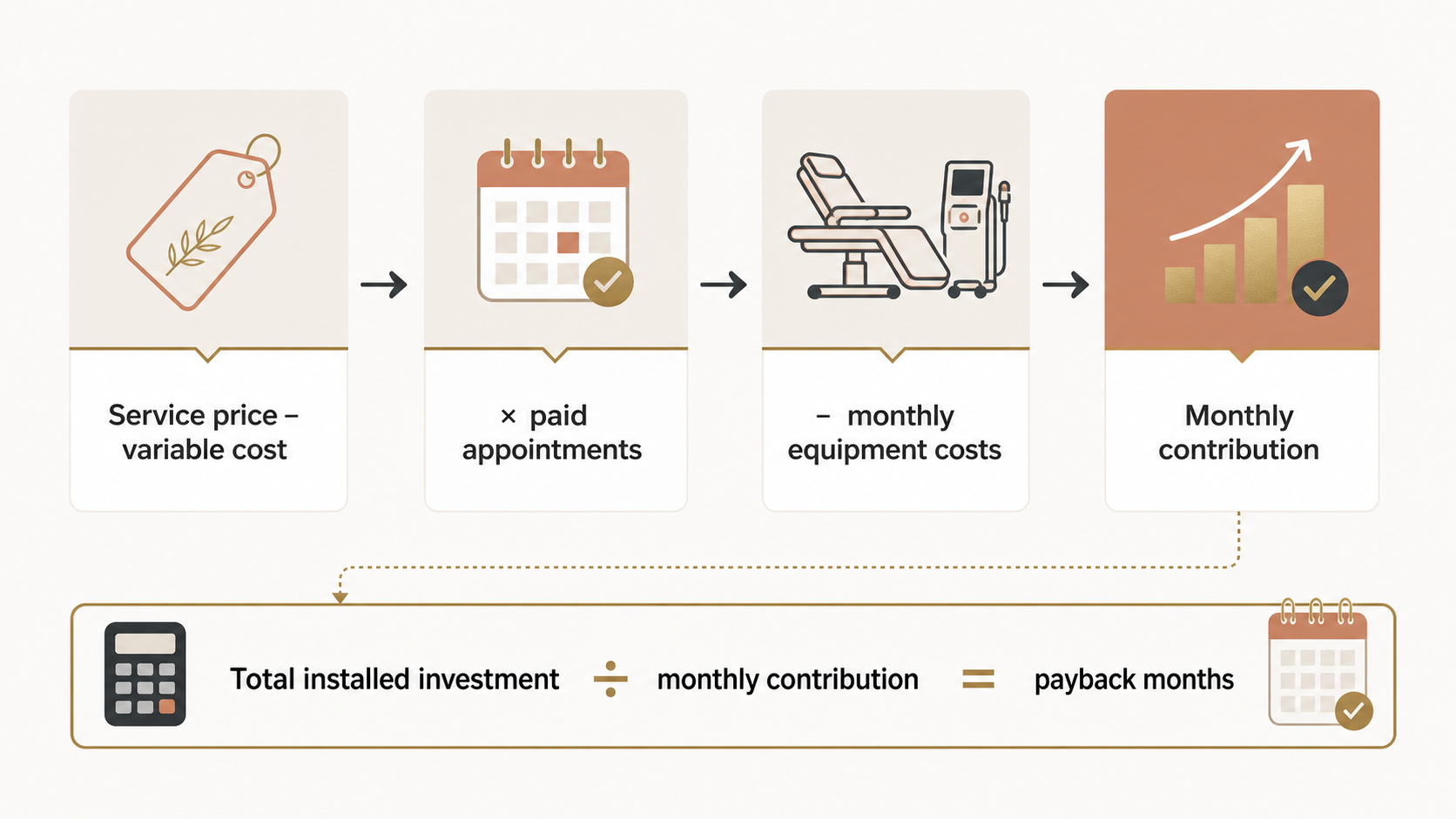
Estimate contribution before estimating payback.
*Illustration assumes $25 variable cost per appointment and $400 monthly equipment-related costs. Replace every input with your own figures.
What determines earning potential?
1. The service menu, not the machine name
A studio earns from a service offer, not from owning a technology label. Decide whether the machine will support a focused body-firming service, a multi-session body contouring program, a package with consultation and follow-up, or several complementary services. Each option changes appointment length, pricing, training, and client expectations.
Avoid building a menu with ten services before testing one clear offer. A simple launch menu can make it easier to explain the appointment, train staff, collect feedback, and measure rebooking. Once demand is visible, the studio can add a second area or package instead of discounting every appointment.
2. Realistic utilisation
Capacity is the number of appointments the room and team could deliver. Utilisation is the proportion of that capacity actually sold and completed. These are different. A machine that can technically operate all day may still produce weak returns if the studio has limited leads, only one trained operator, or a room that is busy with other services.
Estimate capacity from the actual calendar. If an appointment takes 45 minutes, add consultation, cleaning, setup, notes, and room turnover. Then remove staff breaks, opening hours, holidays, cancellations, and time reserved for other services. Use paid and completed appointments—not enquiries, bookings without deposits, or social-media interest—in the ROI model.
3. Treatment duration and operator time
Two machines with similar product descriptions may produce different economics if one requires more setup or operator attention. A multi-handle system may allow a planned service to work on more than one area or client workflow at once, depending on the model and approved instructions. That can help a busy studio, but it does not create demand.
Ask the supplier for the exact operating workflow, setup time, cleaning requirements, handpiece configuration, and training needed. Then test the workflow with a real appointment slot. Your calculation should pay for staff time even if the owner is the first operator; otherwise, the model overstates profit.
4. Consumables and replacement parts
Some body contouring systems have low appointment-specific consumable costs. Others require membranes, gels, applicator covers, cooling materials, or replacement handpieces. Include the cost per appointment and the replacement schedule in the model.
Before ordering, ask for prices and lead times for the parts most likely to stop the service: handles, applicators, cables, screens, fuses, filters, and other model-specific items. A low purchase price is less useful if an unavailable replacement part creates weeks of downtime.
5. Client fit and repeat use
The most profitable machine is often the one that matches questions clients already ask. Review your consultation notes, waitlist, existing body-care services, and competitor pricing. Identify whether clients want a single appointment, a series, maintenance visits, or a broader wellness package.
Be precise in the sales message. Non-invasive body contouring is not a substitute for weight management, diagnosis, or surgery. Client suitability, local scope-of-practice rules, contraindications, and manufacturer instructions must guide the service. Clear expectations protect the business from refund disputes and misleading claims.
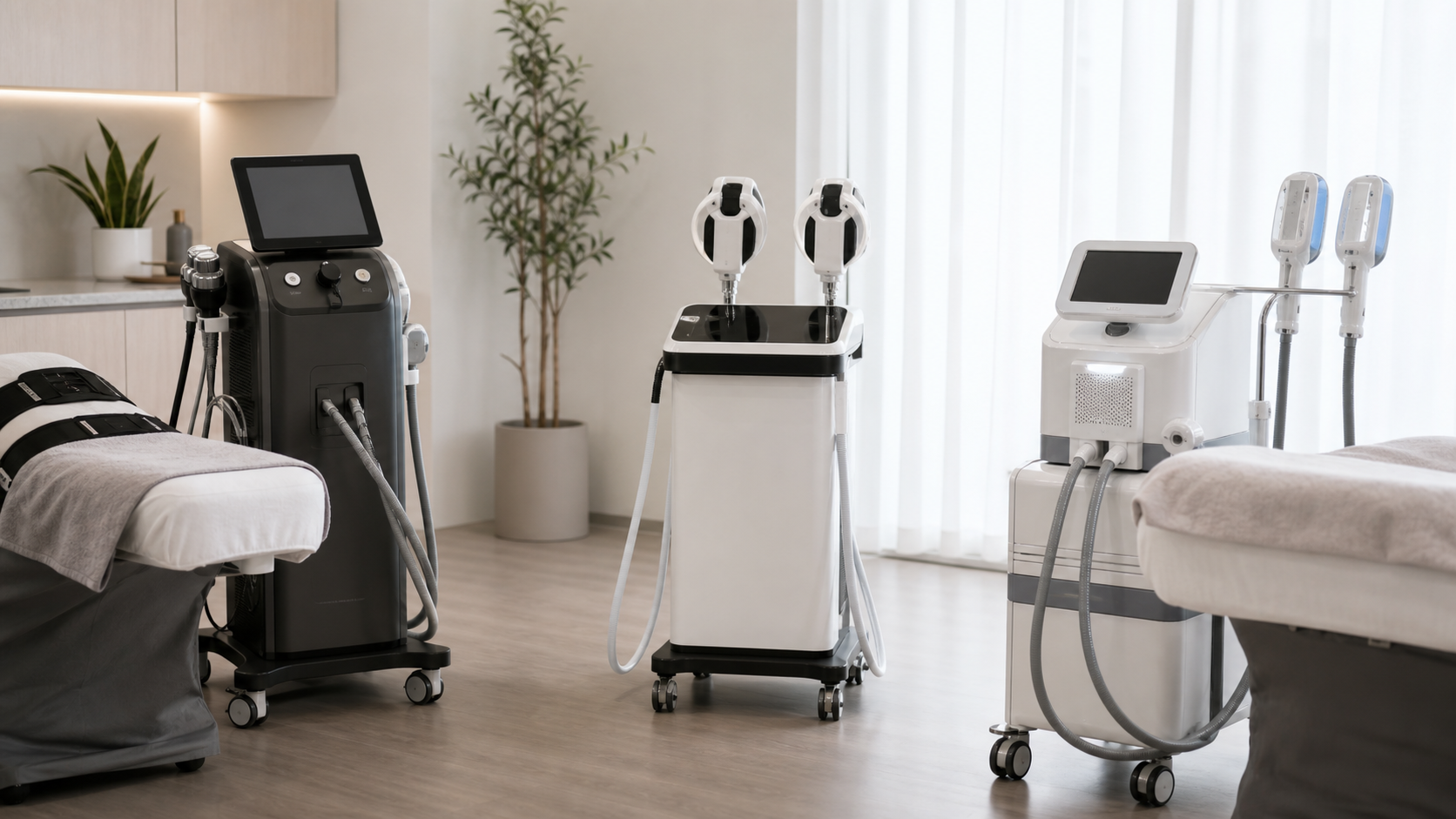
Compare business fit, workflow, and support—not only the technology name.
Which body contouring machine type may fit the business?
The right category depends on the service model rather than a universal ranking.
Focused RF body contouring may fit a studio that wants a straightforward service around controlled heat, body firming, or skin appearance. RESCUPL’s Hot Sculpting Body Contouring Machine is listed as a 2 MHz monopolar RF system with adjustable output and dual-voltage input. Confirm the current manual, intended use, training, and local requirements before using any specification in customer-facing material.
HIEMT or EMS-based body sculpting may fit a studio whose audience is interested in muscle-stimulation-oriented body services. RESCUPL’s HIEMT 2/4 Handles Body Sculpting Machine with RF is listed with a compact 2-handle configuration and combined electromagnetic and RF functions. Compare handle count, session workflow, operator time, service positioning, and support—not only the maximum output shown on a page.
Cryolipolysis or multifunction systems may fit a clinic or studio that has enough room, demand, and working capital for a wider body-contouring menu. RESCUPL’s Cryolipolysis and Body Contouring Equipment page groups cooling-based, cavitation, RF, vacuum, and combined options. Ask which model is actually available, what is included, what is consumable, and which claims are acceptable in your market.
For a new studio, a focused system can be easier to train, explain, and schedule. For a distributor, a broader range may help serve different customer budgets. For a private-label brand, the best choice also includes stable specifications, replacement supply, documentation, packaging, interface language, and a sample approval process.
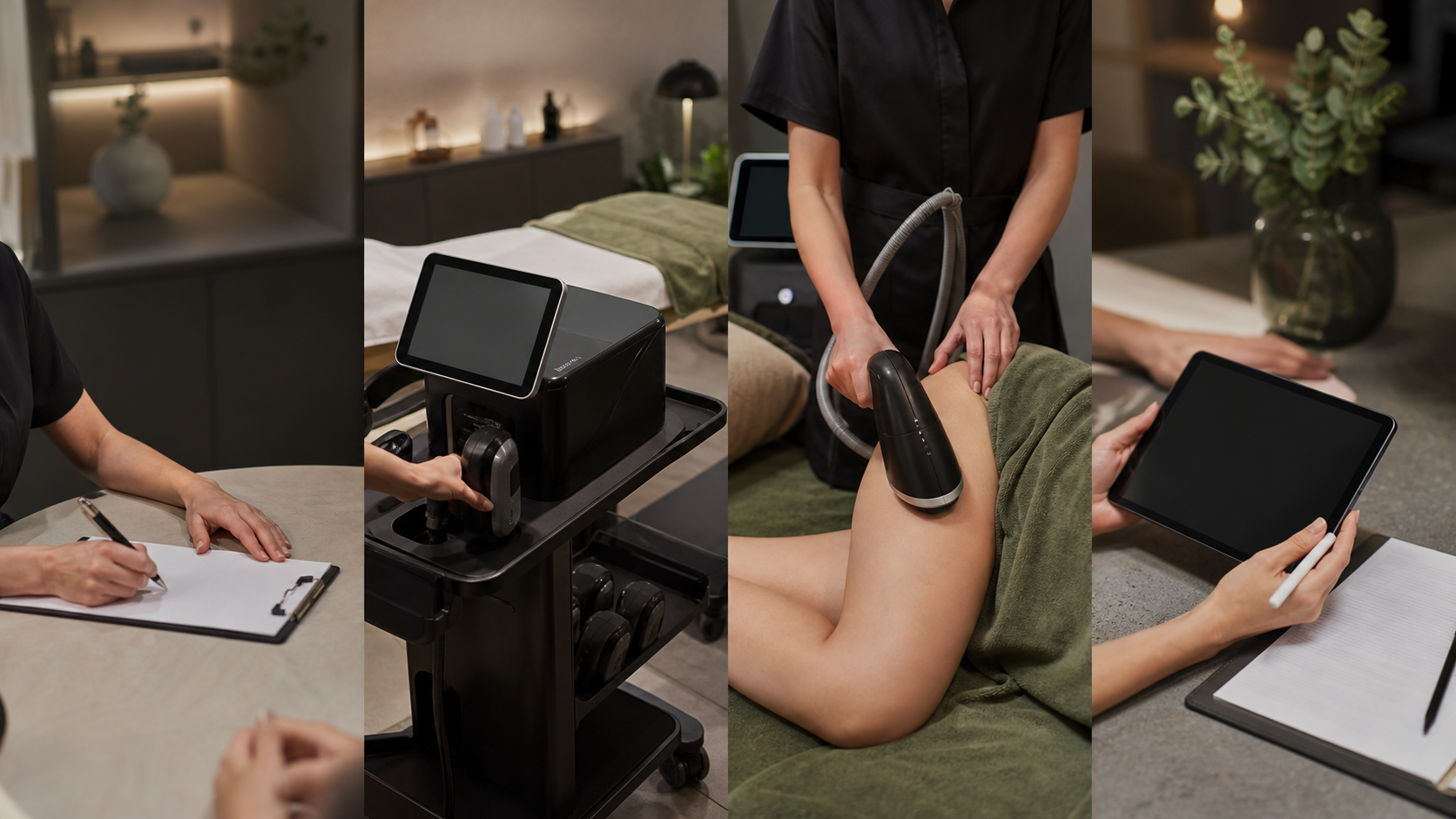
Room time and operator time belong in the ROI calculation.
How to improve the business case before buying
Run a small demand test before committing to a large order. Collect enquiries for a clearly described service, use deposits where lawful and appropriate, and track the number of consultations that convert to paid appointments. This is more useful than counting likes or asking friends whether they like the machine concept.
Build the service around a measured operating time. Write the consultation, setup, service, cleaning, photography or notes, payment, and rebooking steps. If one appointment takes 75 minutes from room entry to exit, do not price it as a 30-minute service.
Compare package pricing with discounting. A package can improve scheduling and cash flow, but it should not hide an unprofitable per-appointment cost. State the number of visits, expiry rules, cancellation terms, and what happens if the client is not suitable for the service.
Finally, include a downside case. Model fewer bookings, lower realised price, a delayed launch, one month of downtime, and an unexpected replacement cost. If the purchase only works in the strongest case, it is not ready for approval.
Questions to ask a supplier before ordering
What exact model, handpieces, applicators, and accessories are included in the quotation?
What is the complete installed cost to my country, including shipping, taxes, and documentation?
What is the expected appointment workflow, including setup, cleaning, and operator time?
Which parts and consumables need replacement, and what are their prices and lead times?
What training, user manual, warranty, remote support, and spare-parts service are included?
Which client areas and service descriptions are supported by the model-specific instructions?
What electrical, labeling, certification, import, and local operator requirements should I verify?
Can I see a live demonstration and approve a sample before a larger order?
For a private-label project, what can be customised: logo, shell, interface language, packaging, and documentation?
What minimum order quantity, production time, inspection process, and after-sales contact apply?
RESCUPL presents OEM/ODM beauty equipment services for branding, interface, packaging, prototyping, and project support. Buyers should confirm the scope for the exact body contouring model instead of assuming every option applies to every machine.
Frequently asked questions
How many treatments are needed to make a body contouring machine profitable?
There is no universal number. Divide the total installed investment by the contribution from one paid appointment, then add monthly equipment-related costs to the model. Use paid, completed appointments and test conservative, expected, and high cases.
What is a good ROI for a body contouring machine?
There is no responsible universal benchmark because service prices, rent, wages, taxes, regulations, financing, and demand vary by market. A good purchase is one that remains workable after realistic costs and a downside scenario are included.
Should a salon choose the cheapest body contouring machine?
No. Compare total cost, workflow, training, replacement parts, documentation, warranty, and support. A cheaper machine that is hard to operate or frequently unavailable may cost more through downtime and rework.
Is a multi-handle machine always more profitable?
No. Extra handles can support capacity or broader service planning, but only when the studio has enough demand, trained staff, room capacity, and approved workflows to use them. Otherwise, the additional purchase cost may sit idle.
Can a body contouring machine guarantee a certain income?
No. Product specifications and supplier examples cannot guarantee income. Revenue depends on local demand, pricing, sales, staff, compliance, service quality, retention, and operating costs.
What should a distributor include in an ROI model?
Include landed cost, wholesale and resale pricing, demo units, inventory, shipping, taxes, warranty reserves, spare parts, training, marketing, payment terms, minimum order quantities, and the number of customer units you can realistically sell.
Recommended RESCUPL links
RESCUPL Professional Beauty Machines — primary catalogue and product-category entry.
Cryolipolysis and Body Contouring Equipment — focused category page with related body-contouring options.
Hot Sculpting Body Contouring Machine — focused RF example.
HIEMT 2/4 Handles Body Sculpting Machine with RF — multi-handle body-sculpting example.
RF vs HIFU vs Microneedling — existing technology comparison for readers evaluating other equipment categories.
Body Contouring Equipment Trends for Beauty Studios — existing related body-contouring article; verify the final live route again when uploading.
OEM/ODM Services — for distributors and private-label buyers.
Contact RESCUPL — single primary enquiry CTA: request model guidance and a quotation.
Related Equipment