HIFU Machine Buying Guide: Cartridges, Depths, and Salon Use
Buying a HIFU machine for a salon or clinic? Compare cartridges, treatment depths, workflow, safety documents, costs, and supplier support before ordering.
If you are buying a HIFU machine for a salon, aesthetic clinic, or distribution business, start with the cartridges and the service you plan to sell—not the machine’s screen size or the largest number in the brochure. A practical HIFU system should offer the treatment depths your market needs, clear cartridge identification, controlled energy settings, a repeatable operator workflow, model-specific documentation, and dependable after-sales support. Facial skin-tightening services often require different depths from body services, while a small salon may need only a focused set of cartridges. A larger cartridge range can be useful, but only when your team is trained to select and use each option correctly.
This guide explains what HIFU cartridges and depths mean for equipment buyers, how to compare systems, and what to confirm before placing an order.
What is a HIFU machine?
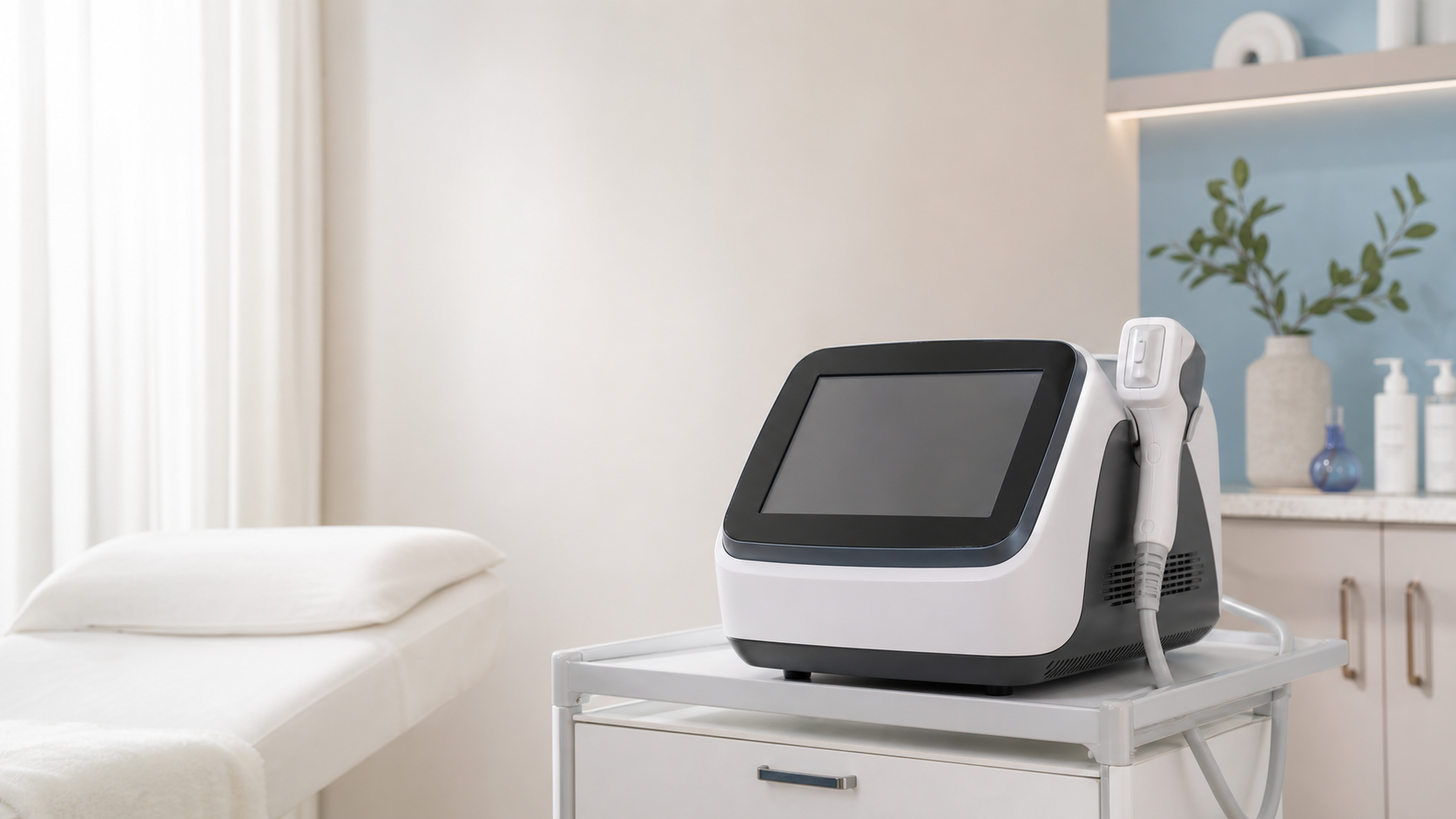
Evaluate a HIFU machine as part of a complete salon service workflow.
HIFU stands for high-intensity focused ultrasound. A professional HIFU handpiece delivers focused ultrasound energy to selected points below the skin surface. The intended effect is localized heating at a chosen depth, while the operator moves the handpiece according to the manufacturer’s instructions and the service area.
In a salon or clinic, HIFU is usually positioned as a non-surgical skin-lifting or skin-firming service. Some systems also include cartridges for body-contouring applications. The machine itself does not guarantee a particular cosmetic result. The outcome depends on the device design, cartridge selection, operating settings, operator technique, client suitability, and local rules for providing the service.
Buyers should also separate cosmetic wording from medical claims. Product pages and sales materials should describe the equipment’s intended professional use without promising treatment of a disease, permanent change, or identical results for every client.
Why do HIFU cartridges matter?
A cartridge is the replaceable or detachable treatment component that delivers ultrasound energy at a defined depth, line length, frequency, or operating range. It is one of the most important parts of the purchase because it affects the areas you can serve, the operating cost per appointment, and the protocols your team can offer.
Two machines may both be called “HIFU,” yet differ significantly in cartridge design. One may be supplied mainly for facial use, while another includes options for the neck, jawline, abdomen, arms, or thighs. Some cartridges create single lines; others create dual lines or multiple lines. Some have a fixed depth, while others are available in a wider set of depths.
Do not compare cartridges by quantity alone. A box containing many depths is not automatically better than a smaller, well-matched set. Ask which cartridge is included, which ones are optional, how each is identified, how many shots or uses it is rated for, how it is stored, and what the replacement price and lead time will be.
What do HIFU treatment depths mean?
Treatment depth is the approximate distance below the skin at which the cartridge focuses energy. Common labels include 1.5 mm, 2.0 mm, 3.0 mm, 4.5 mm, 6.0 mm, and deeper options for selected body applications. The exact range depends on the machine and the manufacturer’s approved instructions.
The basic buyer’s logic is:
Depth range | Common business use to discuss with the supplier | What to verify |
|---|---|---|
Around 1.5–2.0 mm | More superficial facial or fine-detail services, if supported by the model | Whether the cartridge is genuinely supplied for that area and how energy is controlled |
Around 3.0 mm | Facial skin-firming and selected contour areas | Area guidance, line length, energy range, and operator training |
Around 4.5 mm | Deeper facial or jawline-focused protocols on suitable systems | Whether the model’s manual specifies the area and the required technique |
Around 6.0 mm and deeper | Selected body applications on systems designed for them | Local scope of practice, contraindications, cartridge cost, and documentation |
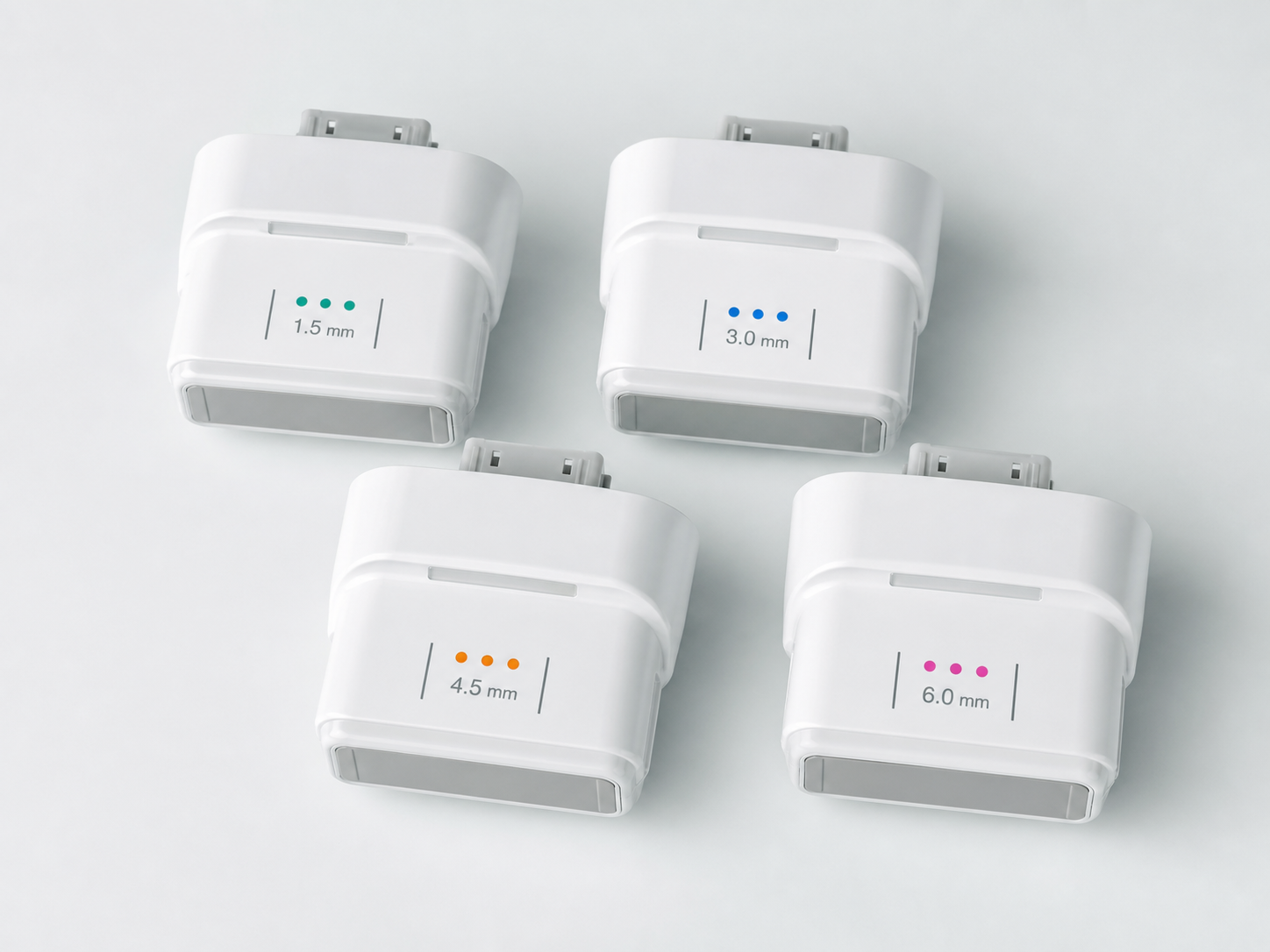
Compare cartridge depth, identification, usage rating, and replacement cost before ordering.
These ranges are not a universal treatment protocol. A number printed on a cartridge does not prove that the device is suitable for every face or body area. The depth, energy, spacing, line length, and movement pattern must be considered together. Request the model-specific manual and cartridge chart before writing your service menu.
Single-row HIFU or dual-row HIFU?
Single-row HIFU delivers one focused line of ultrasound energy per emission. It can be a straightforward option for a studio that wants a focused facial service and a simpler cartridge system. It may also be easier to explain, stock, and train when the business is starting with one or two core services.
Dual-row HIFU is designed to deliver two lines in one emission through a compatible handpiece. The practical attraction is workflow efficiency: the operator may cover a planned area with fewer emissions, depending on the cartridge and the manufacturer’s operating instructions. However, buyers should not assume that “dual-row” means twice the cosmetic result or that every dual-row system has the same output.
Ask the supplier to demonstrate the exact handpiece, show how the interface identifies it, provide the line spacing and energy range, and explain when single-row and dual-row cartridges should be used. RESCUPL’s current homepage lists a Fusion HIFU Dual-Row and Single-Row HIFU Device. If that model is being considered, request the current product sheet, included cartridge list, and model-specific compliance documents before publishing specifications or accepting an order.
How should a salon choose its HIFU cartridge mix?
Choose the cartridge mix from the service menu backwards. Start with the client questions your business already receives, then map each proposed service to the equipment and training it requires.
Small salon or new facial studio
A smaller studio may not need every available depth. A focused package—such as the depths required for the face and neck services the team can realistically sell—reduces initial stock and simplifies training. Before buying, estimate how many appointments per month are needed to use the machine and how long it will take to replace each cartridge.
Aesthetic clinic or skin management centre
A clinic may need more precise documentation, stronger traceability, and a broader range of treatment options. The buyer should check whether each cartridge has a clear model number, whether usage can be recorded, and whether the supplier provides training materials that match the delivered software and hardware. The clinic should also confirm who is permitted to operate the equipment under local rules.
Distributor or private-label buyer
For a distributor, cartridge availability becomes a portfolio decision. Your customers may have different service models, budgets, and regulatory requirements. Compare the standard package, optional cartridges, minimum order quantities, replacement supply, packaging, language support, and the ability to keep the same cartridge naming across private-label batches.
What should you check on the machine itself?
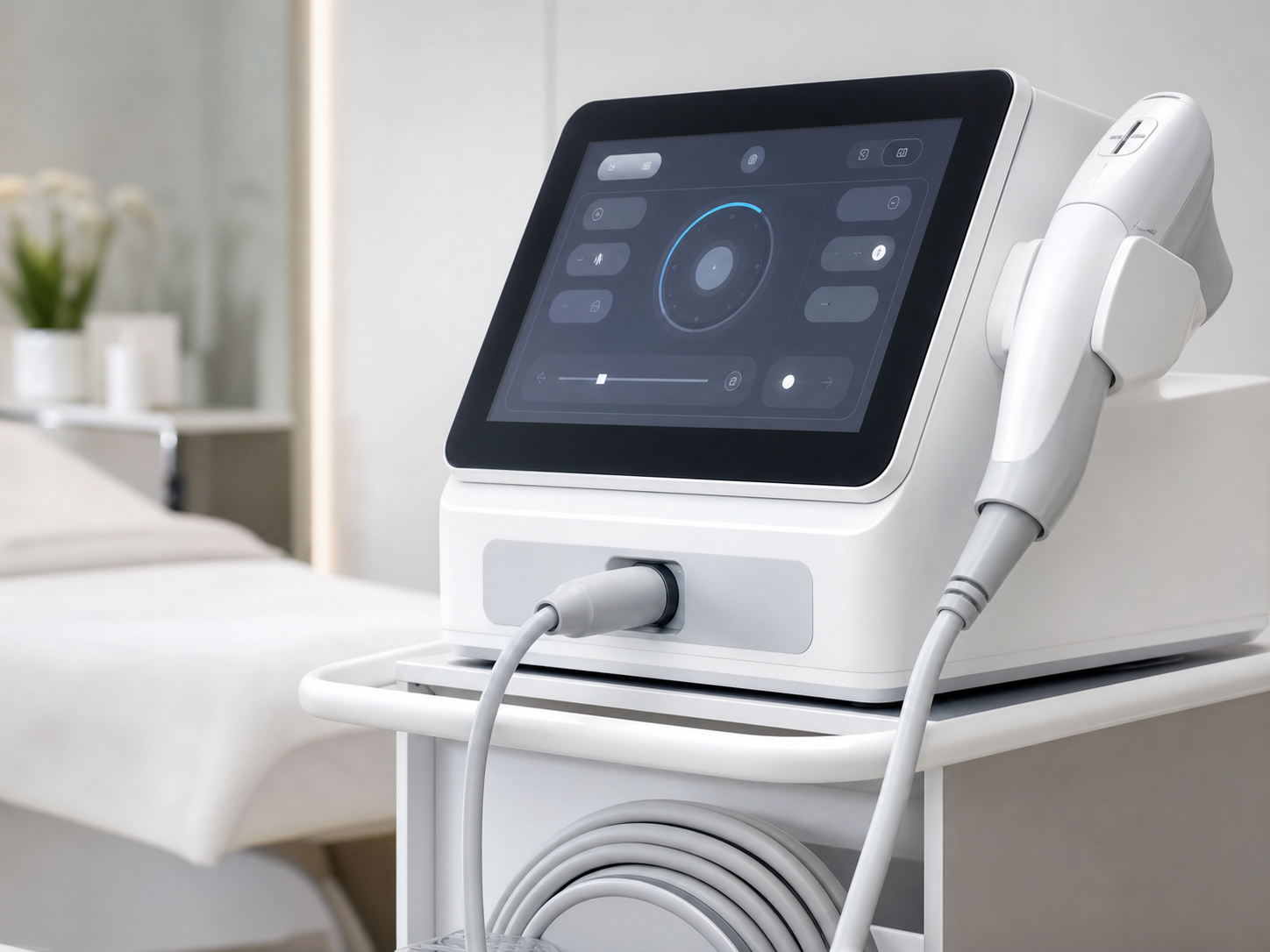
Clear controls help operators use the selected cartridge consistently.
1. Energy and control range
Ask how energy is displayed, what range the operator can adjust, whether settings are independent for different handpieces, and whether the machine provides a clear start, pause, and stop workflow. A controllable system is easier to train and easier to use consistently than one marketed only around maximum output.
2. Cartridge recognition and interface
The interface should make it clear which cartridge is connected and which settings are available. Confirm whether the machine recognises the cartridge automatically or relies on manual selection. Ask what happens if the wrong cartridge is selected, a cartridge is disconnected, or the handpiece reaches its service limit.
3. Shot or line tracking
If the machine tracks shots, lines, or remaining cartridge life, ask how the information is displayed and whether it can be reset only by an authorised process. This matters for appointment planning, replacement stock, and customer communication. Do not rely on a sales claim that a cartridge lasts a certain number of shots unless the supplier explains the test basis and operating conditions.
4. Electrical and installation requirements
Confirm input voltage, plug type, power draw, fuse or protection features, dimensions, weight, ventilation needs, and transport packaging. Dual-voltage input does not automatically mean the unit is ready for every market; local plug, labeling, documentation, and inspection requirements may still apply.
5. Cleaning, storage, and replacement parts
Ask how the handpiece and cartridge are cleaned, whether a coupling medium is required, how the system should be stored, and which parts are considered consumables. Request prices and lead times for replacement cartridges, cables, handpieces, screens, and other parts that could stop the service if unavailable.
6. Safety and compliance documents
Request the documents for the exact model being quoted. Depending on the market, this may include a declaration or certification information, electrical safety records, user manual, labeling files, and contraindication guidance. A document for a similar-looking model should not be treated as proof for the model you are buying. Have your local regulator, insurer, or qualified professional review the requirements that apply to your business.
How to plan HIFU salon use responsibly
A HIFU service should begin with a consultation and a review of the manufacturer’s exclusions and operating instructions. The operator should identify the intended area, select the compatible cartridge, prepare the skin as directed, mark or plan the treatment area when required, and record the settings used. The service should stop if the client reports unexpected pain or if the machine shows an error.
Do not build your marketing around “permanent lifting,” “zero risk,” or guaranteed results. A clearer service description explains the technology, the intended cosmetic purpose, the expected appointment format, and the fact that client responses vary. Where local rules require a licensed or medically supervised operator, follow those rules instead of treating a beauty-machine purchase as permission to provide every possible service.
How to calculate the real purchase cost
The machine price is only one part of the decision. Add shipping, taxes, installation, training, replacement cartridges, consumables, maintenance, payment fees, marketing, and the value of room and staff time. Then compare a conservative appointment plan with the expected replacement schedule.
A simple planning formula is:
Monthly contribution = (service price − variable cost per appointment) × paid appointments − monthly equipment-related costs
Use this calculation to compare a smaller facial HIFU setup with a wider face-and-body system. If your business cannot regularly sell the additional services, extra cartridges may increase inventory cost without increasing contribution. If demand is already clear, a broader system may reduce the need to purchase a second machine later.
Supplier questions before you order
Send the supplier a written list and keep the answers with the quotation:
Which exact cartridges are included, and what are their depths, line lengths, frequencies, and rated usage?
Is the system single-row, dual-row, or both? What is the line spacing for each compatible handpiece?
Which face, neck, and body areas are covered by the current manual?
How are energy, spacing, and line length adjusted and displayed?
What happens when a cartridge reaches its usage limit or an error occurs?
What are the voltage, plug, power, size, weight, shipping, and installation requirements?
Which model-specific safety and compliance documents are available?
What training, warranty, remote support, and spare-parts service are included?
What is the price and lead time for replacement cartridges?
Can the logo, interface language, packaging, and user materials be customised for a private-label project?
If you are a distributor, also ask about sample orders, minimum order quantity, carton labeling, barcode requirements, territory arrangements, and whether future batches will use the same cartridge specifications.
Is a HIFU machine right for your business?
A HIFU machine can make sense when your business has a defined facial or body-care audience, a trained operator, a suitable room, and a service plan based on realistic claims. The best purchase is not the system with the most cartridges. It is the system whose depths, controls, replacement costs, documentation, and support match the services you can consistently deliver.
If you are testing demand, begin with a compact cartridge mix and a clear service offer. If you already operate an aesthetic clinic or supply several salons, compare the full operating workflow, cartridge supply, and support response—not only the product photos. If you are building a private-label line, approve a sample and its documentation before moving to a larger production order.
Related RESCUPL resources
Frequently asked questions
What is the best HIFU depth for the face?
There is no single best depth for every face or every machine. The correct choice depends on the area, the cartridge, the device instructions, and the operator’s training. Ask for a model-specific cartridge chart rather than choosing from a generic depth list.
Do more HIFU cartridges make a machine better?
Not automatically. More cartridges can expand the service range, but they also add training, inventory, replacement, and documentation requirements. Choose the smallest set that supports your actual business plan, then expand when demand justifies it.
What is the difference between single-row and dual-row HIFU?
Single-row systems deliver one focused line per emission. Dual-row systems are designed to deliver two lines through a compatible handpiece. Compare the actual line spacing, energy range, cartridge design, and operating instructions for the model being quoted.
Are HIFU cartridges consumables?
Many systems treat cartridges as replaceable components with a rated usage or shot count. Confirm the manufacturer’s definition, how usage is tracked, the replacement price, and the expected lead time before purchasing.
Can a salon use the same HIFU machine for face and body services?
Some systems are designed for both, while others are intended mainly for facial services. Do not infer body suitability from a deep cartridge alone. Confirm that the manual, cartridge range, operator training, and local rules support the planned service.
Can RESCUPL customise HIFU equipment for a private-label brand?
RESCUPL presents OEM/ODM support for professional beauty equipment, including branding and selected interface or packaging options depending on the model. Confirm the exact customisation scope, minimum order, sample approval process, documentation, and final inspection requirements before production.
Related Equipment