HIFU vs RF Microneedling: Why More Clinics Are Buying Both — And What That Means for Equipment Buyers
Compare HIFU and RF microneedling mechanisms, depths, and results, and learn how the "sandwich protocol" combination is reshaping clinic equipment purchasing in 2026.
HIFU vs RF Microneedling: Why More Clinics Are Buying Both — And What That Means for Equipment Buyers
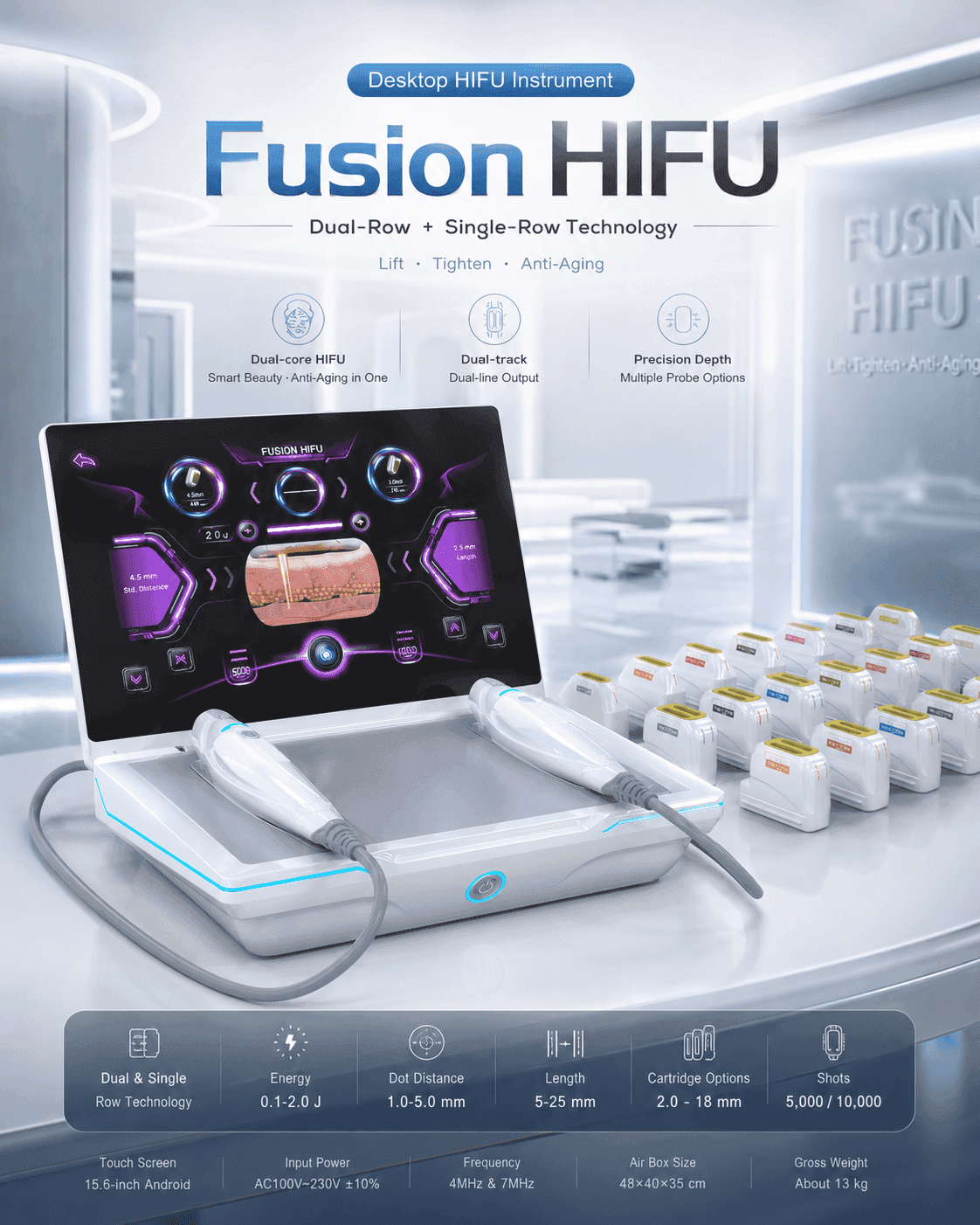
Med spas and aesthetic clinics used to choose either a HIFU machine or an RF microneedling device, depending on budget and treatment focus. That's changing. Through 2026, a growing number of clinics are running both technologies as a staged "combination protocol" — and that shift is starting to change what distributors and brand owners are sourcing from their equipment manufacturer.
This guide breaks down how each technology works, where they differ, why they're increasingly paired, and what to look for when sourcing equipment to support this trend.
How HIFU Works
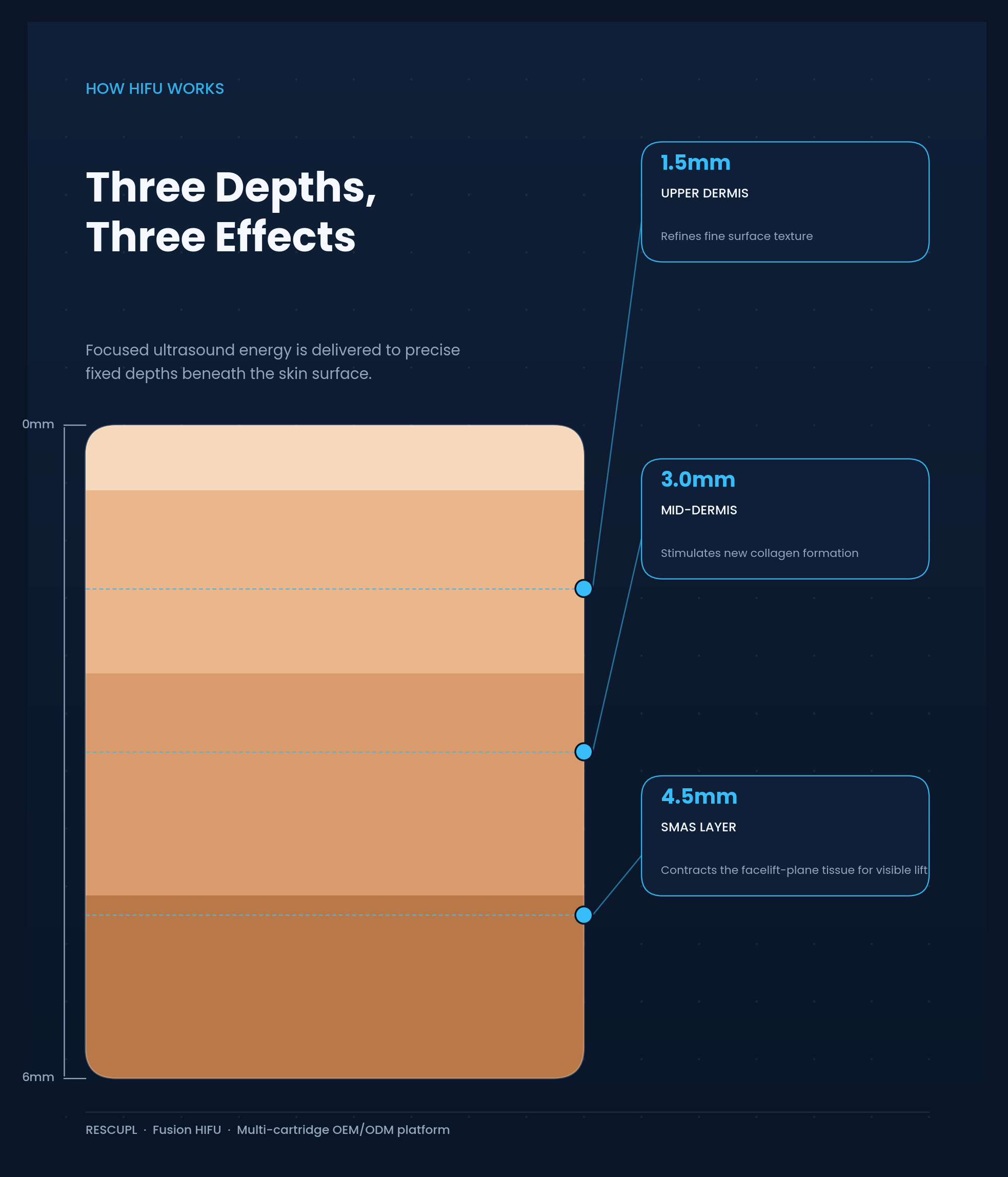
High-Intensity Focused Ultrasound (HIFU) delivers focused ultrasound energy to precise depths beneath the skin surface, most commonly at 1.5mm, 3.0mm, and 4.5mm. Each depth targets a different structure:
- 1.5mm — upper dermis, improves fine texture
- 3.0mm — mid-dermis, stimulates new collagen formation
- 4.5mm — the SMAS layer (superficial musculoaponeurotic system), the same structural layer addressed in a surgical facelift
At each depth, HIFU heats tissue to roughly 60–70°C, creating controlled thermal micro-injury. The body responds with a natural healing cascade that produces fresh collagen and elastin over several weeks, while contraction of the SMAS layer produces an immediate, visible lifting effect. This is why HIFU is generally positioned as the treatment for structural lifting and sagging.
Multi-cartridge platforms (7D, 12D, and 22D/25D systems offering multiple depth and dot-spacing combinations) are currently the format absorbing the most clinic capital, since they let a single machine treat both fine lines and deeper laxity in one session.
How RF Microneedling Works
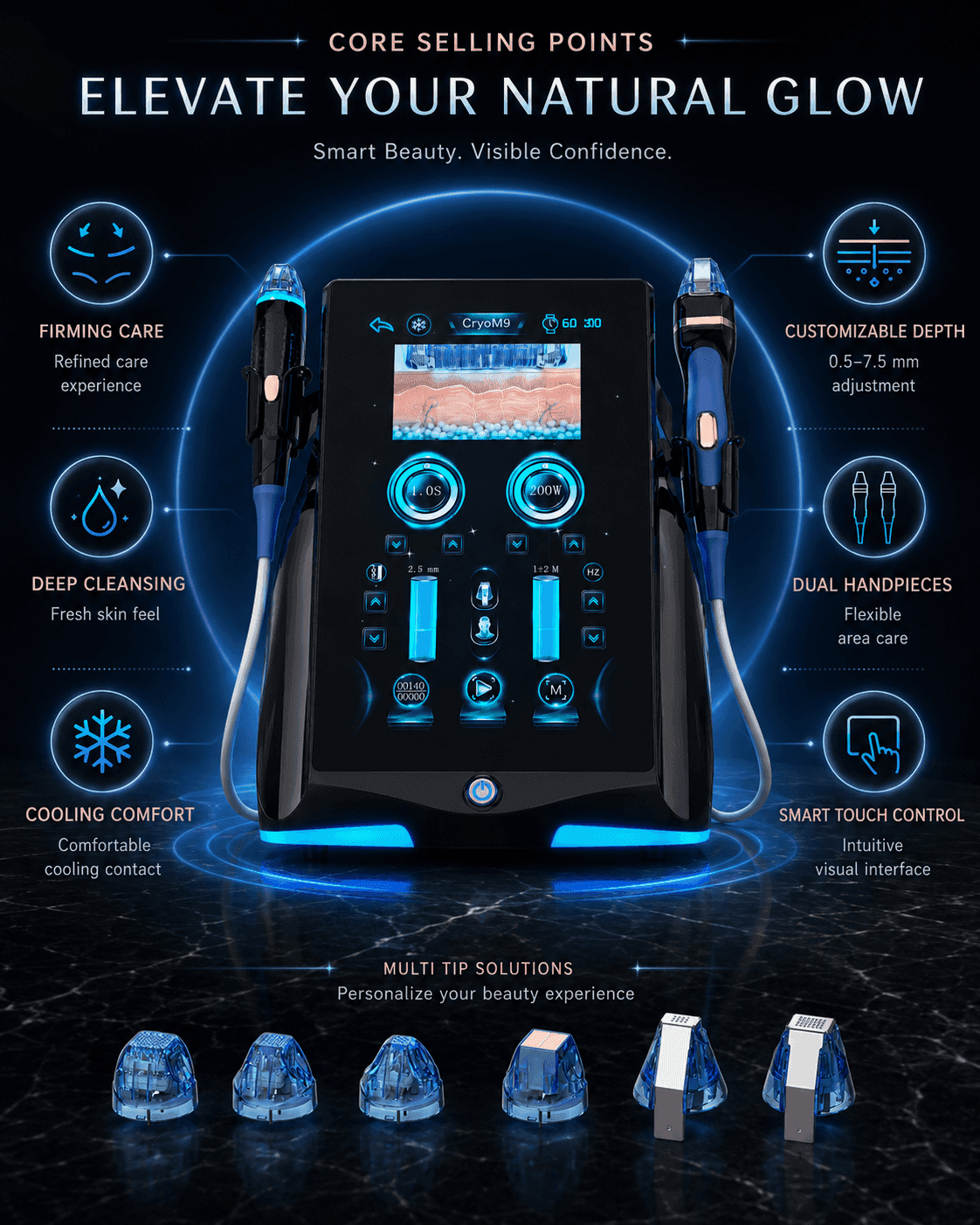
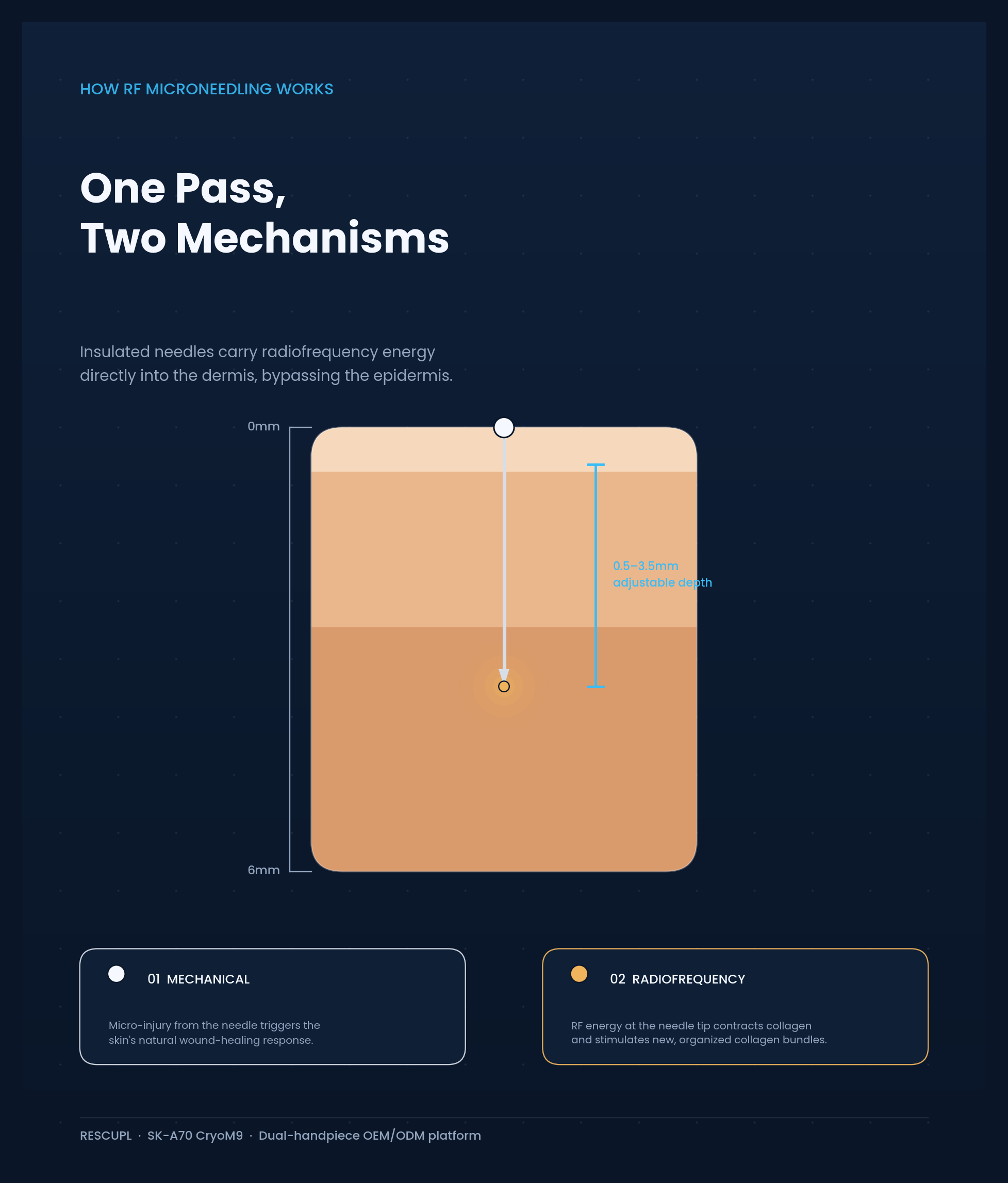
RF microneedling combines mechanical microneedling with radiofrequency energy. Fine needles penetrate the skin — typically adjustable from 0.5mm to 3.5mm depending on skin thickness and treatment area — and act as electrodes that deliver RF energy directly into the dermis, bypassing the epidermis.
This gives RF microneedling a dual mechanism:
- Mechanical injury from the needles triggers the skin's natural wound-healing response.
- Thermal energy delivered at the needle tip causes immediate contraction of existing collagen fibers and stimulates production of new, more organized collagen during healing.
Because the energy is deposited precisely in the deep dermis rather than spread across the surface, RF microneedling is particularly effective for skin texture, pore size, scarring, and mild-to-moderate laxity — the surface-level concerns that HIFU alone doesn't fully address.
HIFU vs RF Microneedling: Side-by-Side
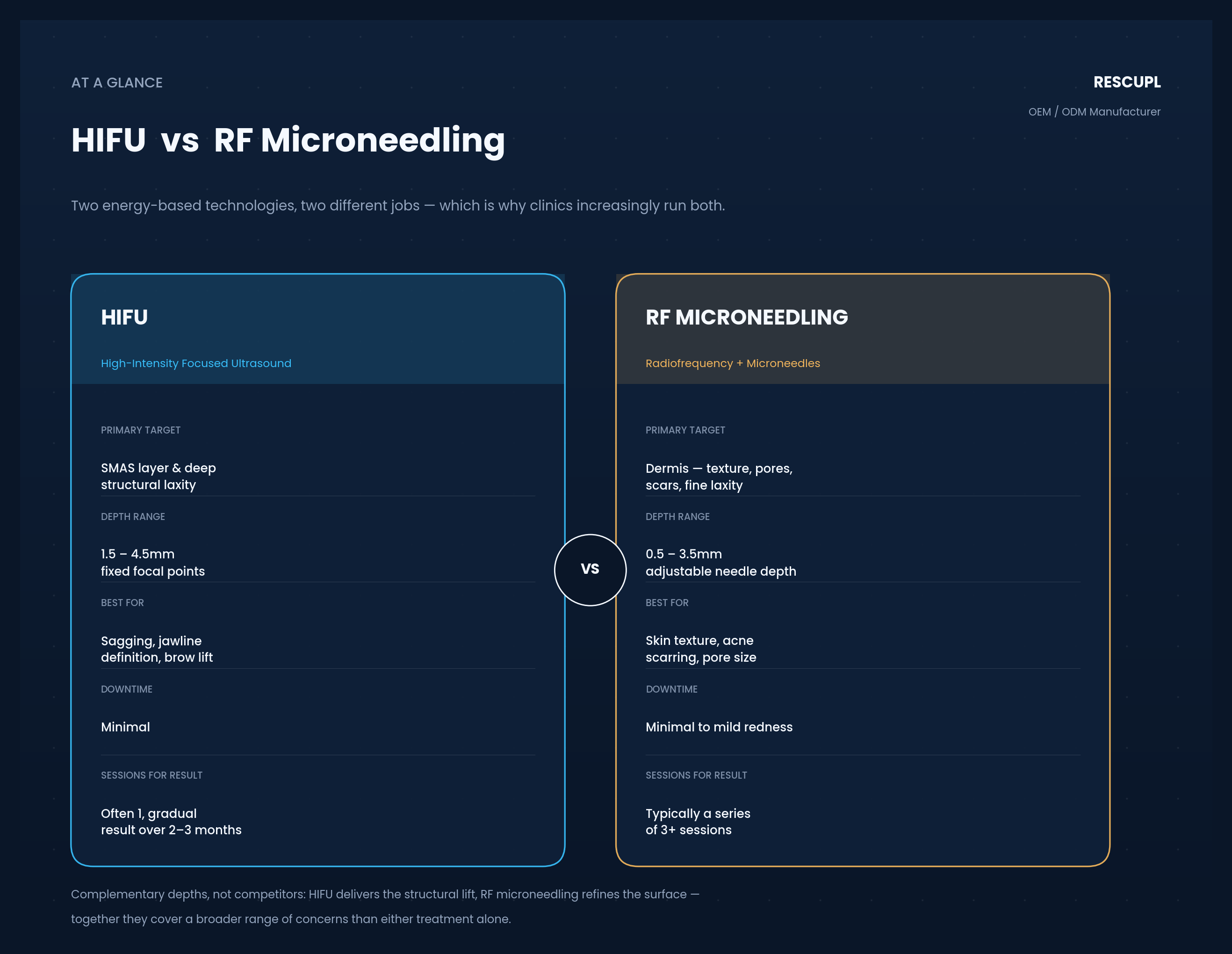
| HIFU | RF Microneedling | |
|---|---|---|
| Primary target | SMAS layer, deep structural laxity | Dermis — texture, pores, scars, fine laxity |
| Depth range | 1.5–4.5mm (fixed focal points) | 0.5–3.5mm (adjustable needle depth) |
| Best for | Sagging, jawline definition, brow lift | Skin texture, acne scarring, pore size |
| Downtime | Minimal | Minimal to mild redness |
| Sessions for visible result | Often 1, with gradual improvement over 2–3 months | Typically a series of 3+ sessions |
Neither technology fully replaces the other — they work at complementary depths and address different concerns, which is exactly why clinics are starting to offer both rather than picking one.
The Combination "Sandwich" Protocol
A cadaver-skin study comparing thermal damage zones from HIFU and bipolar RF found the two energy patterns to be distinct and non-interfering, indicating it's technically feasible to combine them in the same treatment plan. In practice, clinics are running the combination in a staged sequence — commonly HIFU first, followed by a series of RF microneedling sessions roughly four weeks apart, to let the SMAS-layer effects of HIFU settle before layering on surface-level RF microneedling refinement.
The reported outcome: HIFU delivers the visible lift, RF microneedling delivers the texture and pore refinement, and together they cover a broader range of a patient's concerns than either treatment alone — which is a strong reason for a clinic to book (and pay for) both procedures rather than one.
For equipment buyers, this protocol matters for a simple reason: clinics running the combination protocol need both machines, and increasingly want them from a single, coordinated supplier rather than sourcing HIFU and RF microneedling separately from unrelated vendors.
What Equipment Buyers Should Look for When Sourcing
If you're a distributor, brand owner, or clinic group evaluating suppliers to support this combination-protocol trend, a few sourcing criteria matter most:
- Adjustable, multi-depth HIFU cartridges (ideally covering the 1.5mm / 3.0mm / 4.5mm range in one system) rather than single-depth units, so one machine can address both fine lines and SMAS-layer laxity.
- RF microneedling with a genuinely adjustable needle depth (0.5–3.5mm) and reliable RF power delivery at the needle tip, not just mechanical needling with weak RF output.
- Safety and compliance documentation — thermal output consistency, needle insulation quality, and clearances relevant to your target market, since regulatory scrutiny on both energy-based and home-use devices has been tightening through 2026.
- A supplier able to deliver both device categories with consistent build quality, so a clinic-facing brand can market a coherent "combination protocol" package instead of mixing hardware from unrelated OEMs.
RESCUPL: One OEM/ODM Partner for the Full Protocol
RESCUPL manufactures both HIFU-capable facial care platforms and RF microneedling systems, built for private-label and OEM/ODM partners supplying med spas, clinics, and distributors. Rather than sourcing HIFU and RF microneedling from separate factories, brand owners can build a matched combination-protocol lineup — consistent build quality, coordinated branding, and a single point of contact for technical support and after-sales.
If you're developing a combination-protocol offering for your clinic network or private-label brand, get in touch with RESCUPL to discuss OEM/ODM options across our Facial Care Machines and RF Microneedle Machines lines.
Fusion HIFU Dual-Row Device → SK-A70 CryoM9 RF Microneedling Machine → Browse All Facial Care Machines →
Sources: clinical and technical background compiled from published aesthetic-device research and industry reporting, including cadaver-skin thermal interaction studies on HIFU/RF combination safety and manufacturer technical documentation on HIFU depth staging and RF microneedling penetration mechanisms.
Related Equipment