How to Price Beauty Machine Services Without Guessing
Learn how to price beauty machine services with a practical cost-per-treatment formula, capacity check, local-market test, and salon pricing worksheet.
How to Price Beauty Machine Services Without Guessing

The best way to price a beauty machine service is to calculate the minimum price first, then test a clear client-facing price against your local market. Start with the cost of staff time, room time, consumables, payment fees, and equipment recovery. Add the profit you need, then check whether the service length and client demand make the price realistic. A machine is not profitable because it has a low purchase price; it is profitable when the service can be delivered consistently at a price clients understand and the business can sustain.
Start with the service, not the machine
Many salon owners begin by asking, “What should I charge for this machine?” That question is too broad. The same equipment can support a short introductory appointment, a longer premium service, a package, or a service sold through a distributor. Each option has a different cost structure.
Define the service before setting the price:
- What area or concern does the appointment cover?
- How long is the room occupied, including setup and cleaning?
- Who performs the service, and what training is required?
- Does the appointment use a disposable cartridge, tip, gel, membrane, or other consumable?
- Is consultation, photography, aftercare, or follow-up included?
- Is the service appropriate for a salon, a clinic, or only a trained professional under local rules?
This prevents a common mistake: comparing your price with a competitor’s headline offer when the two appointments include different amounts of time, equipment, preparation, or follow-up.
The basic beauty treatment pricing formula
Use this formula for a first calculation:
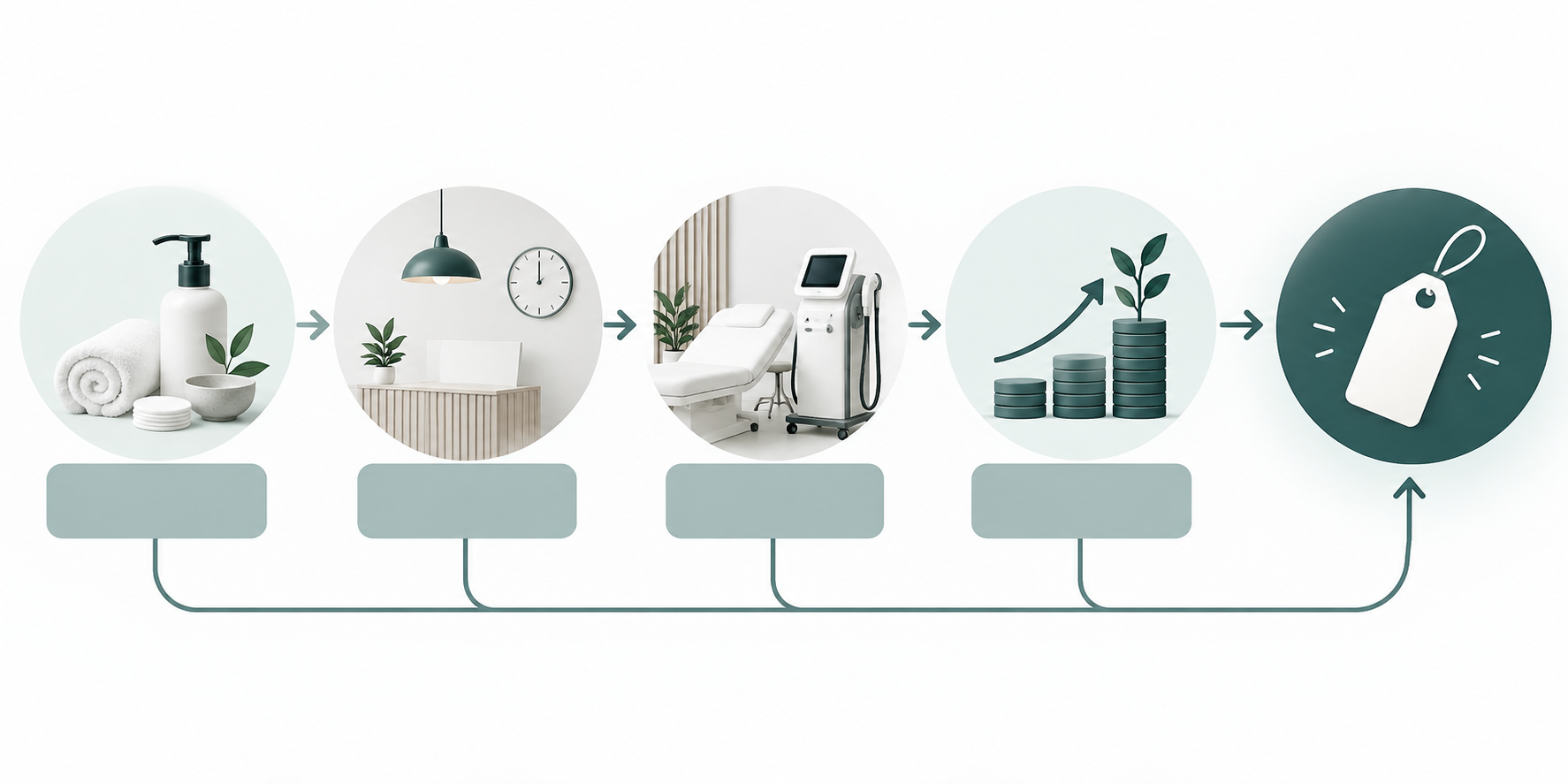
Minimum sustainable price = direct service cost + allocated overhead + equipment recovery + desired operating profit
You can make the calculation more practical by separating fixed and variable costs.
1. Calculate the direct cost of one appointment
Direct costs rise when you perform more appointments. Include:
- Staff cost for the full appointment, not only the time the machine is active
- Consumables used for that client
- Laundry, cleaning supplies, and protective materials
- Payment processing fees
- Any appointment-specific product or aftercare item
For example, if a 60-minute appointment uses 20 minutes of setup and cleanup, cost the staff member for the complete 80-minute block. Pricing only the treatment time makes every busy day look more profitable than it really is.
2. Add a fair share of overhead
Overhead continues even when the machine is not booked. Depending on the business, it may include rent, utilities, insurance, booking software, reception time, local marketing, equipment maintenance, and management time.
Do not assign the entire monthly rent to one machine. Instead, estimate the number of billable service hours the room can realistically support, then allocate a share to the service. Use realistic utilisation, not a fully booked calendar.
3. Recover the equipment investment
Equipment recovery is the amount you set aside from each appointment to repay the machine and its launch costs. Include more than the supplier quote:
- Machine and accessories
- Freight, import charges, and local taxes where applicable
- Installation or staff training
- Initial marketing and photography
- Spare parts or backup accessories
- Any financing cost
Choose a recovery period that fits your business plan. A new studio may prefer a cautious recovery schedule because it cannot assume full utilisation. An established studio with consistent bookings may choose a shorter target, but should still keep a maintenance reserve.
4. Add operating profit deliberately
Profit should not be whatever remains after discounting. Decide what the service must contribute to the business after its direct cost and allocated overhead. Then check whether the resulting price is credible in your area.
If the required price is much higher than comparable local services, do not immediately cut the margin. First ask whether the service is too long, the room is underused, the equipment is over-specified, or the service needs a clearer customer segment.
Use a simple worksheet before publishing a price
Create one worksheet for every service. These are planning figures, not universal market benchmarks.
| Input | Example planning figure | What to verify |
|---|---|---|
| Total appointment time | 80 minutes | Booking and cleaning workflow |
| Staff cost for the block | $24 | Actual payroll or contractor cost |
| Consumables | $8 | Supplier quote and usage per client |
| Payment and small supplies | $5 | Local payment rate and real usage |
| Allocated overhead | $18 | Room hours and realistic utilisation |
| Equipment recovery reserve | $25 | Total landed cost and recovery target |
| Desired operating profit | $40 | Business target, not competitor guess |
| Calculated minimum price | $120 | Recheck all assumptions |
In this example, the suggested client price might be set above the calculated minimum to allow for occasional discounts, rebooking incentives, or slower weeks. The exact price should be tested against local demand, competitor positioning, and the service experience. Never publish the example figures as if they were a guaranteed margin or an industry average.
Check the capacity of the room and the operator
A price can look attractive on paper but fail if the service consumes too much capacity. Ask four questions:
- How many appointments can one operator complete in a normal shift?
- How much time is lost between clients?
- Can the room support other services when the machine is idle?
- What happens if a client cancels or needs a longer consultation?
If the machine can technically run several appointments per day but the operator can only deliver a few because of preparation, consultation, or cleaning, use the lower number in your plan. A realistic booking target produces a more reliable price than a maximum-throughput calculation.
The same logic matters to distributors and private-label buyers. A machine with more handles, modes, or accessories is not automatically a better commercial choice. It may be valuable if those features support a clear service menu, but unnecessary complexity can increase training time, maintenance needs, and the number of claims staff must explain.
Choose a pricing structure that clients can understand
Most businesses need more than one price, but not an overloaded menu. Consider three layers:
An introductory service
Use a shorter or narrower service to let a new client understand the experience. State exactly what is included and avoid presenting a discount as the permanent value of the treatment.
A standard appointment
This should be the main price used for capacity and profitability planning. It needs a clear duration, service area, preparation, and aftercare explanation.
A package or maintenance plan
Offer a package only after confirming that the service naturally involves repeat visits and that the package cash flow will not create operational pressure. Show the per-visit price, the total payment, expiry rules, rescheduling terms, and what happens if the client is not suitable for a later appointment.
For clinics or businesses operating under local professional rules, pricing should not encourage staff to promise a medical result. Describe the service, process, and eligibility checks accurately, and confirm local requirements before launch.
Test the price without damaging your positioning
Price testing does not require changing everything at once. Use a controlled local test:
- Publish one clear service description and one standard price.
- Track enquiries, bookings, cancellations, appointment duration, and rebooking.
- Ask where the client heard about the service and what they expected to pay.
- Compare the actual service time with the time used in your worksheet.
- Review the result after enough appointments to see a pattern, not after one busy weekend.
If enquiries are strong but bookings are weak, the issue may be trust, explanation, location, payment options, or the gap between the advertised and final price. If bookings are strong but the service regularly runs late, the price may be acceptable while the workflow is not. If the service is busy but contributes little cash, revisit consumables, staff time, and discounting before buying another machine.
What equipment buyers should ask suppliers
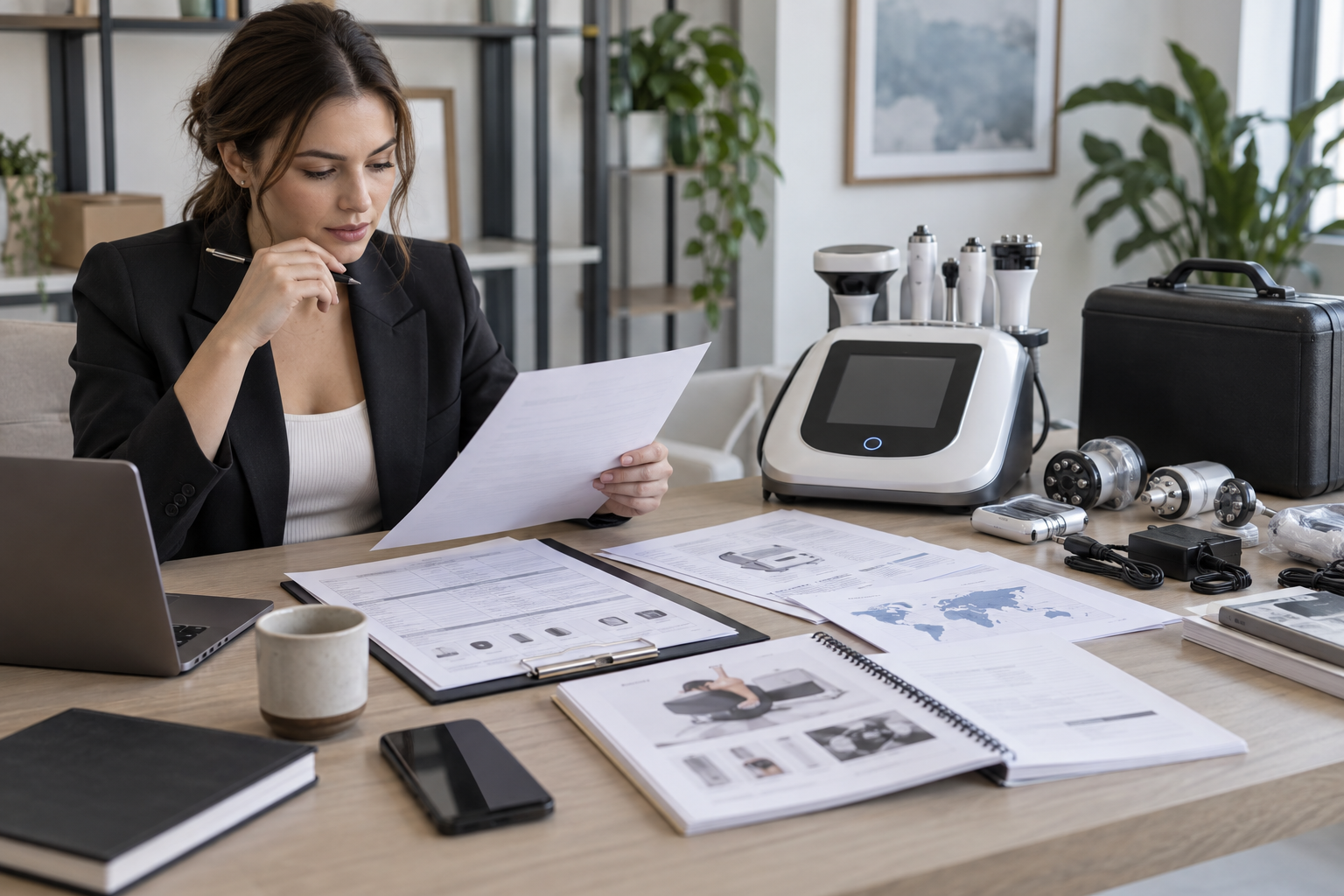
Your service price depends on facts that should come from the supplier, not assumptions in a sales brochure. Ask for:
- The complete machine configuration and included accessories
- Consumable or replacement-part pricing
- Expected replacement intervals for cartridges, tips, probes, or handpieces
- Power, voltage, installation, and room requirements
- Training materials and setup support
- Warranty coverage and the process for technical support
- Shipping terms, lead time, and documents needed for your market
- A video demonstration of the exact model or configuration
RESCUPL’s current catalogue covers body contouring, facial care, RF microneedle, shock wave, and multifunctional equipment. The right comparison is not the lowest listed price; it is the total cost of the configuration that can support your planned service. Use the RESCUPL product catalogue to compare categories, then request a quote that includes the accessories, shipping details, and support relevant to your market.
For a broader decision process, see How to Choose the Right Professional Beauty Equipment for Your Salon. If you are comparing facial services, the RF vs. HIFU vs. Microneedling guide can help you connect technology choice with appointment structure and client fit.
When OEM or ODM changes the pricing question
Distributors and private-label buyers need to price the whole commercial system, not only a treatment session. Custom branding, packaging, interface language, sample orders, minimum quantities, documentation, and after-sales support can change the landed cost and launch timeline.
RESCUPL describes its OEM/ODM service as covering design, functions and specifications, interface and language, logo and packaging, prototype review, quality checks, and ongoing technical support. Those items should be confirmed for the exact project. Ask for a written quote that separates sample cost, customisation cost, production, freight, import responsibility, and replacement parts.
Then build your distributor or private-label price from the same logic: landed cost, local support, sales and training time, warranty reserve, channel margin, and the price your target customers can understand. A low factory quote is not a profitable offer if the distributor must absorb every support and replacement cost.
A final pricing checklist
Before publishing a beauty machine service, confirm that you can answer “yes” to these questions:
- Have I defined the exact service and total appointment time?
- Have I included staff time, consumables, payment fees, and cleaning?
- Have I allocated overhead using realistic room utilisation?
- Have I included equipment recovery and a maintenance reserve?
- Does the price leave room for honest promotions without destroying margin?
- Have I checked the price against local demand and comparable services?
- Can staff explain what is included without making unsupported promises?
- Have I verified the machine configuration, consumables, support, and local requirements?
- Can I measure bookings, cancellations, actual time, rebooking, and contribution after launch?
If the answer to several questions is no, the service is not ready for a final price. Improve the information first. Good pricing is not a guess with a confident number attached; it is a repeatable decision based on the service you can actually deliver.
FAQ
How much should a salon charge for a beauty machine treatment?
There is no single correct price. Calculate the full cost of the appointment, add overhead and equipment recovery, set a required operating profit, and then compare the result with local demand and competing services. The advertised price should match the actual duration, area, preparation, and aftercare included.
Should equipment cost be included in every treatment price?
Yes. Set aside an equipment recovery amount for each appointment, even after the machine has been paid for. This creates funds for maintenance, replacement accessories, and the next equipment investment. The amount should be based on your landed cost and realistic booking volume.
Is it better to charge per session or sell packages?
Use a standard session price first so you understand the service economics. Add packages only when repeat visits make sense for the service and the terms are clear. A package should improve planning for both the client and the business, not hide an unprofitable session price.
How do consumables affect beauty treatment pricing?
Consumables directly reduce the contribution from every appointment. Confirm the real cost per use, replacement interval, and shipping time before publishing a price. If a supplier cannot explain those costs, your margin calculation is incomplete.
Can a manufacturer help me set my salon prices?
A manufacturer can provide configuration, consumable, and support information and may share general service-planning guidance. Your final price still depends on local wages, rent, taxes, regulations, demand, positioning, and the service you actually deliver. Treat supplier examples as planning inputs, not guaranteed market results.
Where can I request a beauty equipment quote?
You can use the RESCUPL contact page to request pricing, technical information, or an OEM/ODM discussion. Include your country, business type, intended service, quantity, preferred configuration, and target launch date so the quote can be evaluated against your real pricing plan.
Related Equipment