Professional vs Home-Use Beauty Machines: Key Differences for Buyers
Compare professional and home-use beauty machines by intended use, controls, workflow, accessories, support, compliance, and total cost before buying.
Professional vs Home-Use Beauty Machines: Key Differences for Buyers
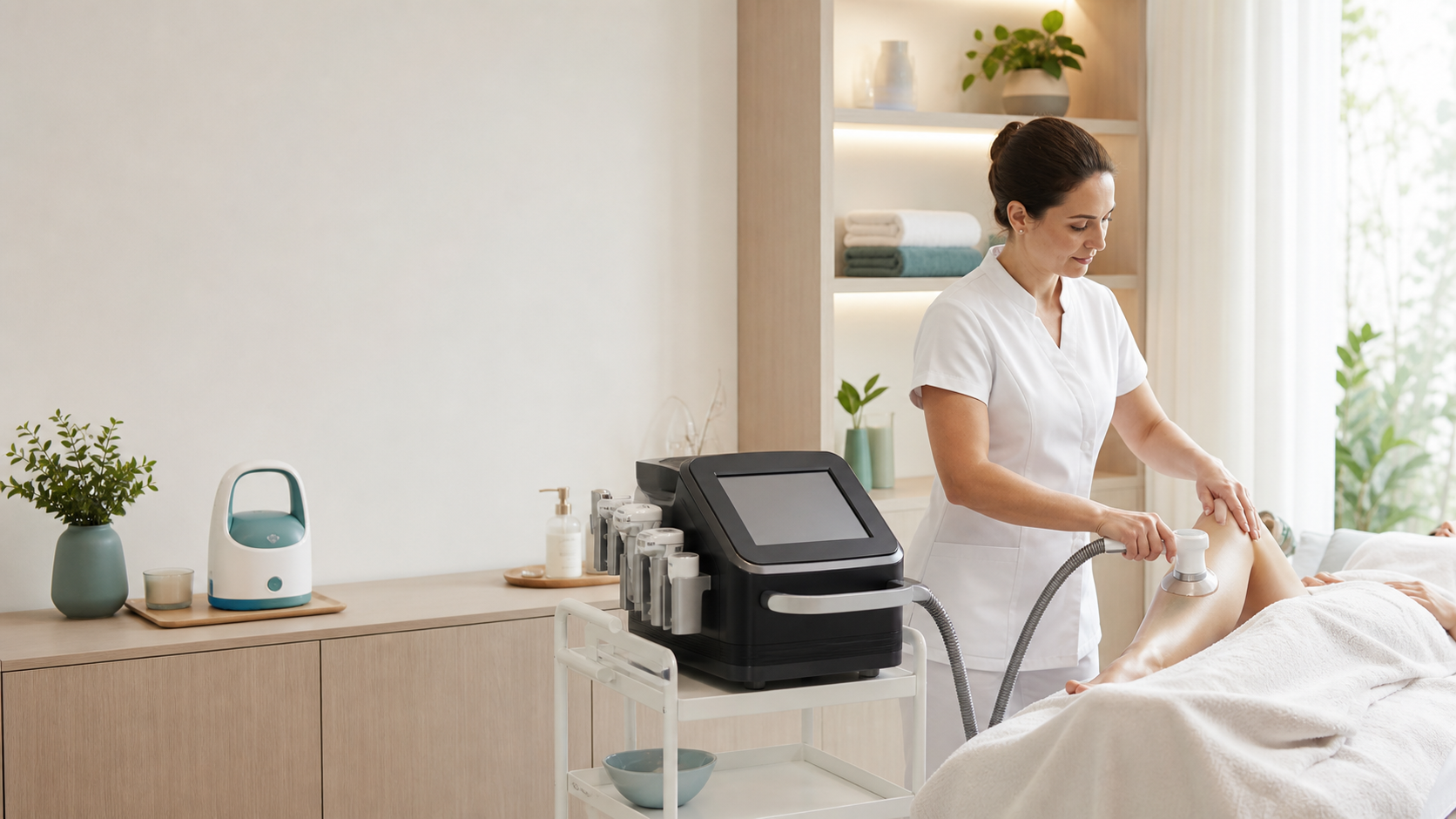
If you are buying equipment for a salon, clinic, or beauty distribution business, choose a professional machine when the device will be used repeatedly by trained staff, must support a defined service menu, and needs documented support after delivery. A home-use device may be suitable for personal, occasional use, but a lower price or smaller size does not automatically make it the right business purchase. Compare the intended user, operating limits, controls, accessories, cleaning process, documents, warranty, and total cost before comparing prices.
The label “professional” is useful, but it is not proof of quality on its own. Some products use professional-sounding language while offering limited documentation or weak after-sales support. The safest buying decision comes from matching the machine to the work you expect it to do and verifying the supplier’s claims for the exact model.
What is the difference between professional and home-use beauty machines?
The main difference is the complete operating system around the machine, not just the power rating. Professional equipment is generally designed for trained operators, repeated sessions, a controlled work environment, and a business workflow. It may include a larger console, more adjustable parameters, multiple handpieces, treatment presets, service records, replaceable parts, and supplier training.
Home-use equipment is normally designed for an individual to operate with limited training. It may be lighter, simpler, quieter, and easier to store. Its controls are often more restricted, and the accessory set may be smaller. That can be an advantage for personal use, but it can become a limitation when a studio needs consistent results across different staff members, treatment areas, and client schedules.
These are broad buying patterns, not universal rules. Always read the product label, instructions, intended-use statement, and local requirements for the exact device.
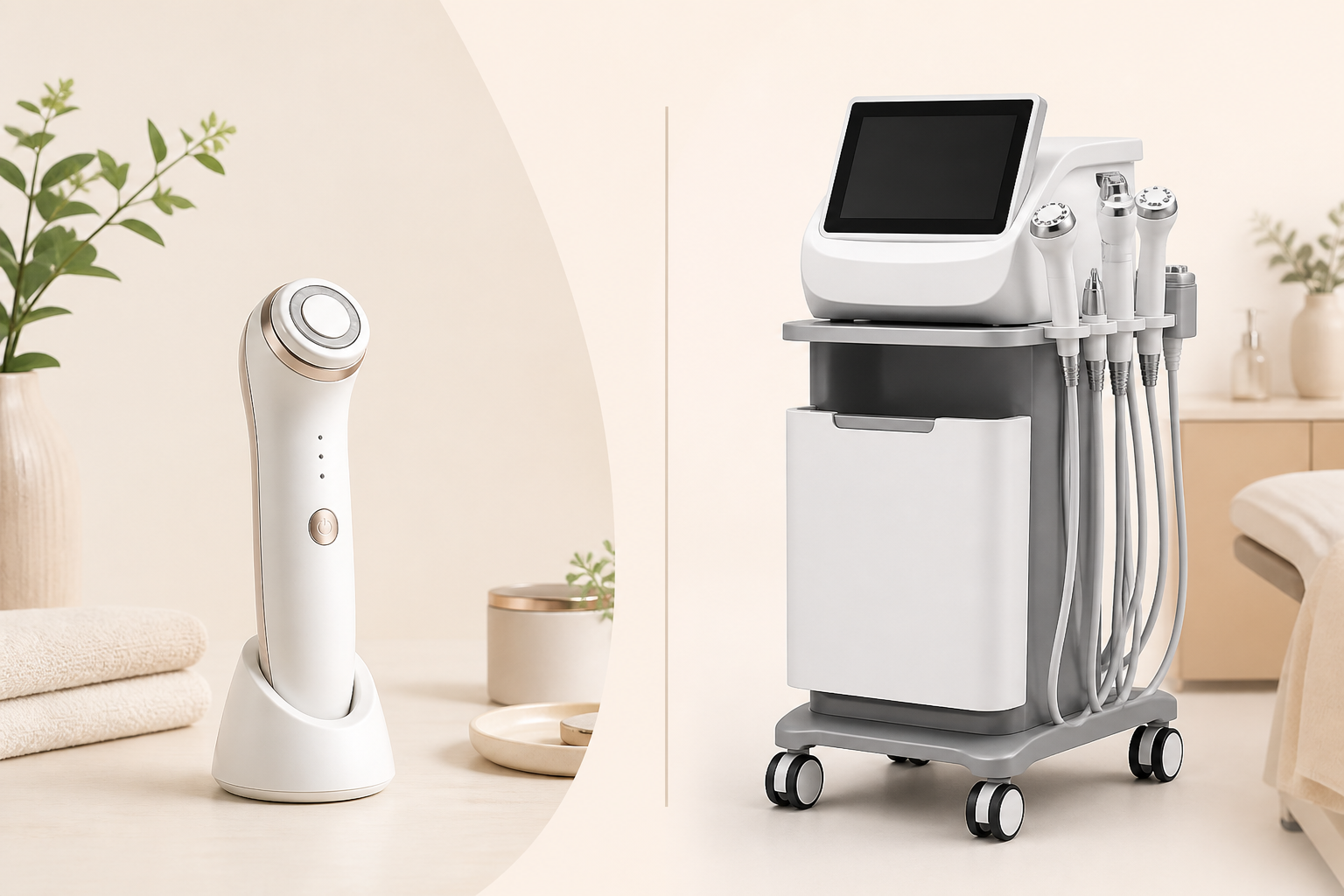
A practical comparison for buyers
| Buying factor | Professional beauty machine | Home-use beauty device |
|---|---|---|
| Intended operator | Trained beauty professional or qualified practitioner | Individual consumer |
| Usage pattern | Repeated business use across many clients | Occasional personal use |
| Controls | Wider adjustment range, presets, or operator controls | Simpler, more limited controls |
| Accessories | Multiple handpieces, probes, or treatment heads may be available | Usually a smaller accessory set |
| Workflow | Consultation, preparation, treatment, cleaning, records, and aftercare | Personal routine with a shorter setup |
| Support needs | Training, manuals, spare parts, warranty handling, and technical support | Basic instructions and consumer support |
| Purchase decision | Service menu, room, staff, compliance, and payback plan | Convenience, portability, and personal budget |
The table is a starting point, not a substitute for the specification sheet. A compact professional device can be a good choice for a small studio, while a large-looking device may still be unsuitable if the supplier cannot explain its operating limits or service support.
1. Intended use matters more than the product name
Start by writing down who will operate the machine, how often it will run, and which services it must support. A solo aesthetician working from a small room may need a portable system with a clear interface. A busy salon may need a machine that can support several appointments, quick cleaning, and consistent handpiece changes. A distributor may need a stable product family, multilingual documents, spare parts, and packaging that can be shipped safely.
Do not assume that a device described as “home use” can be placed into a professional menu simply because it appears on a manufacturer’s catalogue. Ask the supplier whether the exact model is intended for business use, what training is required, and what the warranty covers when the device is used commercially. Written answers are more useful than a sales description alone.
2. Output and adjustability are only useful when staff can control them
Buyers often compare watts, frequencies, energy levels, or other numbers first. Those figures matter, but a larger number does not automatically mean a better purchase. The useful questions are:
- What does each setting control?
- Is the displayed value input power, output power, or a nominal range?
- Can staff select a conservative starting setting and increase it gradually?
- Are the controls locked, logged, or protected against accidental changes?
- Does the manual explain the operating sequence for each handpiece?
A professional machine should help a trained operator follow a repeatable process. If the interface is difficult to understand, more adjustability can create more opportunities for inconsistent use. For a home device, limited controls may reduce complexity. For a business, the key is not maximum adjustment; it is controlled, documented adjustment.
3. Handpieces and tips affect the service menu
The number of handles or tips can change how a machine fits into daily operations. Multiple handpieces may allow a studio to cover more treatment areas or offer different service options. They also create more cleaning, storage, replacement, and training requirements.
Before buying, make a simple accessory map:
- Name each handpiece or tip.
- Record its intended use in the supplier’s manual.
- Note whether it is reusable, disposable, or replaceable.
- Confirm the cleaning and disinfection method.
- Ask for the replacement price and normal availability.
This is especially important for distributors and private-label buyers. A product may look attractive in a catalogue, but a missing accessory or a long replacement delay can create customer complaints after the sale. Ask for photos, part numbers, and a sample accessory list before you finalize the product page or quotation.
4. Workflow and room setup separate business equipment from personal equipment
Professional use involves more than switching a device on. Staff may need to confirm the client’s goals, prepare the skin or treatment area, select a mode, record settings, clean the equipment, and explain aftercare. The machine should fit the available room, trolley, power supply, ventilation, storage, and cleaning station.
Check the following before ordering:
- Overall and packed dimensions
- Weight and whether one person can move it safely
- Voltage, frequency, and plug configuration
- Heat, ventilation, or room requirements
- Screen visibility and cable length
- Cleaning access around the handpiece and control panel
- Time needed to prepare and reset the room
Home-use equipment is often easier to store, but compactness is not the only goal in a salon. A device that is awkward to clean or slow to reset may cost more in staff time than a larger, better-organized professional system.
5. Training and documentation should be part of the purchase
Ask what the supplier provides before payment, not after the machine arrives. A useful package should include the current operating manual, setup instructions, parameter guidance, cleaning instructions, suitability notices, troubleshooting steps, and a contact for technical questions. A video demonstration is helpful, but it should support the written instructions rather than replace them.
RESCUPL’s FAQ states that its product range includes professional equipment for body contouring, facial care, skin analysis, and other beauty applications. It also says the company provides training, manuals, and technical support. Treat these as supplier-provided service information and confirm what is included with the exact model, order quantity, and destination market before purchase.
For a salon, schedule staff training before selling the service. For a distributor, create a short local training pack that matches the approved product documentation. Do not rewrite technical instructions into stronger marketing claims.
6. Safety, compliance, and advertising claims need separate checks
A machine can be suitable for professional use and still require local checks before it is advertised or operated. Confirm the exact model name, manufacturer or legal entity, intended use, electrical information, test reports, declaration documents, and any registration or insurance requirements that apply in your market.
Do not treat a logo or certification mark on a product image as complete evidence. Ask for documents that match the model and the seller. Check whether the claims you plan to use are cosmetic, wellness-related, or regulated in your market. Avoid promises to diagnose, cure, remove disease, or guarantee a result. Use careful wording such as “designed for,” “may support,” or “intended for cosmetic care” only when that wording matches the approved information.
This matters even more when moving a home-use product into a professional environment. Commercial use may change the training, insurance, maintenance, and documentation expectations. Get the supplier’s written position and ask a local compliance professional when the rules are unclear.
7. Compare total cost, not only the purchase price
The real cost of a beauty machine includes more than the amount on the product page. Add shipping, customs, insurance, installation, staff training, consumables, replacement tips, maintenance, downtime, payment fees, and marketing preparation. For a distributor, also include warehouse handling, local delivery, demonstrations, returns, and technical support for your customers.
The right question is not “Which machine is cheapest?” It is “Which machine can I operate reliably and explain clearly within my service model?” A lower-cost unit may be sensible for a personal routine or a small test. A professional unit may make more sense when staff need repeatable workflows, multiple accessories, and a support path. Run a simple planning model using your own expected service price, realistic appointment volume, variable costs, and conservative utilization. Treat the result as a planning estimate, not a guaranteed return.
8. When should a salon choose a professional machine?
Choose professional equipment when most of the following are true:
- The machine will be used by trained staff.
- You are building a paid service menu around it.
- You need more than one treatment mode or accessory.
- The room has the required power, space, and cleaning setup.
- You need manuals, training, warranty support, and spare parts.
- You want a documented process that more than one operator can follow.
- You may later need distributor pricing, private labeling, or repeat supply.
RESCUPL’s catalogue currently includes professional facial-care, body-contouring, RF microneedling, shock-wave, and other equipment categories. For example, the catalogue lists a portable EMS-and-RF body-contouring system, a one-handle home-use EMS listing, multi-handle body-contouring equipment, HIFU, RF microneedling, and focused shock-wave equipment. This mix shows why buyers should compare intended use and workflow rather than assuming that every product serves the same business role.
When can a home-use device be the better choice?
A home-use device can be appropriate when the buyer wants a personal routine, has limited storage, needs occasional use, and does not plan to sell treatments to clients. It can also be useful for market research or a small internal test, provided the supplier confirms the intended use and warranty conditions.
It is usually the wrong choice when a salon expects high daily utilization, several operators, a wider treatment menu, formal client records, or distributor-level support. Do not buy a home-use device simply because it is cheaper and plan to “upgrade later” without checking whether it can legally and operationally support the service you want to sell.
A buyer’s checklist before requesting a quote
Send the supplier a short, specific brief containing:
- Your business type and destination country.
- The service or product category you are considering.
- Expected quantity: sample, single studio unit, or distribution order.
- Available room size, power supply, and portability needs.
- Required handpieces, tips, languages, and packaging.
- Training, warranty, spare-part, and after-sales questions.
- Documents needed for import, insurance, and local advertising.
- Your target delivery window and preferred shipping terms.
If you are developing a private-label range, RESCUPL’s OEM/ODM service page describes support for logo placement, packaging, interface language, accessories, specifications, and custom design. It also outlines a workflow from inquiry and design through prototype, quality checks, delivery, and technical support. Confirm current MOQ, lead time, scope, and documents in a written proposal because these details can vary by model and order.
Final recommendation
For a beauty business, buy for the workflow you intend to run, not for the lowest price or the most impressive specification. A professional machine is the better fit when trained staff will use it repeatedly and you need a supported service system. A home-use device is the better fit for personal, occasional use. Before you decide, compare the exact model’s controls, accessories, documents, operating environment, warranty, replacement parts, and total landed cost.
If you are still comparing models, review the RESCUPL professional equipment catalogue, then use the Contact page to request a model-specific quotation based on your country, quantity, service plan, and documentation needs.
Frequently asked questions
Can a home-use beauty machine be used in a salon?
Not automatically. Ask the supplier whether the exact model is intended and warranted for commercial use. Then confirm local requirements, training needs, cleaning procedures, and insurance conditions before placing it in a paid service menu.
Are professional beauty machines always more powerful?
No. Professional suitability depends on intended use, controls, workflow, documentation, support, and serviceability. Output numbers should be compared only when the supplier explains how they are measured and controlled.
What should a distributor ask a beauty machine manufacturer?
Ask for the exact model specification, product documents, accessory and spare-part list, warranty terms, training plan, packaging details, shipping documents, sample policy, and support process. Also confirm which marketing claims and images you may use in your market.
Is a portable machine professional equipment?
It can be. Portability describes the format, not the quality or intended use. Check the device’s commercial-use statement, operating limits, training, warranty, and ability to fit your workflow.
How do I compare two machines with similar prices?
Compare the complete cost and operating plan: accessories, consumables, staff time, cleaning, training, replacement parts, downtime, warranty, shipping, documents, and expected service use. The machine with the lower purchase price may not have the lower business cost.
Can RESCUPL help with private-label equipment?
RESCUPL’s OEM/ODM page describes custom branding, packaging, interface language, accessories, and equipment design support. Request a current proposal with the exact model, quantity, market, required documents, and timeline before treating any MOQ or lead-time statement as final.
Related Equipment