RF Microneedling vs. Traditional Microneedling for Professional Studios
Compare RF microneedling and traditional microneedling by technology, workflow, consumables, client fit, and buying requirements for professional studios.
RF Microneedling vs. Traditional Microneedling for Professional Studios
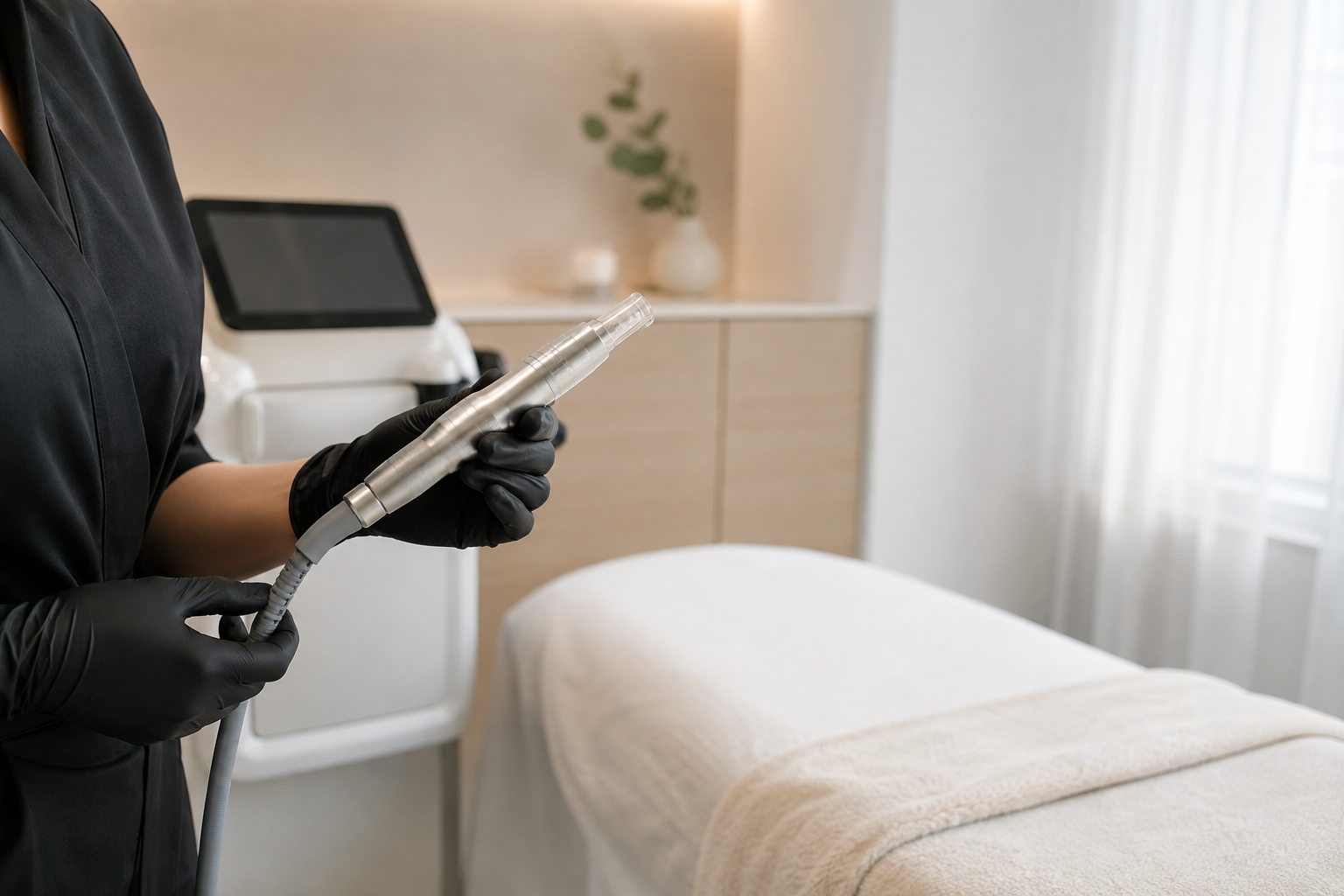
RF microneedling is not automatically a better replacement for traditional microneedling. The two services share a needle-based workflow, but they add different kinds of control: traditional microneedling creates mechanical microchannels, while RF microneedling combines controlled needle penetration with radiofrequency energy delivered at the needle tip or through a selected configuration. For a professional studio, the right choice depends on the service you want to sell, operator training, cartridge costs, local rules, client expectations, and whether the extra RF capability will be used often enough to justify the investment.
The short answer: choose by service model
Choose traditional microneedling when you want a simpler entry point, a familiar mechanical procedure, lower equipment complexity, and a service focused on surface texture and renewal. Choose RF microneedling when your studio can support a more advanced platform, model-specific training, controlled energy settings, sterile or single-use needle cartridges, and a service menu that makes use of adjustable depth and RF delivery. Some studios may eventually offer both: traditional microneedling for an accessible entry service and RF microneedling for clients seeking a more technology-led option.
The important purchasing question is not “Which technology has the strongest marketing?” It is “Which service can our team deliver consistently, explain accurately, and price with all direct costs included?”
What traditional microneedling does
Traditional microneedling uses a pen, roller, or similar handpiece with fine needles to create controlled microchannels in the skin. The intended business use is usually a straightforward mechanical service: select the appropriate cartridge, set a suitable depth, move the handpiece in a consistent pattern, and complete the approved cleaning and aftercare workflow.
Its main advantages for a studio are simplicity and accessibility. A compact pen takes little room, is easy to demonstrate, and can support a lower-cost entry service. It may fit a studio that is testing demand, has limited treatment space, or wants to train staff around a less complex platform before investing in an energy-based system.
The limitations are just as important. A traditional device does not add radiofrequency delivery, so it cannot be presented as an RF service. The operator also needs to manage needle depth, speed, pressure, cartridge selection, skin preparation, hygiene, and aftercare without using a machine feature to compensate for weak technique. A low purchase price does not remove the need for training, suitable consumables, clear documentation, and compliance with local professional requirements.
What RF microneedling adds
RF microneedling combines mechanical needle penetration with radiofrequency energy. In an insulated-needle configuration, the shaft is insulated and energy is delivered mainly from the exposed needle tip. The commercial reason to choose this format is greater control over where the RF energy is delivered, alongside adjustable needle depth and a more differentiated service proposition.
Current RESCUPL RF microneedling pages show several configurations rather than one universal specification. The EMRF M8 Microneedling Machine lists insulated gold-plated needles, 1 MHz and 2 MHz RF with a simultaneous dual-frequency mode, adjustable depth from 0.5 to 7 mm, adjustable RF release time from 100 to 900 ms, and a 15-inch touchscreen. The SK-A68 Gold RF Microneedling Device is a more compact handheld model with a 3.5-inch LCD screen, 25 insulated needles, 1 MHz, 2 MHz, and dual-frequency operation, plus M and N operating modes.
“RF microneedling” is a category, not a complete buying specification. Models may differ in needle configuration, RF frequency, depth increments, cartridge design, interface, size, and workflow. Ask for exact model documentation before comparing prices or promising a service.
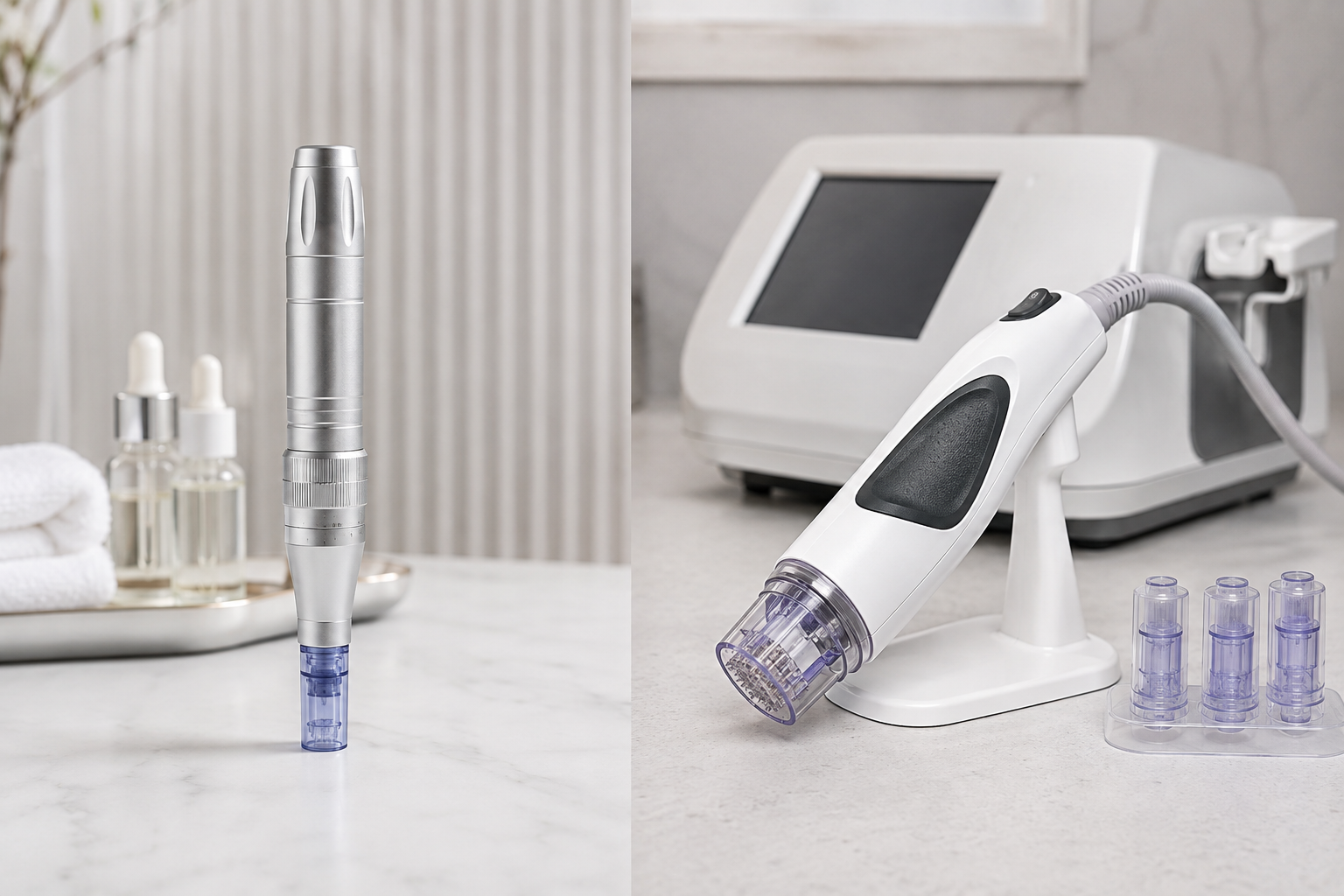
RF microneedling vs. traditional microneedling: side by side
| Buying factor | Traditional microneedling | RF microneedling |
|---|---|---|
| Main action | Mechanical microchannel creation | Mechanical microchannels plus RF energy delivery |
| Equipment complexity | Usually simpler | More settings, handpiece details, and energy controls |
| Typical entry cost | Often lower | Usually higher because of RF generation and controls |
| Consumables | Needle cartridges or tips | RF-compatible needle cartridges or tips; confirm exact replacement terms |
| Operator requirements | Depth, movement, pressure, hygiene, and aftercare | All traditional skills plus RF settings, contact, energy delivery, and model-specific safety procedures |
| Service positioning | Accessible texture and renewal service | More technology-led service for studios with suitable training and demand |
| Space needs | Pen systems can be compact | Handheld or console options vary widely; check the actual footprint |
| Key supplier question | Cartridge quality and replacement supply | Needle insulation, RF output, depth control, cartridge supply, training, and documentation |
This table is a starting point, not a clinical protocol. The final service scope must follow the exact device instructions and the requirements of the country where the machine will be used.
Compare the client and appointment experience
Clients often use “microneedling” as a broad label, but their expectations may be different. Some want a familiar, lower-commitment facial service. Others ask specifically about RF, adjustable depth, skin-firming support, or a higher-spec device. Your consultation should identify the request without turning a technology difference into an unsupported outcome promise.
For traditional microneedling, explain that the service uses controlled mechanical contact and that visible redness or sensitivity can occur. For RF microneedling, explain the added energy component, operator training, expected sensations, and aftercare. Do not copy a supplier’s recovery time or recommended sessions into public copy without checking the exact model, protocol, and local rules.
Appointment length also affects profitability. Include consultation, preparation, cleaning, consent, notes, aftercare, cartridge checks, and operator monitoring in the room-time calculation—not only active device time.
When traditional microneedling is the better first purchase
Traditional microneedling may be the more sensible first purchase when demand is untested, the customer base is price-sensitive, the room or mobile workflow is restrictive, or the team is still establishing a reliable hygiene and documentation routine. A compact pen can validate bookings, staff confidence, consultation language, and repeat-visit behavior before the studio adds RF complexity. It may also be easier to explain and store, but cartridge and labor costs still need to be calculated. The machine cannot replace disciplined preparation, approved cleaning, consent, record-keeping, and aftercare.
When RF microneedling is worth evaluating
RF microneedling deserves consideration when the studio already has demand for professional microneedling or RF-related services and can support the additional requirements. It may be a fit when:
- the team wants one platform with adjustable needle depth and RF control;
- the service menu needs a higher-value, technology-led option;
- the studio has enough appointment demand to use the extra capability;
- operators can complete model-specific training and follow the supplied instructions;
- the business can track cartridge use, downtime, maintenance, and client feedback;
- the local market and professional rules permit the planned service and advertising claims.
RESCUPL currently lists multiple RF microneedle machines, including the compact SK-A68, the EMRF M8 platform, and other catalogue options. The right comparison should begin with the exact service plan: face only or face and body, one operator or several, portable or fixed room, retail purchase or bulk distribution, and standard branding or private label.
The costs buyers often miss
Equipment price is only the first line in the budget. Build a per-session estimate using:
Full session cost = equipment allocation + cartridge or tip cost + staff time + room time + cleaning and preparation + payment fees + maintenance allowance + marketing allocation
For traditional microneedling, the cartridge replacement schedule and the number of cartridges used per appointment are central. For RF microneedling, confirm whether each cartridge is disposable, how it is packaged, which needle configurations are available, and whether replacement cartridges remain available after the initial order.
Also check whether the quotation includes the handpiece, foot pedal, grounding accessories where applicable, power cable, case, starter cartridges, user documentation, and training. A low headline price may exclude items that are essential to the service. For a distributor or private-label brand, add packaging, language changes, sample approval, import costs, and local support materials.
Do not use a supplier’s ROI badge as your forecast. The live RESCUPL product pages show retail prices for some models, but your actual economics will depend on local pricing, utilization, taxes, consumables, staffing, and service rules. Model a conservative booking scenario before ordering multiple units.
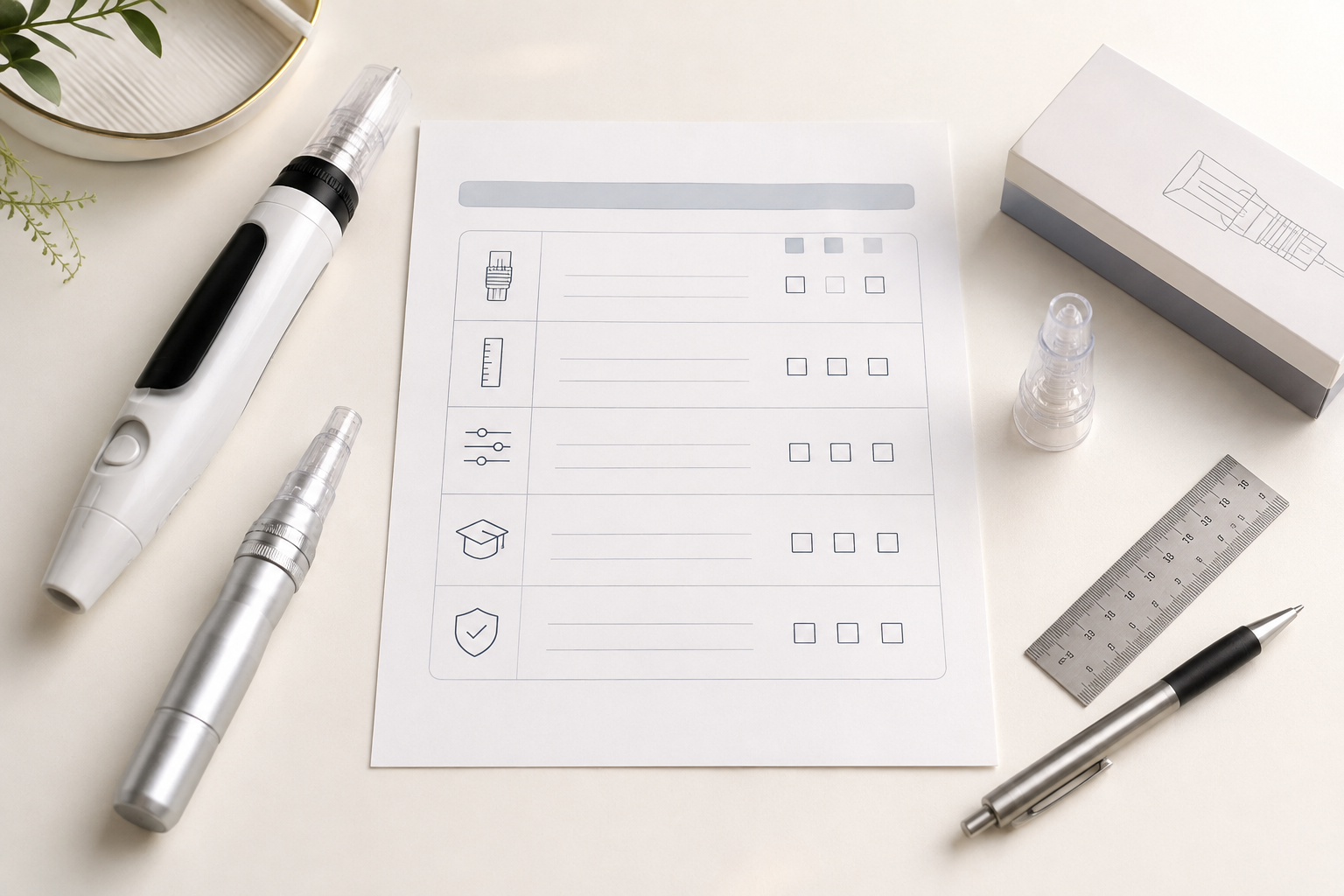
What to inspect before ordering an RF microneedling machine
Ask the supplier for a complete, model-specific answer to these questions:
- What is the exact RF configuration: monopolar, bipolar, or another arrangement?
- Are the needles insulated, non-insulated, or available in both options?
- What is the real adjustable depth range, and what are the depth increments for facial and body use?
- Which RF frequencies, power ranges, pulse or release controls, and operating modes are available?
- How are cartridges identified, stored, opened, and replaced?
- What is included in operator training, and is training available in the language of the target market?
- Which documents describe setup, cleaning, maintenance, suitability notices, and troubleshooting?
- What warranty applies to the main unit, handpiece, screen, and power components?
- How are replacement parts and cartridges ordered after the first shipment?
- Can the supplier provide a sample unit or a verified demonstration before a bulk order?
If the answer is only a brochure, keep asking. A credible purchase decision needs the actual configuration and operating documents, not impressive words.
Build a two-tier service menu responsibly
Studios that offer both technologies should make the difference easy to understand. One menu item can be a traditional microneedling service with a clear mechanical description. Another can be an RF microneedling service that explains the added energy component, the consultation process, the operator qualification, and the model-specific aftercare.
Do not make the RF service sound automatically superior for every client. Instead, describe who it is designed for, what the appointment includes, what the client should expect, and when the studio may recommend another option or referral. This improves trust and gives staff a consistent explanation.
For distributors, the same principle applies to product pages and sales materials. Separate verified specifications from suggested use cases. Avoid turning a factory description into a guaranteed result, universal skin-type claim, or medical statement. Ask the manufacturer to approve the final technical and regulatory wording for the destination market.
Final decision checklist
Before buying, confirm that:
- you have identified a real client demand for the service;
- the equipment matches the room, power supply, operator count, and appointment length;
- all cartridges, tips, and replacement parts are available under clear terms;
- staff training covers the exact model, not just general microneedling;
- the cleaning, consent, documentation, and aftercare workflow is ready;
- the price model includes the complete appointment and direct costs;
- the public claims match the equipment documents and local requirements;
- the supplier has provided warranty, support, and troubleshooting details;
- a sample or single-unit test is possible before a larger order;
- you know whether your next step is a retail purchase, distributor quote, or OEM/ODM discussion.
Conclusion
Traditional microneedling is usually the simpler way to start a professional needle-based service. RF microneedling can offer a more configurable and differentiated platform, but it also brings more settings, documentation, training, and cost questions. The best purchase is the one your team can operate consistently and your business can fill with real appointments.
If you are comparing RF microneedling machines for a beauty studio, clinic, distribution business, or private-label project, review the 2 in 1 RF Microneedling Machine, SK-A68 Gold RF Microneedling Device, and EMRF M8 Microneedling Machine to compare current configurations. Distributors and private-label buyers can review OEM/ODM Services, while studios ready to discuss a purchase can contact RESCUPL with their market, service menu, expected volume, and support requirements. For broader technology context, see the existing RF vs. HIFU vs. Microneedling guide.
Frequently asked questions
Is RF microneedling better than traditional microneedling?
Not for every studio or every client. RF microneedling adds radiofrequency energy and more controls, while traditional microneedling is simpler and may have a lower entry cost. Choose based on service demand, operator capability, local requirements, and full operating cost.
Can a traditional microneedling pen provide RF microneedling?
No. A traditional pen creates mechanical microchannels but does not deliver radiofrequency energy. RF microneedling requires a device and cartridge system designed for RF delivery.
Are RF microneedling cartridges more expensive?
The answer depends on the model and cartridge design. Ask for the exact cartridge price, packaging, replacement schedule, minimum order, and expected supply availability. Include the cost in every service calculation.
How deep should a professional microneedling machine go?
There is no single correct depth for every area, client, or device. Compare the manufacturer’s stated range with the intended service, operator training, and local requirements. Do not select a machine only because it advertises a deeper maximum setting.
Can a small beauty studio use RF microneedling equipment?
Potentially, if the footprint, power supply, training, workflow, and demand fit the studio. RESCUPL lists a compact SK-A68 handheld RF microneedling device as well as larger touchscreen platforms, so compare the actual model rather than the category name.
Does RESCUPL offer OEM or ODM RF microneedling equipment?
RESCUPL’s OEM/ODM service page describes custom support for product configuration, branding, language, interface, packaging, samples, and quality checks. Confirm the exact RF configuration, documentation, minimum order, timeline, and market requirements in writing before committing.
Related Equipment