Unoisetion Cavitation 2.0 vs. Traditional 40K Cavitation: A Buyer’s Guide for 2026
Compare Unoisetion Cavitation 2.0 and traditional 40K cavitation from an OEM buyer’s perspective. Learn what to verify before choosing equipment for a salon or distribution line.
Unoisetion Cavitation 2.0 vs. Traditional 40K Cavitation: A Buyer’s Guide for 2026
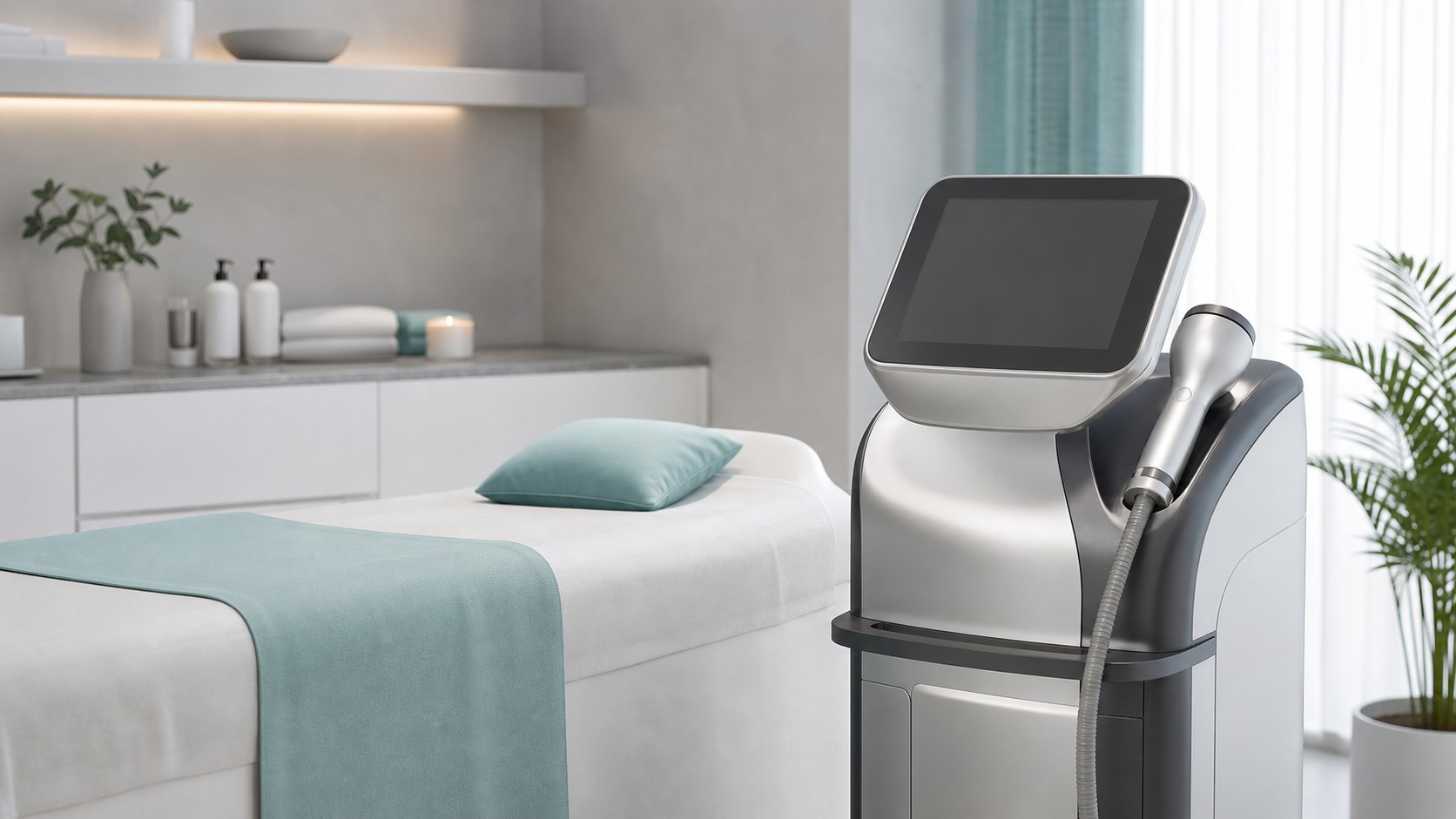
Professional cavitation equipment in a modern treatment-room setting.
If you source, distribute, or private-label body contouring equipment, you may have seen more buyers asking about “Unoisetion Cavitation 2.0.” The phrase sounds like a new generation of 40K cavitation, but the label alone does not tell you what is inside the machine.
For a salon owner, the practical questions are simple: Is the machine quieter? Does it deliver stable output during a session? Can staff operate it consistently? For an OEM or distribution buyer, there is one more question: can the manufacturer prove the difference with documentation and testing?
This guide explains the buyer-relevant difference between traditional 40K cavitation and equipment marketed as Unoisetion Cavitation 2.0. It also shows what to ask before you add the technology to a product catalog or private-label range.
Quick answer: what is the difference?
Traditional 40K cavitation refers to body contouring equipment that uses low-frequency ultrasound, commonly around 40 kHz. “Unoisetion Cavitation 2.0” is better treated as a market term for a quieter or more actively controlled cavitation design—not as a universal technical standard.
Some manufacturers may use real-time frequency tracking or automatic calibration to reduce output drift and operating noise. Others may use the phrase mainly to describe a quieter handpiece, improved housing, or a revised control system. The only reliable way to compare two machines is to review the actual frequency-control method, test conditions, output data, and service documentation.
That distinction matters because a new name is not the same thing as a verified engineering upgrade.
How traditional 40K cavitation works
Traditional cavitation equipment uses a handpiece to deliver low-frequency ultrasound to a selected body area. In salon equipment, 40 kHz is a familiar market specification and is often combined with other body-contouring functions such as RF, vacuum, roller massage, or light-assisted modes.
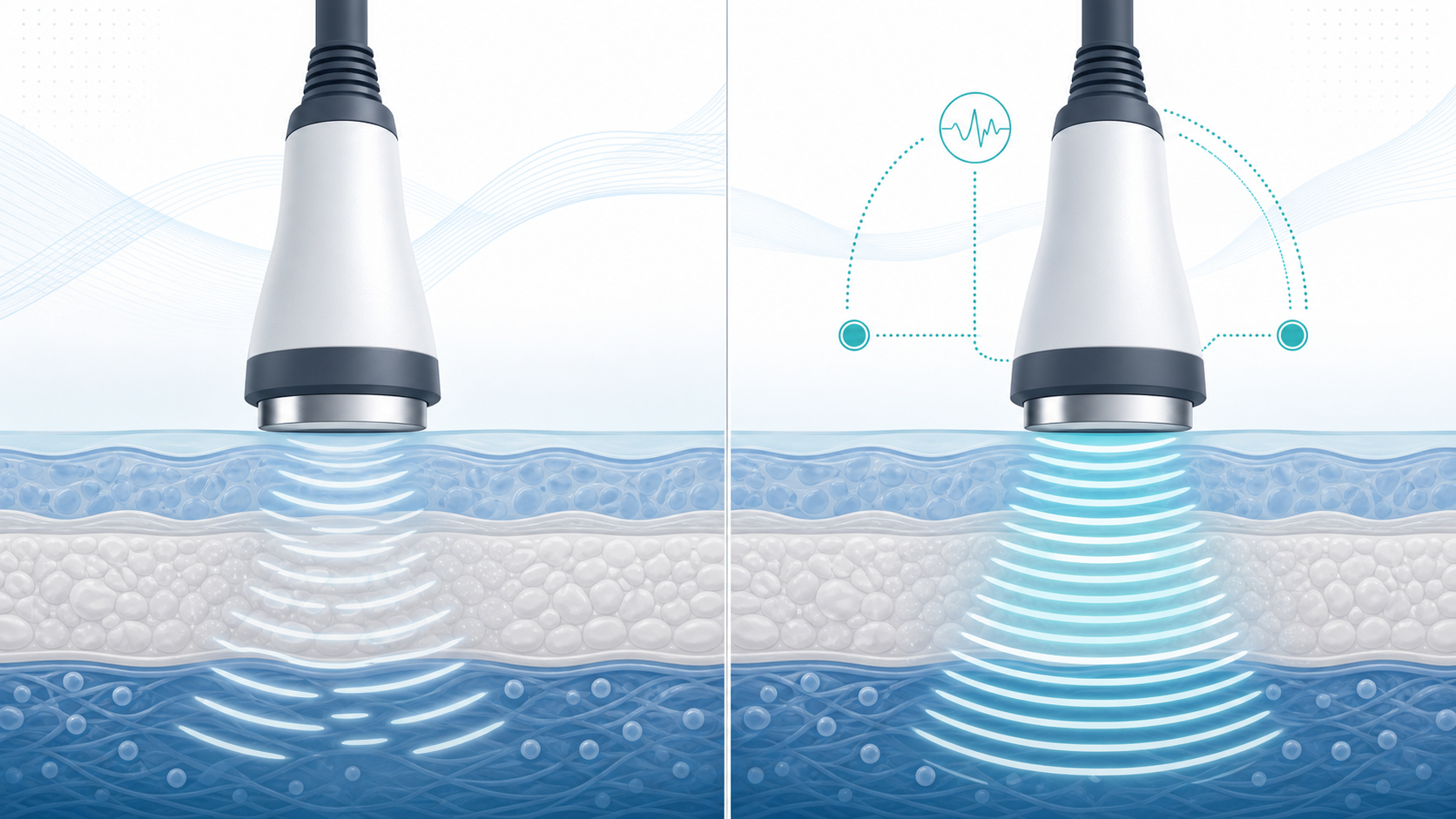
Compare the actual control and handpiece changes—not only the product name.
From a business perspective, the value of a traditional cavitation platform is flexibility. A salon can build several body-shaping service packages around one machine, while a distributor can offer a familiar technology to a broad range of customers. RESCUPL’s 6-in-1 Cavitation Lipo Laser Machine is an example of this multifunction positioning.
The main operating trade-off is that the handpiece can produce a noticeable hum or buzzing sound. Output may also change as the handpiece and electronics warm up, depending on the design and how well the system controls its operating frequency.
Noise and drift are not automatically signs that a machine is unsafe or unsuitable. They are buyer-experience and consistency questions that should be measured under defined conditions.
What “Unoisetion Cavitation 2.0” may change
In current buyer conversations, the term is generally used to describe a quieter cavitation experience and more stable frequency control. A genuine upgrade may include some combination of:
automatic frequency tracking during operation;
compensation for changes caused by handpiece temperature or load;
a redesigned handpiece or internal acoustic structure;
more consistent energy delivery across a treatment session;
clearer calibration and quality-control records.
These features could make the treatment room feel more premium and make the product easier for a distributor to demonstrate. But the word “Unoisetion” by itself does not prove that all of these features are present.
For buyers, the right question is not “Does this model use the new name?” It is “What changed in the hardware and control system, and how was that change measured?”
Traditional 40K vs. Unoisetion Cavitation 2.0
Buyer factor | Traditional 40K cavitation | Equipment marketed as Unoisetion Cavitation 2.0 |
|---|---|---|
Core technology | Low-frequency ultrasonic cavitation | The same basic cavitation approach, with claimed noise or control improvements |
Operating sound | Often a noticeable hum or buzz | May be quieter, depending on the handpiece and control design |
Frequency control | May be fixed or less actively corrected | May include automatic tracking or calibration; verify with supplier data |
Treatment consistency | Depends on the stability of the electronics and handpiece | Potentially more stable across a session; do not assume without test records |
Sales message | Familiar, easy to explain, widely recognized | A newer differentiation angle for premium or upgraded equipment |
OEM complexity | Usually simpler to configure | May require more advanced control hardware, firmware, and testing |
Best buying signal | Clear specifications, stable samples, reliable support | Measured noise and frequency data, not the label alone |
Why quiet operation matters to salons
Lower operating noise can improve the client experience, especially in treatment rooms where the client is awake and the session is hands-on. A quieter machine may also make it easier for the therapist to explain the service and maintain a more relaxed room atmosphere.
However, “quiet” should not be treated as a substitute for output stability, handpiece quality, or operator training. Ask how the noise level was measured: at what distance, with which handpiece, at which power setting, and in what room. A number without test conditions is difficult to compare.
For salons that want more than one body-contouring service, it may be useful to compare a dedicated cavitation platform with a broader body contouring equipment collection. A multifunction system may offer better menu flexibility, while a more focused machine may be easier to position around one premium service.
What OEM and private-label buyers should verify
Before approving a sample or printing a new product catalog, ask the manufacturer for answers to these questions:
1. What exactly does the control system do?
Ask whether the machine uses fixed-frequency driving, automatic frequency tracking, closed-loop calibration, or another control method. Request a plain-language explanation as well as the technical specification.
2. What is the working frequency range?
“40K” may be used as a rounded market description. Ask for the operating range, tolerance, and the conditions under which the frequency is measured.
3. How is noise measured?
Request before-and-after or model-to-model measurements in decibels. The supplier should state the measurement distance, room conditions, handpiece, power setting, and whether the machine was measured with a load.
4. Does the output remain stable during a full session?
Ask for a session-length test rather than a reading taken only at startup. A useful report should show how the frequency and output behave as the handpiece warms up.
5. Can the supplier provide a sample and test documents?
Do not rely only on a product listing. Request a working sample, user manual, wiring or control description where appropriate, calibration records, warranty terms, spare-part availability, and compliance documents for your target market.
6. What can be customized?
Private-label buyers should confirm whether the supplier can customize the shell, logo, startup screen, interface language, packaging, accessories, and user documentation. RESCUPL’s OEM/ODM service covers product appearance, functions and specifications, interface, branding, packaging, prototyping, quality control, and technical support.
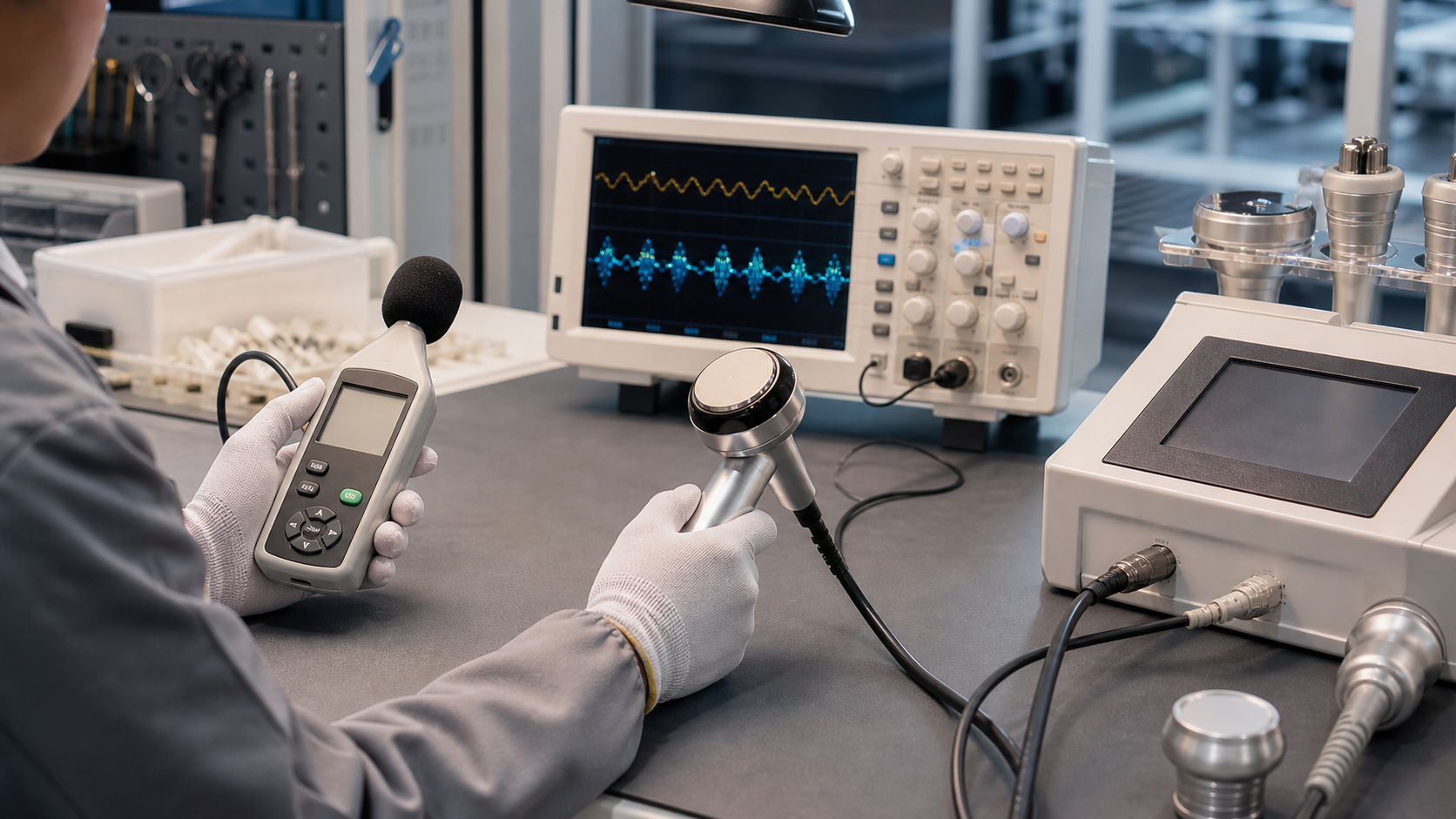
Supplier verification should include defined test conditions and full-session measurements.
Which type of machine fits your business?
Traditional 40K cavitation is often a sensible choice when your customers want a familiar, flexible machine that can support several body-contouring packages. It may be easier to train, explain, and sell across a wide salon network.
An Unoisetion-marketed machine may be worth considering when quieter operation is important to your target market or when your brand needs a clear upgrade story. The decision becomes stronger when the supplier can demonstrate measurable improvements rather than only provide new terminology.
If you want to compare cavitation with a cooling-based system, look at the 360 Cryolipolysis Machine for Body Contouring. It represents a different product direction: cooling-based contouring combined with other body-care functions. That comparison can help distributors decide whether their market is asking for a quieter familiar service or a more specialized equipment category.
For buyers who already have a clear treatment menu, a Rotary Negative Pressure RF Machine may also be relevant when the commercial focus is body contouring and skin-firming rather than cavitation alone.
Common buying mistakes
The first mistake is treating a marketing name as a regulated specification. “Unoisetion Cavitation 2.0” may describe a real product feature, but it is not enough information to compare suppliers.
The second mistake is comparing only the headline frequency. Two machines can both be described as 40K while differing in handpiece construction, control stability, acoustic design, maintenance requirements, and after-sales support.
The third mistake is asking for a lower noise figure without defining how it should be measured. If the test setup changes between suppliers, the numbers are not meaningful.
The fourth mistake is buying a sample before checking the full product line. Confirm whether the supplier can keep the same parts, firmware, documentation, and quality standard when the order moves from one sample to production.

Choose the platform that matches the service menu and target market.
Final takeaway
Unoisetion Cavitation 2.0 should be evaluated as a possible refinement of traditional 40K cavitation, not accepted as proof of a new technology. The strongest buying decision comes from comparing the actual control method, full-session stability, measured operating noise, handpiece design, documentation, and support package.
For a salon, the practical benefit may be a calmer client experience. For a distributor or private-label brand, the bigger opportunity is a product that can demonstrate its difference clearly and support a credible sales story.
If you are sourcing cavitation, cryolipolysis, RF, or combined body-contouring equipment, contact RESCUPL for model guidance and distributor pricing. Share your target market, expected order volume, service menu, and customization requirements so the right platform can be compared on more than a product name.
Frequently asked questions
Is Unoisetion Cavitation 2.0 a different treatment principle?
Usually, it is presented as a refinement of ultrasonic cavitation rather than a completely different principle. Ask the supplier to explain the actual control and handpiece changes.
Is a quieter cavitation machine automatically better?
No. Lower noise can improve the client experience, but buyers should also check output stability, handpiece quality, documentation, training, warranty, and spare parts.
Is traditional 40K cavitation still relevant in 2026?
Yes. It remains a familiar category for salons and distributors. The right choice depends on the service menu, target customers, machine design, and supplier support.
What should a distributor request before placing an OEM order?
Request a sample, technical specifications, noise and stability test conditions, user documentation, compliance documents for the target market, warranty terms, spare-part information, and a clear description of branding and packaging options.
Can a cavitation machine be combined with other body-contouring functions?
Yes. Many platforms combine cavitation with RF, vacuum, massage, or light-assisted functions. Review each function separately and confirm that the combined configuration matches the services your customers actually sell.
Related Equipment