Private Label Beauty Machines: From Logo Design to Delivery
Learn how private-label beauty machines move from product selection and logo design to samples, quality checks, packaging, and delivery.
Private Label Beauty Machines: From Logo Design to Delivery
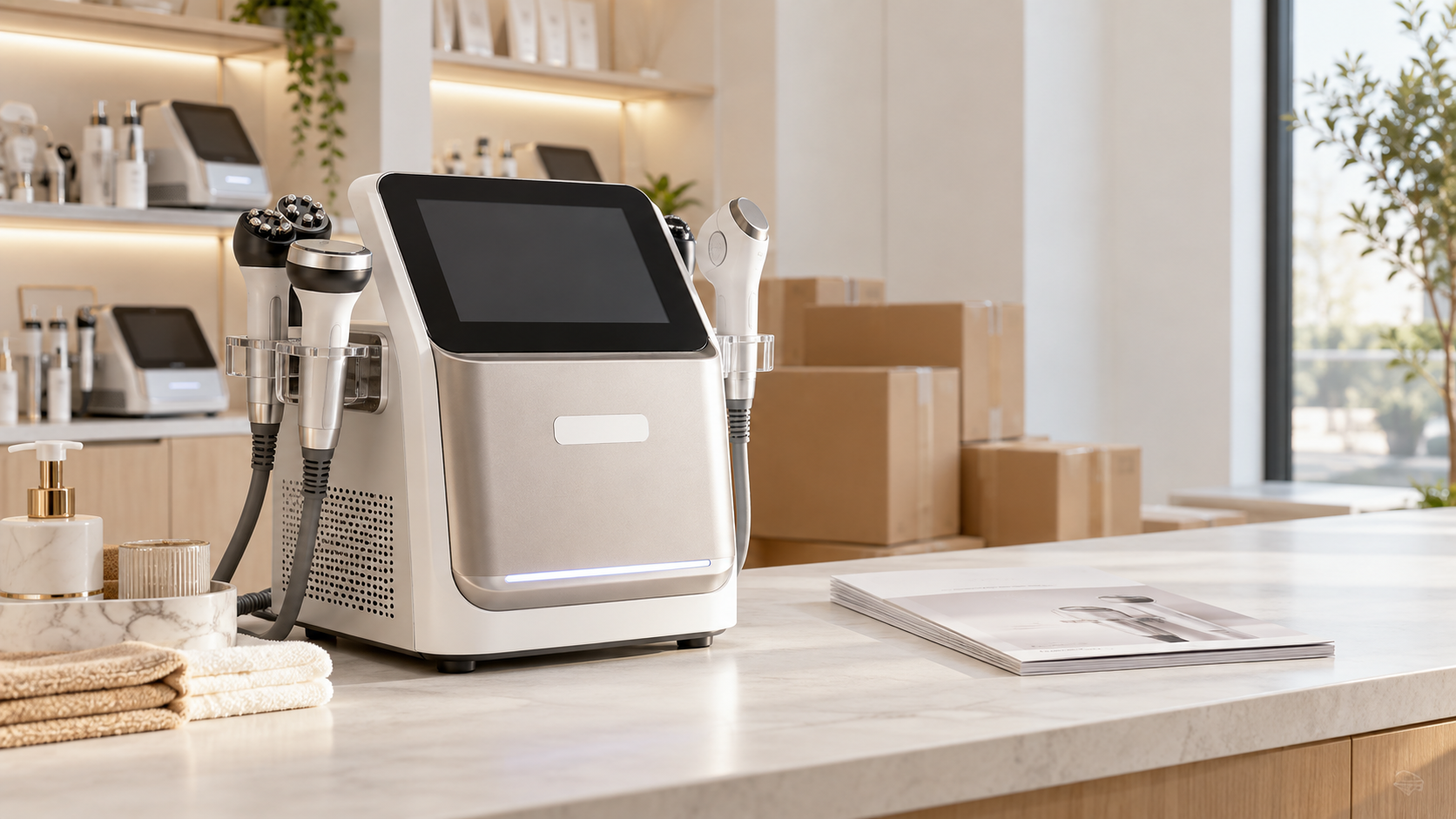
If you are building a beauty equipment brand, private label is more than putting a logo on an existing machine. A workable project connects the right equipment platform with your target service, brand identity, interface language, packaging, documentation, quality checks, and delivery plan. Start by defining the customer and use case, then choose a proven configuration before requesting custom changes. Ask for a written quote that separates the sample, branding, packaging, production, shipping, and support items. Review a physical or documented sample before mass production, confirm the final artwork and specifications in writing, and agree on inspection and after-sales responsibilities before you pay a deposit.
What private label means in beauty equipment
Private label beauty machines are professional devices manufactured for sale under your brand name. The underlying platform may already exist, while the visible brand elements and selected configuration are adapted to your market. Depending on the supplier and project, this can include the logo on the machine body, startup screen, packaging, user manual, interface language, accessories, or even the outer shell.
Private label is often used interchangeably with OEM, but the project can involve different levels of customization. A standard private-label order may use an existing machine with your logo and packaging. A deeper OEM project may change the controls, accessories, software language, or appearance. ODM usually involves choosing from a manufacturer's existing design and adapting it for your brand. The commercial labels matter less than the actual deliverables. Ask the supplier to describe exactly what will change, what will remain standard, and what must be approved before production.
The goal is not maximum customization. The goal is a machine that your team can sell, explain, operate, service, and reorder consistently.
Step 1: Define the business before choosing the machine
Start with the service and customer, not the logo. Write a short project brief that answers:
- Who will use the machine: your own studio, a distributor's customers, or both?
- Which service category will it support: body contouring, facial care, skin analysis, hair removal, or another professional use?
- What training level will operators have?
- Will the machine be used in a small treatment room, a multi-room clinic, or a distributor showroom?
- Which countries will receive the machine, and what language, plug, voltage, labeling, and documentation requirements apply?
- Do you need a small pilot order, a repeatable catalogue item, or an exclusive market project?
This brief prevents a common mistake: paying for a visually impressive custom machine that does not fit the service menu or sales channel. A distributor may need simple demonstrations, durable packaging, spare-parts access, and a repeatable configuration. A studio may care more about footprint, workflow, accessories, and staff training. A new brand may need a coherent visual system across several device categories rather than one heavily modified product.
Step 2: Choose a stable platform and define the customization level
Before asking for a new shell or interface, compare the supplier's current professional beauty equipment catalogue. Look for a platform with a clear purpose, understandable controls, available accessories, and a service workflow your team can explain. Ask for the exact model name, configuration, included handpieces or applicators, power requirements, dimensions, warranty terms, and replacement-part process.
Then classify each requested change as standard, configurable, or new development:
| Project item | Questions to ask the supplier |
|---|---|
| Machine platform | Which existing model is the base? What is included in the standard version? |
| Appearance | Is the logo printed, engraved, backlit, or shown on the startup screen? What artwork format is needed? |
| Interface | Which languages, labels, presets, and safety messages can be changed? |
| Accessories | Are the handpieces, probes, straps, tips, or cables standard or custom? |
| Packaging | Can the carton, foam, labels, manual, and barcode be branded? |
| Shell or structure | Is this a cosmetic change or a new engineering project? |
| Documentation | Which manuals, certificates, test records, and declarations are supplied for the exact model? |
Do not assume that a logo change also changes the software, packaging, warranty, or technical documents. Put each deliverable in the quotation and approval record.
Step 3: Build a useful brand system
Good private labeling makes the product easier to recognize and easier to sell. It does not require decoration on every surface. Create a simple brand system for the machine body, screen, packaging, manual, and sales materials.
Use the same spelling, color references, logo clear space, and product naming across the files. Decide whether the product should carry your brand only or show a manufacturing reference where required by local rules. Check that the logo remains legible on a curved panel and at the small size used on accessories or cartons.
Interface language deserves special attention. Translate operating labels and safety instructions for the actual market; do not paste marketing copy into a control screen. Ask to review screenshots or a working sample. Confirm whether the interface has fixed text, editable labels, service presets, or software limitations. If the machine will be sold through distributors, prepare a consistent product name and short explanation they can reuse.
Packaging should protect the machine as well as communicate the brand. Confirm the outer carton dimensions, internal protection, accessory placement, warning labels, serial-number area, and shipping marks. A beautiful box that does not protect handles, screens, or cables is not a successful branding project.
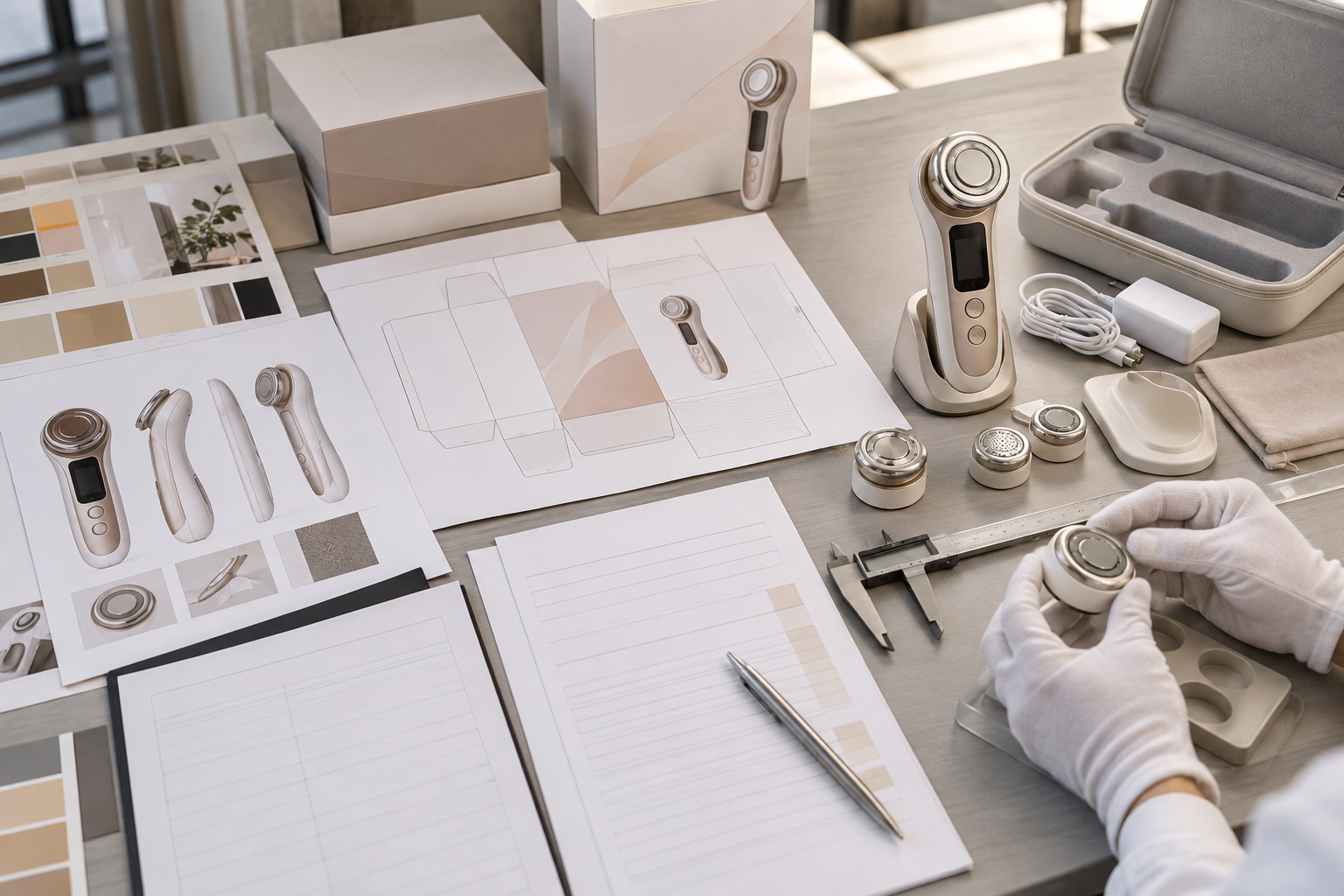
Step 4: Ask for a sample and approve it in stages
The sample stage is where most avoidable misunderstandings can be found. Ask what type of sample you will receive: a visual mockup, a branded shell, a working machine, or the final production configuration. These are not equivalent.
Use a written approval sequence:
- Approve the project brief and base model.
- Approve the logo placement, colors, product name, and packaging artwork.
- Review the interface language and key screens.
- Test or inspect the sample configuration, accessories, and included documents.
- Record changes, open questions, and the final approval date.
Keep the approved artwork, specifications, photos, videos, and sample notes together. If a change is requested after approval, ask whether it affects the price, lead time, minimum order, or compliance documents. A sample is not just a marketing photo; it is a reference for what the production team is expected to make.
Step 5: Check quality and documentation before delivery
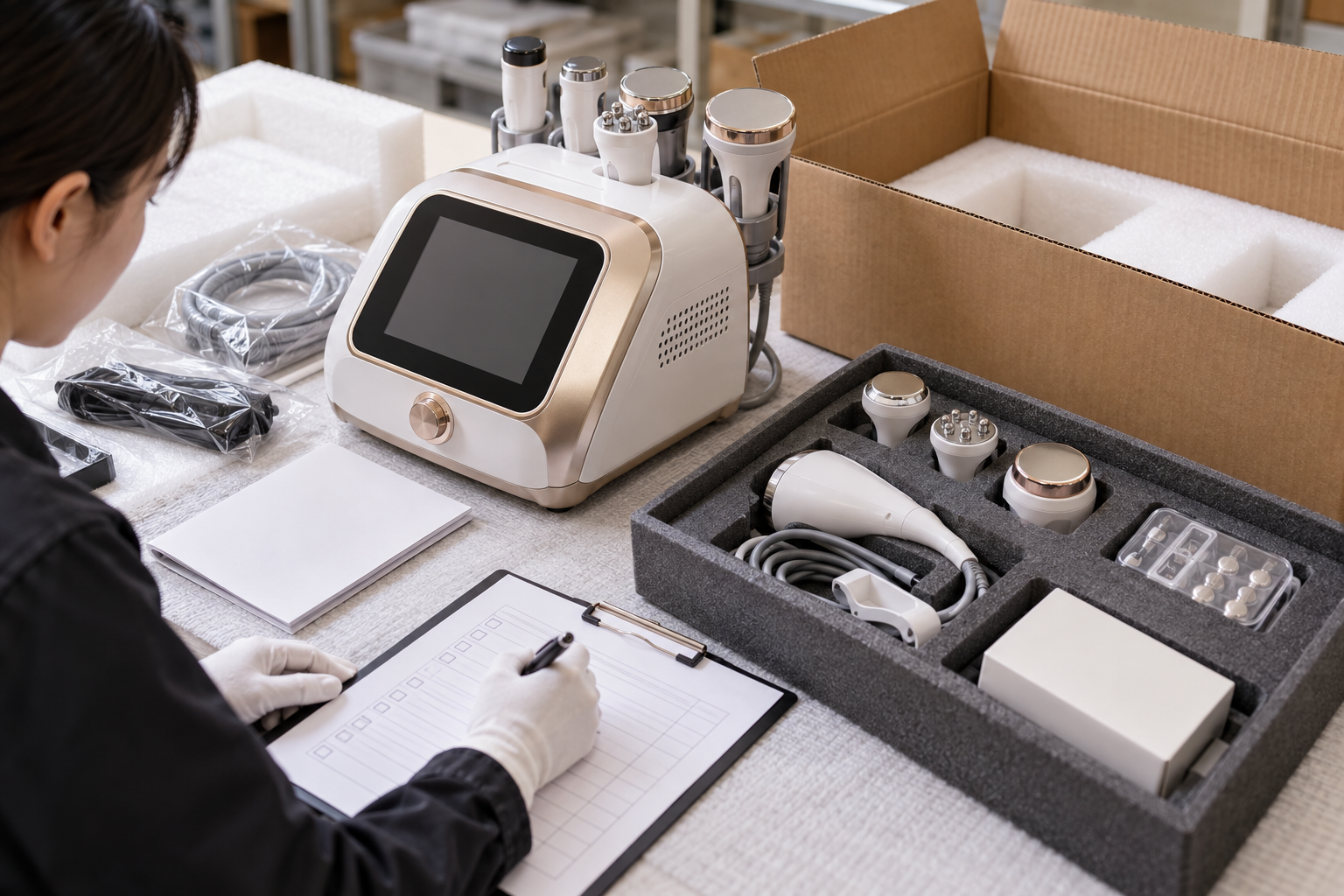
Private-label buyers should check more than appearance. Ask how the supplier verifies the incoming components, assembly, software, accessories, electrical safety, and final packing. Request the quality records that are available for the exact model and configuration. If the supplier describes a factory test, ask what is tested, for how long, and how the result is recorded.
Also confirm the document set needed for your market and sales channel. Depending on the product and destination, this may include a user manual, packing list, commercial invoice, product specifications, test reports, declarations, labels, warranty terms, and shipping information. A general company certificate is not automatically proof that every customized configuration has the same documentation. Match each document to the model, brand, and destination.
Before shipment, confirm:
- The final machine, logo, screen, accessories, and packaging match the approved sample.
- The quantity and serial numbers are recorded.
- The operating manual uses the correct language and product name.
- The carton, foam, and accessory packing are suitable for the shipping method.
- The quotation identifies who handles freight, customs information, import duties, and local compliance.
- The warranty start date, exclusions, spare-parts process, and technical-support channel are clear.
RESCUPL's current OEM/ODM page describes a workflow covering inquiry, design review, prototype approval, quality control, delivery, and ongoing support. It also describes logo and packaging branding, interface and language customization, and a 72-hour continuous-operation quality check. Treat these as current service descriptions to confirm for the exact project, not as a substitute for a model-specific quotation or destination review.
Step 6: Calculate the real launch cost
The machine price is only one part of a private-label launch. Build a cost sheet with separate lines for:
- Sample and prototype charges
- Logo, artwork, packaging, and manual preparation
- Machine, accessories, and spare parts
- Inspection or testing requested by your market
- Freight, insurance, customs, duties, and local delivery
- Translation, training, demonstrations, and sales material
- Warranty reserve and after-sales support
- Distributor margin or studio setup cost
Do not compare two suppliers using only the unit price. One quote may include branded packaging and a working sample; another may charge those items separately. A lower price can also become expensive if accessories, documents, or replacement parts are unclear.
For a distributor, calculate the landed cost per sellable unit and the cost of keeping stock. For a salon or medspa, calculate the cost of the full service setup, including room time, staff training, consumables, maintenance, and the number of appointments needed to support the investment. Keep planning figures separate from verified supplier costs and local market prices. For a related service-pricing framework, see How to Price Beauty Machine Services Without Guessing.
Common mistakes to avoid
The first mistake is customizing too early. Confirm that the base machine fits your market before investing in a new shell or software request.
The second is approving from a single image. Ask for photos or video of the actual sample, screen, accessories, packaging, and labels.
The third is treating MOQ as the only commercial condition. A small order may still have sample charges, artwork fees, limited customization, or different support terms. Confirm the complete order condition in writing.
The fourth is leaving after-sales support until after delivery. Ask who will answer technical questions, how faults are diagnosed, which parts are replaceable, and how warranty decisions are made.
The fifth is selling claims that the supplier has not documented for your market. Keep product descriptions within the approved specification, applicable rules, and evidence you can show customers or distributors.
When private label is the right choice
Private label can be a good fit when you already understand the customer, want a repeatable product line, and can support the brand after the first order. It may be less suitable when you are still testing the category, do not have a service or distribution plan, or cannot review samples and documentation.
For an early-stage brand, start with one or two well-defined products and a small pilot. Measure operator feedback, customer questions, delivery damage, support requests, and reorder interest before expanding the range. For an established distributor, a shared design system and documented product configuration can make future orders easier to compare and train.
Final private-label buyer checklist
Before confirming production, make sure you can answer yes to these questions:
- Do we know the target customer, service, market, and operator?
- Is the base model and included configuration written down?
- Are logo, interface, packaging, manual, accessories, and shell changes listed separately?
- Have we reviewed and approved the relevant sample or working evidence?
- Do the documents match the exact model and destination?
- Are quality checks and shipment checks defined?
- Are lead time, payment stages, MOQ, freight, duties, warranty, and support clear?
- Can we sell and support the machine after delivery?
If any answer is no, pause the order and ask for clarification. To discuss a specific private-label project, contact RESCUPL. A private-label project succeeds when the commercial promise, physical product, documents, and support process all describe the same machine.
FAQ
What is the difference between private label and OEM beauty machines?
Private label usually means selling an existing product under your brand with selected branding changes. OEM is often used for a broader customization project, such as changes to the interface, accessories, specifications, or shell. Ask the supplier to define the actual deliverables rather than relying on the label alone.
Can I put my logo on a beauty machine and its packaging?
Many suppliers offer logo and packaging branding, but the method, artwork requirements, minimum quantity, and cost vary. Confirm logo placement, production proof, packaging files, and whether the startup screen or user manual can also be branded.
Should I order a sample before private-label production?
Yes. A sample or working configuration gives you a chance to check the appearance, controls, accessories, packaging, documents, and operator workflow before a larger order. Record the approved version so later production can be compared against it.
What should I ask a private-label supplier about delivery?
Ask for the estimated production timeline, what starts the clock, packaging completion, inspection timing, shipping method, responsibility for customs information, and how delays or damaged cartons are handled. Confirm the final timeline for your exact configuration in writing.
Is a low MOQ always better for a new beauty equipment brand?
Not necessarily. A low MOQ can reduce inventory risk, but it may come with fewer customization options, higher sample or artwork costs, or different support terms. Compare the full launch cost and the quality of the pilot, not only the unit count.
Related Equipment