How to Build a Profitable Body Contouring Service Menu
Build a practical body contouring service menu with the right equipment, pricing logic, session plans, and buyer checks for your beauty studio.
How to Build a Profitable Body Contouring Service Menu
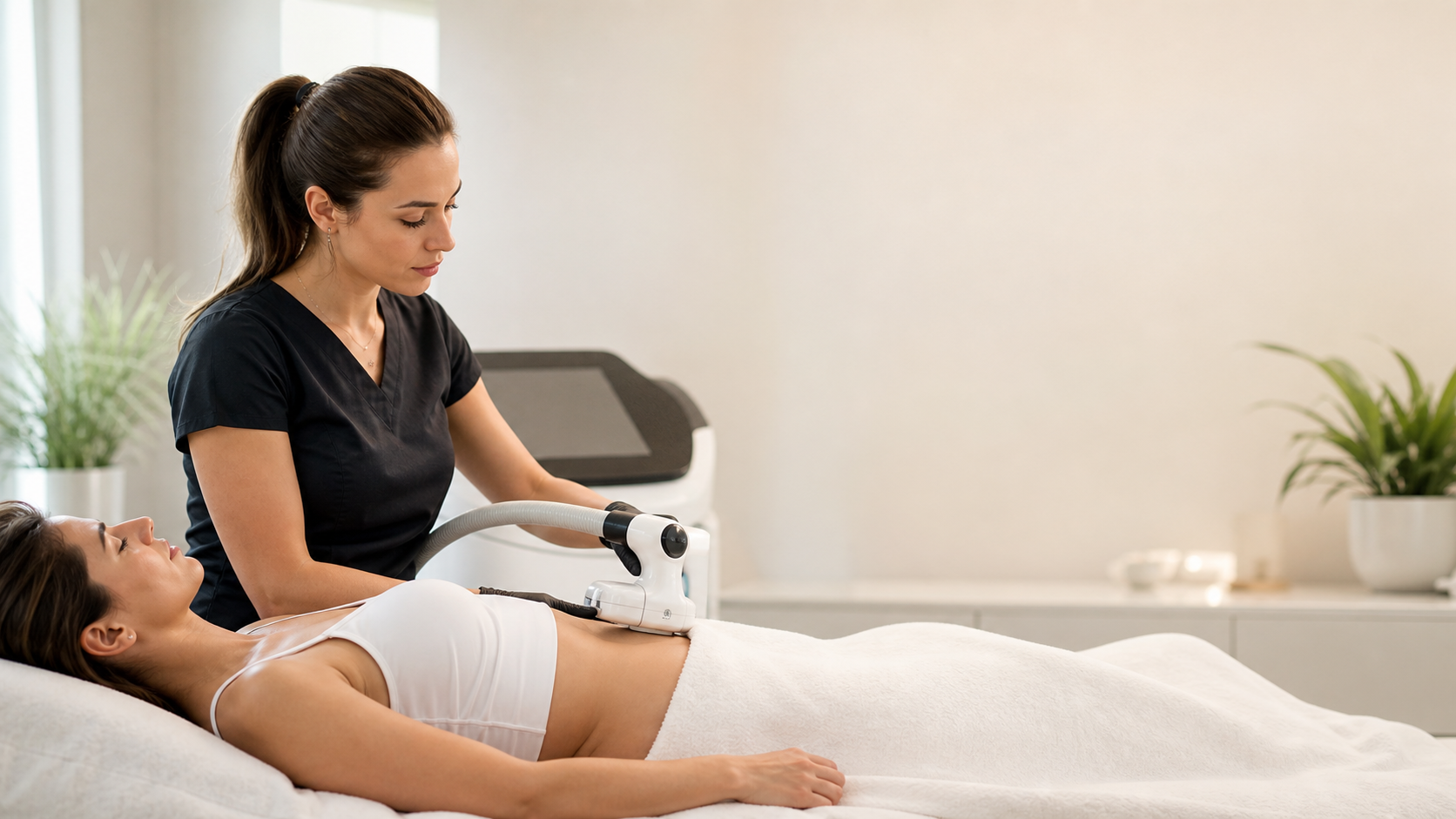
The most profitable body contouring service menu is not the one with the most machines. It is the one that matches your clients, room capacity, staff skills, local rules, and acceptable price range. Start with one or two clearly defined services, calculate the full cost of delivering each session, and build a repeatable consultation and follow-up process before adding more technology. A salon may use EMS, HIEMT, RF, cavitation, cryolipolysis, or a combined platform, but the machine should support a workable service model—not become the service model by itself.
Start with the client problem, not the machine
Before comparing equipment, review the questions clients already ask your team. Do they want a more defined waistline, support for a structured body-care program, firmer-looking skin, muscle-toning services, or a short appointment that fits around work? These requests may sound similar, but they can lead to different equipment and different expectations.
Use your existing consultation notes, booking requests, and staff feedback. Look for patterns such as:
- the body areas clients mention most often;
- the appointment length they can realistically book;
- whether they prefer a single focused service or a multi-step program;
- how much explanation they need before committing;
- whether they already buy facial, massage, wellness, or other body services.
This information helps you decide whether your first offer should be a focused EMS or HIEMT service, an RF-based body service, a multifunction appointment, or a broader consultation that recommends different options. It also prevents a common purchasing mistake: buying a device because its specification sheet looks impressive, then discovering that it does not fit your customers’ schedules or your staff’s workflow.
Choose a simple menu structure
A clear body contouring menu usually needs three layers: an entry service, a focused program, and a premium or combined option. The names and claims should reflect what the equipment is designed to do and what your staff can explain responsibly.
For example, a studio could organize its menu like this:
| Menu level | Purpose | What to define before launch |
|---|---|---|
| Introductory consultation or single session | Let a new client understand the service and decide whether it fits | Appointment length, consultation steps, suitability checks, and price |
| Focused body service | Deliver one repeatable service for one or two target areas | Machine, applicators, session duration, spacing, staff workflow, and follow-up |
| Structured multi-session program | Encourage consistent bookings without promising a guaranteed result | Number of visits, review points, inclusions, exclusions, and cancellation policy |
| Combined service | Pair technologies only when there is a clear operational reason | Sequence, total appointment time, training, consumables, and client communication |
Avoid making every possible combination a separate item. Too many menu choices make consultations harder and increase the chance that staff describe the same machine differently. A smaller menu is easier to train, photograph, price, and improve.
Match the technology to the service job
Body contouring equipment is not interchangeable. The right comparison depends on the service you intend to sell.
EMS and HIEMT for muscle-stimulation services
EMS and HIEMT systems are commonly positioned around electrical or electromagnetic muscle stimulation. They may suit studios that want a structured service focused on abdominal, gluteal, thigh, or arm areas, subject to local requirements and the manufacturer’s instructions.
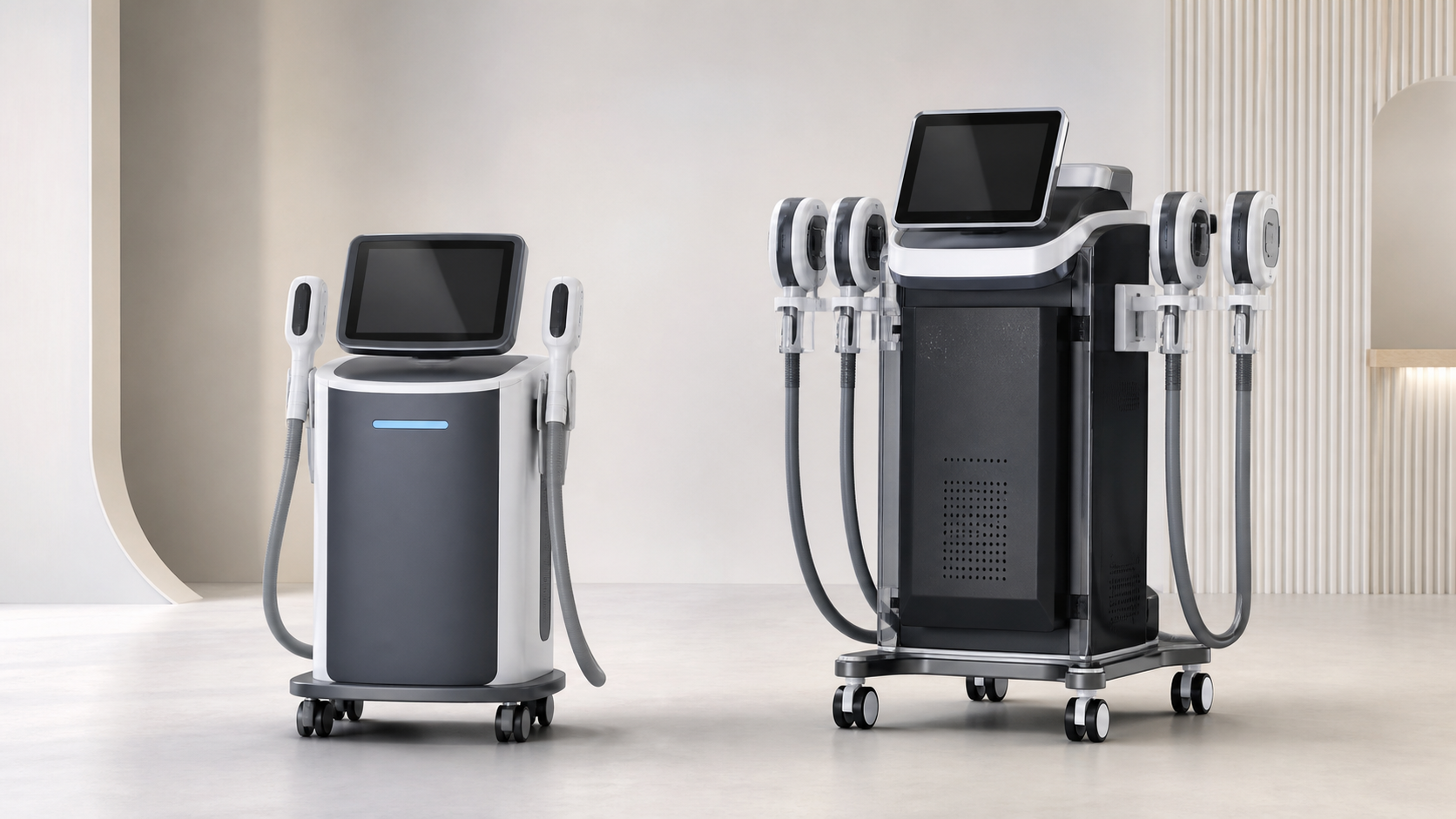
The first purchasing questions are practical: How many handles are included? Can the handles be positioned comfortably? How long does setup take? How much space is needed around the client? Can one operator manage the appointment safely and consistently? A two-handle system may be more suitable for a smaller studio or a focused service, while a four-handle platform may support a different throughput model. More handles do not automatically mean more profit; they matter only if your bookings, staffing, and room layout can use them.
RESCUPL’s current catalogue lists several body-contouring options, including one-handle EMS, a four-handle Super Power Neo Sculptor, and HIEMT systems. Its HIEMT 2/4 Handles Body Sculpting Machine with RF 3.5 MHz is listed with two air-cooled handles, a 12-inch screen, 100–240V input, and a 17 kg chassis. These are purchase facts to confirm against the final quotation and configuration, not promises about client outcomes.
RF for heat-based body services
RF equipment may fit a menu built around controlled warming and body-firming services. The business model is different from a muscle-stimulation service: the operator may need to manage contact, movement, temperature monitoring, conductive materials, and client comfort throughout the appointment.
When reviewing an RF system, ask which body areas it is intended for, how the handpiece is used, what monitoring is built in, and what training is provided. Do not copy a supplier’s suggested power or temperature ranges directly into public marketing without confirming the approved protocol for your market and model.
Cavitation, cooling, and multifunction platforms
Cavitation, cooling-based systems, and multifunction machines can help a studio create a broader body-care menu, but they also create more decisions. Each added modality can mean more training, more consumables, more maintenance points, and more client education.
A multifunction platform makes sense when the services will actually be booked and the operator can explain the role of each step. It is a weak purchase when the extra handles and modes are included mainly to make the brochure look larger. Review the actual handpieces, replacement parts, operating sequence, cleaning requirements, and service documentation before treating the platform as a “do everything” solution.
For a first purchase, compare the simplest machine that can deliver your intended service with the combined machine you are considering. The difference should be justified by bookings, workflow, or a meaningful service gap—not by a longer feature list.
Calculate service economics before setting the price
Do not price a body contouring session by copying a competitor’s menu. Build a simple per-session calculation first:
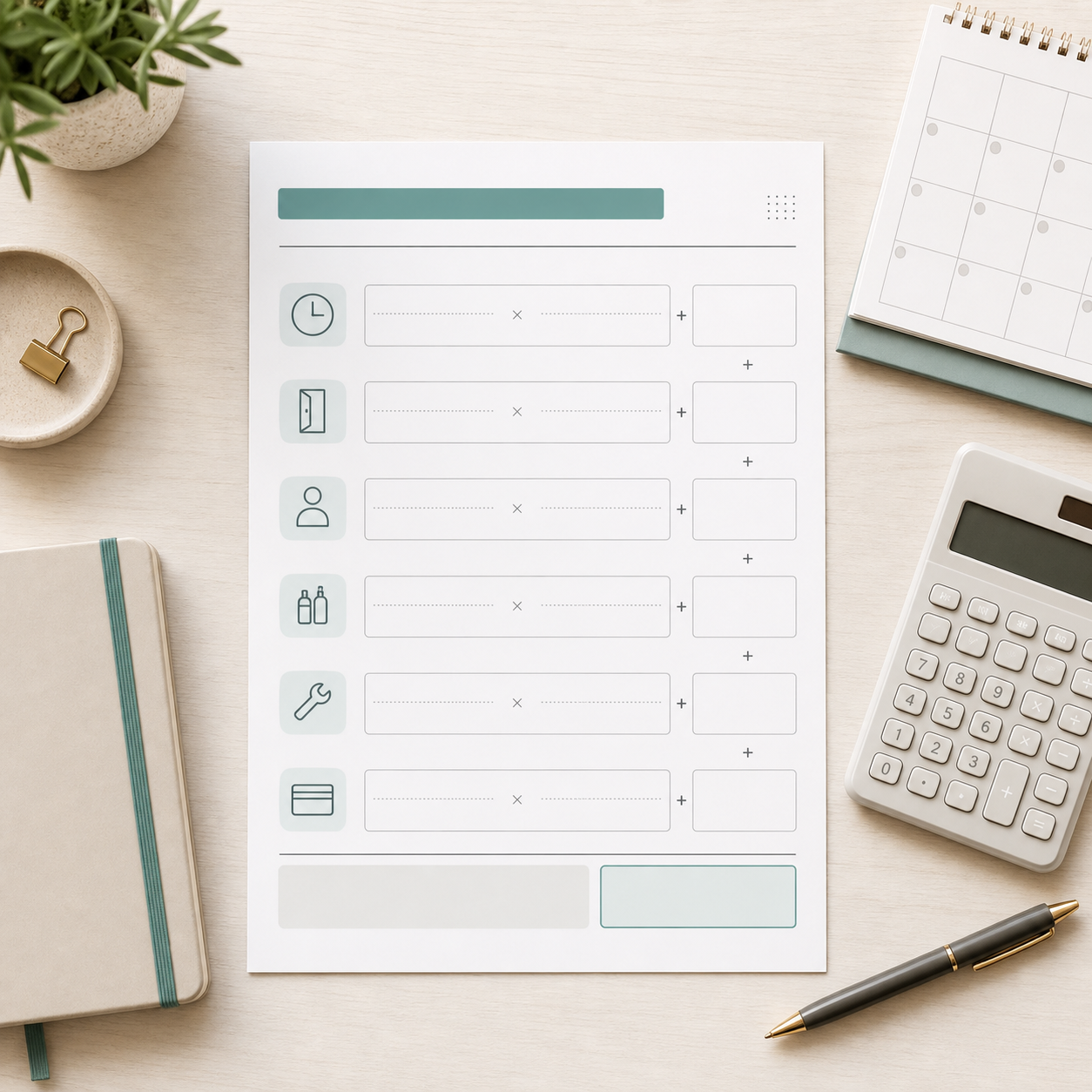
Minimum session cost = (machine cost ÷ expected sellable sessions) + staff time + room time + consumables + payment fees + maintenance allowance + marketing allocation
The number of expected sellable sessions is a planning assumption, not a guarantee. Use a conservative scenario and a realistic scenario. Include setup, cleaning, consultation, notes, and payment time—not only the minutes when the machine is active.
For example, if a 45-minute appointment occupies a room for one hour after setup and reset, the room-cost calculation should use that full hour. If a program includes a progress review or a complimentary consultation, include that time too. If the device uses gels, disposable covers, cartridges, cooling materials, or other consumables, record them per session rather than hiding them inside a general overhead number.
A simple menu worksheet should contain:
- client-facing price;
- expected appointment time;
- operator time;
- room occupancy time;
- consumable cost;
- payment and booking fees;
- estimated maintenance and replacement-part allowance;
- contribution before general overhead;
- minimum bookings needed each month.
Do not advertise a payback period unless your assumptions are visible and can be updated. A supplier’s “faster ROI” badge is not a business forecast for your studio. Your local price, utilization, staffing, taxes, refunds, and lead cost decide whether the purchase works.
Design the booking path around repeatable work
Profitability depends on consistent delivery as much as on price. Write the service journey before launching:
- Inquiry: Record the client’s goal, area of interest, availability, and relevant questions.
- Consultation: Explain what the service is designed for, what it is not designed for, and when referral or medical clearance may be appropriate.
- Preparation: Confirm the room, machine, accessories, consent documents, and cleaning supplies.
- Service: Follow the model-specific instructions and monitor comfort throughout the appointment.
- Aftercare: Give only approved aftercare information and a clear contact path for concerns.
- Review: Record the client’s feedback, attendance, and any reason to change or stop the service.
This process also helps distributors and private-label buyers. A machine that looks attractive in a catalogue still needs a usable training package, clear interface, replacement parts, warranty terms, and support contacts. Ask the manufacturer what is included in onboarding and what your team must create locally.
Build packages without overpromising
Packages can make scheduling easier, but they should not pressure clients into buying more visits than they need. A responsible package explains the number of appointments, expected spacing, included areas, expiry date, cancellation rules, and review point.
Use language such as “designed for,” “supports,” or “may suit” only when it accurately reflects the service and local advertising rules. Avoid guaranteed inch loss, permanent results, treatment of disease, or claims that a device replaces exercise, nutrition, or medical care. Body contouring is not one uniform category, and suitability varies by technology, model, client, and jurisdiction.
If your staff cannot explain the difference between a service and a medical claim, pause the launch and improve training first. Clear communication protects the client relationship and makes the menu easier to sell because expectations are specific.
Decide when to add a second machine
Add another platform only after the first service has produced enough operating evidence. Review:
- completed appointments versus inquiries;
- repeat-booking rate;
- average time per appointment;
- cancellations and refunds;
- operator confidence and training gaps;
- repair or downtime events;
- consumable use;
- contribution after direct costs;
- the most common client request you currently cannot serve.
If demand is strong but appointments are limited by handle count or room time, a higher-throughput model may be justified. If clients ask for a different body-care objective, a complementary technology may make more sense. If demand is weak, another machine will not fix unclear positioning or poor follow-up.
What to ask a body contouring machine supplier
Before requesting a quote, send the supplier a short operating brief: country, business type, target client, expected monthly bookings, available room size, voltage, preferred service length, and whether you need retail, wholesale, OEM, or ODM support.
Ask for:
- the exact model and included accessories;
- model-specific operating and safety documentation;
- training format and language options;
- warranty scope and replacement-part process;
- electrical requirements and shipping configuration;
- consumables and their expected replacement schedule;
- sample or prototype options for private-label projects;
- packaging, interface, logo, and territory terms for OEM/ODM work.
RESCUPL’s OEM/ODM page describes support for industrial design, function and specifications, multi-language interfaces, logo and packaging, exclusive agency discussions, prototype approval, quality checks, delivery, and ongoing technical assistance. Those options may help a distributor or private-label buyer align a body contouring platform with its market, but the final scope, timing, minimum order, and commercial terms should be confirmed in writing.
Final checklist
Before publishing a body contouring service menu, confirm that:
- every service has one clear purpose and a defined target client;
- the machine, handles, accessories, and voltage match the planned workflow;
- the price includes the full appointment time and direct costs;
- staff can explain suitability, limits, and when to refer a client;
- the package terms and cancellation policy are written clearly;
- the supplier has provided model-specific training and support details;
- claims have been checked against local advertising and professional requirements;
- bookings, repeat visits, costs, downtime, and client feedback will be tracked monthly.
Conclusion
A profitable body contouring service menu is built from repeatable work, transparent costs, and a clear reason for each machine. Start with the demand you can prove, launch a small number of services, and measure the real time and cost of delivering them. Then expand when the data shows a capacity or client-fit problem that another platform can solve.
If you are comparing body contouring machines for a beauty studio, clinic, distribution business, or private-label project, review the current RESCUPL body contouring catalogue and request a quote based on your service plan, room setup, market, and expected volume.
For related reading, see EMS Body Sculpting Machines: Technology, Uses, and Buying Checklist and Cavitation vs Cryolipolysis.
Frequently asked questions
How many body contouring services should a new salon launch?
Start with one focused service and one consultation or package option. Add more only after the team can deliver the first service consistently and you understand its booking demand, direct cost, and repeat-visit pattern.
Which body contouring machine is best for a small beauty studio?
There is no universal best machine. Compare handle count, footprint, electrical needs, appointment time, training, maintenance, and the specific client request you want to serve. A compact two-handle system may fit a different business model from a four-handle platform.
How should I price a body contouring treatment?
Calculate the full cost of the appointment, including room and staff time, consumables, payment fees, maintenance, and marketing allocation. Then compare the resulting contribution with your local market and positioning. Do not rely on the equipment purchase price alone.
Can I combine EMS, HIEMT, RF, or cavitation in one service?
Only when the exact equipment, protocol, staff training, client suitability process, and local requirements support the combination. Confirm the manufacturer’s instructions and avoid presenting a combined service as automatically better than a focused service.
Is OEM or ODM useful for a body contouring service menu?
It can be useful for distributors and brands that need a specific interface, logo, packaging, accessory set, or market configuration. Request the exact scope, sample process, minimum order, timeline, support, and documentation before committing.
Related Equipment