360 Cryocontouring Machine Buyer’s Guide: Applicators, Cooling Coverage, and Supplier Checks
A practical 360 cryocontouring machine buyer’s guide covering applicator fit, cooling coverage, controls, documentation, supplier support, and operating cost.
360 Cryocontouring Machine Buyer’s Guide: Applicators, Cooling Coverage, and Supplier Checks
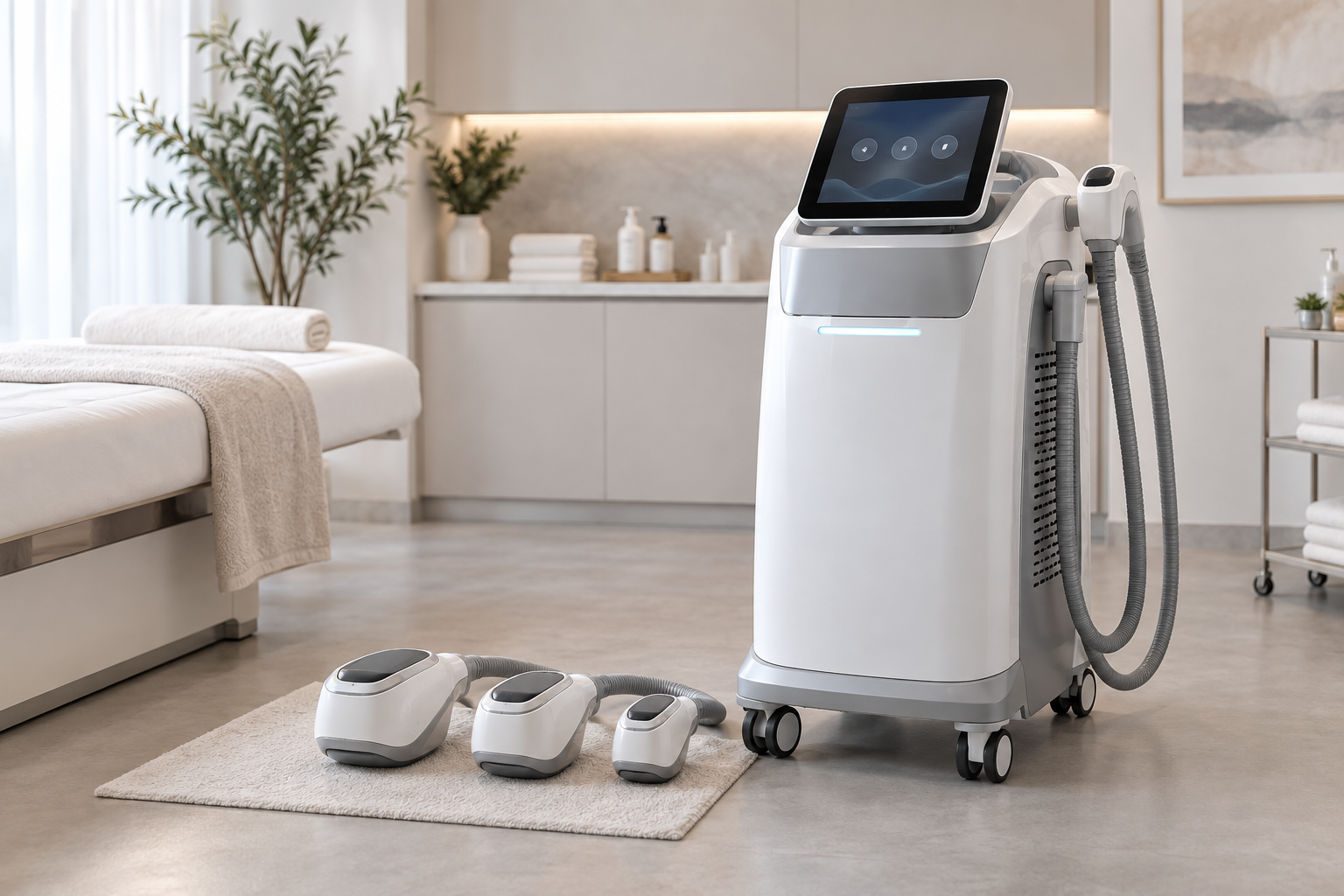
If you are comparing a 360 cryolipolysis machine for a salon or clinic, start with the cooling system, applicator fit, control range, operating workflow, and supplier support—not the number of technologies listed on the brochure. A machine that combines cooling with cavitation, radiofrequency, vacuum, or light may look versatile, but each function should be checked separately for its intended use, documentation, training, maintenance, and local compliance. Before you buy, ask for a live demonstration, the complete technical file for the exact model, a written warranty, and a quote that includes shipping and replacement parts.
What does “360 cryolipolysis” mean?
The phrase usually describes a cooling-based body-contouring system designed to surround or cover a treatment area rather than cool it from only one flat surface. In practice, suppliers may use different names, including 360 cooling, cryocontouring, or cryolipolysis. Those names are not enough to prove that two machines use the same applicator design, temperature control, contact method, or intended use.
For a buyer, the important question is not whether “360” appears in the product name. The important question is how the applicator contacts the body, how cooling is controlled, which areas can be treated, and what documentation supports the model you will actually import and operate. Ask the manufacturer to show the cooling path, contact surfaces, sensors, emergency stop, and cleaning procedure on the exact unit.
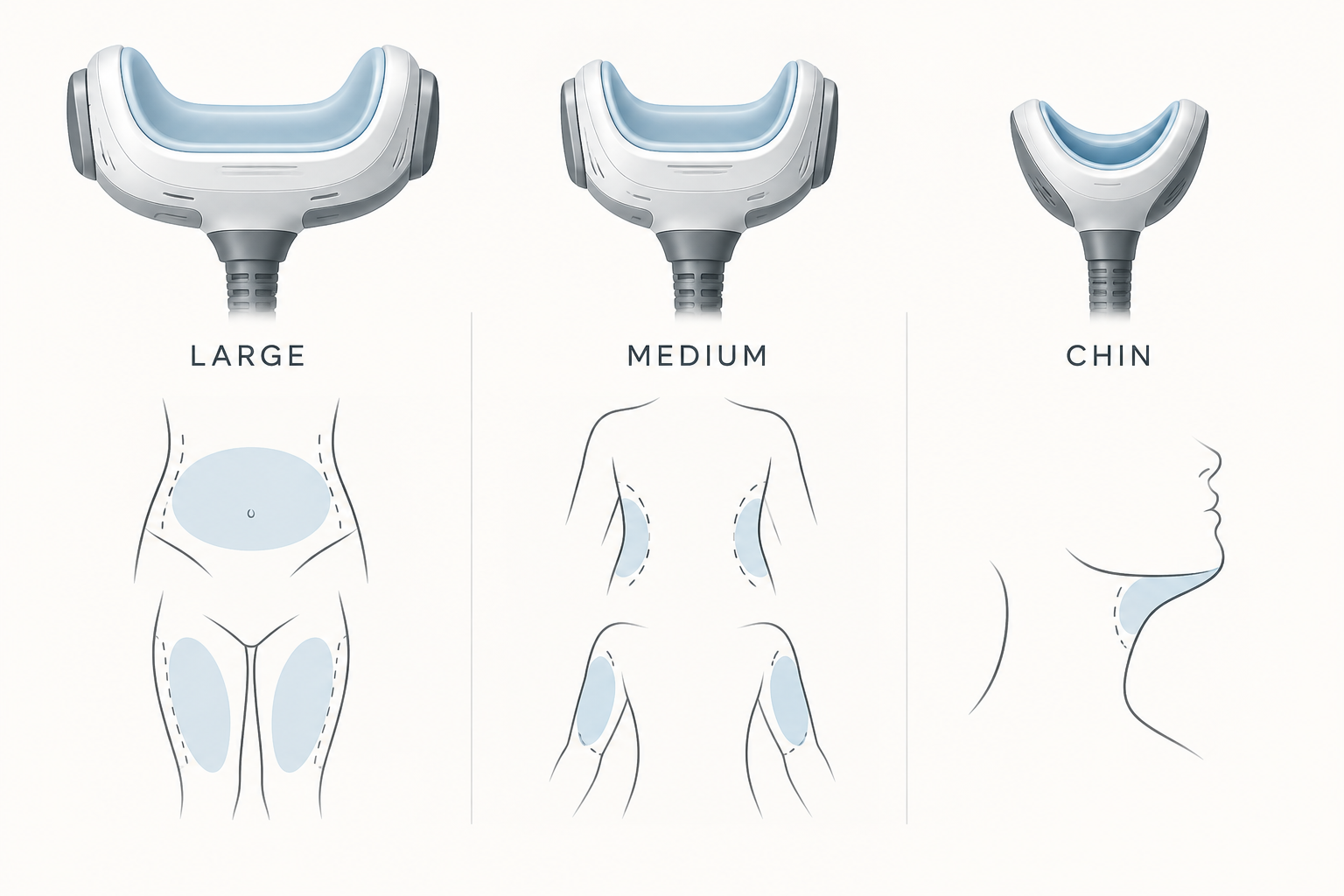
RESCUPL’s listed 360 Cryocontouring stimulation Machine is presented as a multifunctional body-contouring platform with three cooling handles, 40K ultrasonic cavitation, multipolar RF, vacuum, and light-assisted functions. The product page lists large, medium, and chin-sized cooling applicators, a 10.4-inch touchscreen, and a displayed temperature range of -10°C to +45°C. These are useful starting points for a comparison, but a buyer should confirm the final configuration, local voltage, included accessories, and approved operating documentation before placing an order.
1. Compare cooling coverage and applicator fit
Cooling coverage has a direct effect on your treatment workflow. A single flat applicator may suit one body area but require repositioning for another. A system with several applicator sizes may give operators more flexibility, provided the handpieces are practical to position and secure.
Ask these questions before comparing prices:
- How many cooling applicators are included in the quoted configuration?
- What are the contact dimensions of each applicator?
- Which applicator is intended for the abdomen, flanks, arms, thighs, or submental area?
- Can more than one area be treated at the same time?
- How is contact pressure controlled and monitored?
- Are straps, protective membranes, gels, or other consumables required?
- How long does it take to clean, disinfect, and reset each applicator?
RESCUPL lists three cooling handle sizes for the SK-3470: a large handle for broader areas, a medium handle for areas such as flanks or arms, and a smaller chin handle. Treat that as the manufacturer’s stated configuration, not as a substitute for a hands-on fit test. A distributor should also request photographs or video of the applicators attached to a range of representative body areas.
2. Check temperature control, sensors, and operator controls
The displayed temperature range is only one part of a cooling system. You also need to know how the machine reaches the selected setting, how it monitors the contact surface, and what happens if a sensor detects an abnormal condition.
A serious technical review should cover:
- The selectable temperature range and whether it applies to every applicator.
- The number and location of temperature sensors.
- Whether the screen displays live temperature, elapsed time, and alarms.
- The emergency-stop method and recovery procedure after an interruption.
- Whether the system records operating parameters for internal quality control.
- The cleaning instructions for the applicator and contact surface.
- The electrical specification, plug type, fuse requirements, and local voltage compatibility.
Do not choose a machine because it shows a lower temperature on a brochure. Lower is not automatically better for every client, area, or operating environment. Your team needs a clear, documented protocol that matches the device, the operator’s training, and local rules. If a supplier cannot explain the alarm logic or provide a manual for the exact model, pause the purchase.
3. Separate the cooling function from the extra technologies
Many salon systems combine several functions in one cabinet. This can be commercially useful: the same machine may support more than one service category and reduce the need for multiple devices. It can also make buying decisions harder, because each function adds its own training, consumables, maintenance, and compliance questions.
Treat each function as a separate buying decision:
| Function | What to compare | What to verify before purchase |
|---|---|---|
| Cooling or cryocontouring | Applicator design, coverage, temperature control, sensors | Exact handpiece configuration, safety documentation, cleaning process, operator training |
| Ultrasonic cavitation | Frequency, handpiece, control range, intended body areas | Technical specification, operating instructions, contraindication guidance, service parts |
| Multipolar RF | Frequency, energy control, contact method, temperature monitoring | Applicator maintenance, gel or consumables, operator training, local compliance |
| Vacuum | Pressure control, cups or handpieces, filtration and cleaning | Replacement parts, hygiene workflow, noise, and service support |
| Light-assisted function | Wavelength, emitter layout, control and eye protection | Exact intended use, protective instructions, regulatory documents, replacement parts |
The presence of five functions does not automatically create five profitable services. Before buying, map each mode to a real menu item, a trained operator, a customer group, a cleaning workflow, and a documented price. If you will only use the cooling function, a simpler single-purpose system may be easier to train and maintain. If you already have demand for several body-care services, a multifunctional unit may make better use of floor space.
4. Evaluate the screen and daily workflow
A touchscreen is valuable only when it makes routine work clearer. During a product demonstration, ask the operator to complete a full start-to-finish workflow rather than tapping through a showroom presentation.
Check whether the interface makes it easy to:
- Select the correct applicator or mode.
- Set the permitted operating parameters.
- See the live temperature and remaining time.
- Recognize an alarm and follow the recovery instruction.
- Pause or stop the session safely.
- Clean and prepare the system for the next client.
RESCUPL lists a 10.4-inch touchscreen for the 360 model. That may be suitable for a studio, but screen size should not be the deciding factor. Ask to see the actual language options, user permissions, preset controls, and error messages. For distributors and private-label buyers, confirm whether the interface can be branded or translated, and whether the final wording will be reviewed before production.
5. Calculate the real purchase and operating cost
The machine price is only the first line of the budget. Build a simple cost sheet before comparing suppliers. Include the equipment, shipping, customs or local import fees, installation, training, room preparation, consumables, replacement applicators, service visits, and expected downtime.
For a salon, also estimate how the machine will fit the existing schedule. A service that requires a long setup and cleaning time may have less usable capacity than the brochure suggests. Ask:
- How long does setup take before the first appointment?
- What is the realistic room reset time?
- Which parts are consumable and how often are they replaced?
- What is the price and lead time for a replacement handpiece or sensor?
- Is remote support included, and through which channels?
- What does the warranty cover, and what is excluded?
RESCUPL’s public product page lists a one-year factory warranty, global air door-to-door shipping, and technical assistance. The OEM/ODM services page also describes design, interface, packaging, sample, and support steps for custom projects. Ask the sales team to put the warranty scope, shipping responsibility, spare-parts process, and response expectations into the quotation for your exact destination.
6. Review safety, documentation, and local rules
Cooling and energy-based equipment can be regulated differently depending on the country, the intended use, and the claims made in marketing. A supplier’s logo or a general statement such as “factory quality checked” is not the same as model-specific approval for every market.
Request a document pack that identifies the exact model and configuration. Depending on your market, this may include the user manual, electrical test reports, declaration or conformity documents, risk information, labeling, serial-number records, and applicable quality or manufacturing documents. Ask who is responsible for import registration, local notification, professional licensing, and advertising review.
Your marketing should also match the evidence. Avoid promising a guaranteed amount of fat loss, a medical outcome, or a fixed result in a fixed number of sessions. Use the permitted description of the service, explain that suitability must be assessed by a qualified professional, and follow local rules for screening, consent, records, and aftercare. If the product page uses a claim that you cannot verify for your market, do not copy it into your own advertising.
7. Compare the supplier, not just the machine
For a first purchase, the supplier relationship can matter as much as the cabinet. A useful supplier should answer specific technical questions, show the exact configuration, provide a usable manual, and explain what happens after delivery.
Before you sign, request:
- A live video demonstration or sample-unit review.
- The complete specification for the quoted model and voltage.
- A list of included accessories and optional parts.
- Warranty terms and a replacement-parts pathway.
- Operator training materials and cleaning instructions.
- Packaging photos and shipping dimensions.
- A pro forma invoice with responsibilities clearly stated.
- References or evidence relevant to your market, where available.
If you are building a brand, ask about minimum order quantities, sample approval, private-label packaging, interface language, exclusivity, and intellectual-property protection. RESCUPL states that sample orders can start from one unit, OEM branding from 10 units, and ODM shell design from 20 units on its public OEM/ODM page. Confirm that the thresholds apply to the model and project you want, because customization, accessories, and local documentation can change the commercial terms.
A practical pre-order checklist
Before paying a deposit, you should be able to answer “yes” to most of these questions:
- Have we seen the exact cooling applicators and control screen?
- Do we know which areas each applicator is designed to fit?
- Do we have the complete specification, voltage, and accessory list?
- Can the operator explain alarms, cleaning, and safe stopping?
- Have we separated the cooling function from the other technologies?
- Have we calculated shipping, customs, consumables, and spare parts?
- Is the warranty written clearly enough for our destination?
- Do the proposed marketing claims fit local rules and the available documents?
- Do we have a training and support contact after delivery?
- If this is a private-label order, have we approved the final shell, interface, packaging, and labels?
If several answers are “no,” the right next step is not to negotiate the price. Ask for the missing evidence first.
FAQ
Is a 360 cryolipolysis machine suitable for every salon?
No. Suitability depends on the salon’s services, operator qualifications, local rules, room layout, cleaning process, client demand, and access to technical support. A multifunctional device is useful only when the studio can safely operate and market the functions it buys.
Is 360 cooling automatically better than 2D cooling?
Not automatically. Surround-style cooling may offer a different applicator experience and coverage, but buyers should compare contact fit, sensors, control, documentation, and workflow on the exact model. A product name alone is not enough to establish performance.
What should I ask about the temperature range?
Ask how the range is measured, which surfaces are monitored, whether each applicator has independent control, how alarms work, and what the operator must do when the actual temperature differs from the setting. Request the written operating manual before ordering.
Should I buy a multifunctional body-contouring machine?
Buy one when the additional functions match real services you plan to offer and your team can support them. If you only need cooling, a simpler system may reduce training and maintenance complexity. Compare the full workflow and operating cost rather than counting modes.
Can I order a private-label 360 cryolipolysis machine?
Possibly, depending on the model, order size, design requirements, and target market. Ask about sample approval, branding thresholds, interface language, packaging, documentation, warranty, and intellectual-property protection. Put the final configuration in writing before production.
Related Equipment