Subdermal RF vs. RF Microneedling: Which Technology Should You Stock for the Post-GLP-1 Skin-Laxity Wave?
Subdermal RF platforms are entering the post-GLP-1 skin-laxity market in 2026. Here's how the technology actually compares to RF microneedling and monopolar RF — and what it means for salon, medspa, and distributor equipment budgets.
Subdermal RF vs. RF Microneedling: Which Technology Should You Stock for the Post-GLP-1 Skin-Laxity Wave?
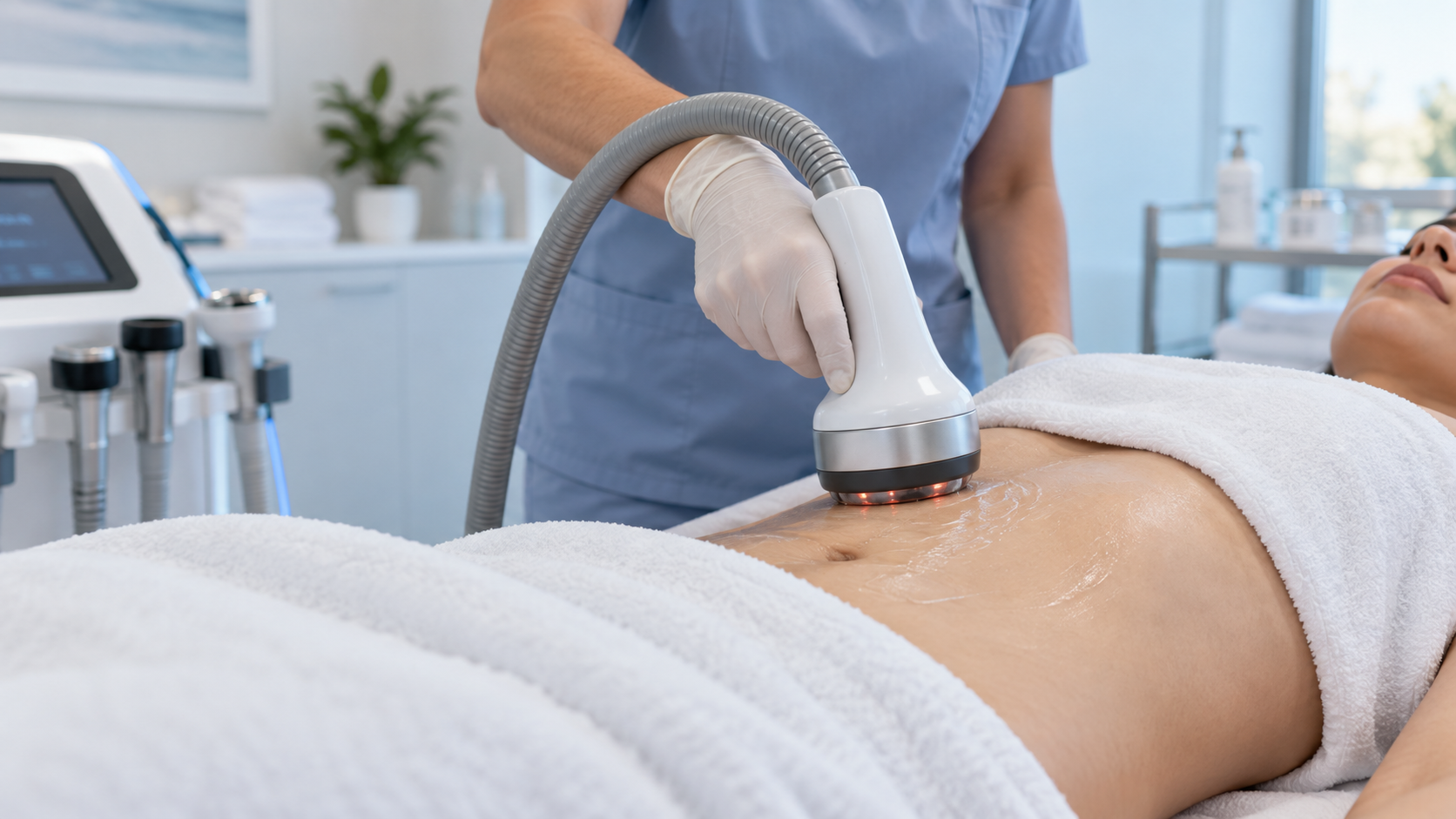
On September 14, 2026, Aesthetic Management Partners introduced ATTIVA, a subdermal radiofrequency platform built by Italy's Tema Medicina. It delivers thermal energy beneath the skin through a fine cannula, with dual real-time temperature monitoring — and it's marketed specifically at one growing complaint: loose, lax skin left behind after significant weight loss on GLP-1 medications. (Plastic Surgery Practice, Sept 2026)
It's not the first device to chase this demand — we covered the broader shift in Post-GLP-1 Body Contouring: The Equipment Buyer's Guide. But "subdermal RF" is a genuinely new category label showing up in buyer searches, and it's easy to conflate it with RF microneedling or standard monopolar RF — three technologies that look similar on a spec sheet but sit in very different places on cost, training, and regulatory footing.
This guide breaks down what subdermal RF actually is, how it compares to what most salons and medspas already run, and what that means for your 2026 equipment budget.
What "Subdermal RF" Actually Means
Most RF devices on the market today heat tissue in one of two ways:
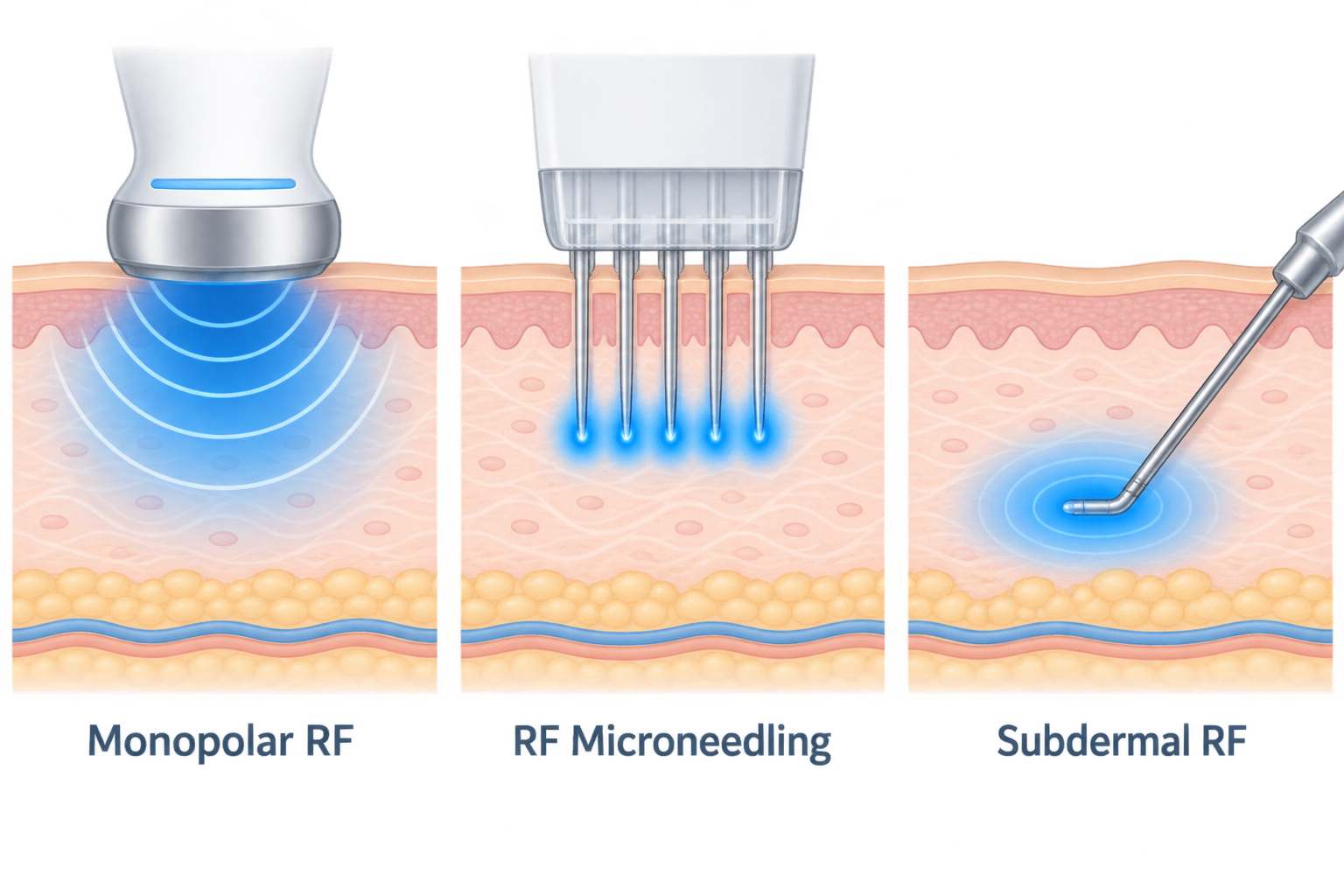
- Surface/monopolar RF — energy is applied through an external electrode on the skin's surface and travels down into the dermis and subcutaneous layer, dispersing through the body to a return pad.
- RF microneedling — fine needles physically penetrate the skin to deliver RF energy directly at a controlled depth, bypassing the epidermis.
Subdermal RF is a third approach: a thin cannula is inserted under the skin (typically through a small entry point) and RF energy is delivered directly into the subdermal plane from below, often with continuous internal-and-external temperature feedback to manage safety. It sits closer to a minimally invasive procedure than a walk-in spa service — cannula insertion generally places it under physician or advanced-practitioner scope in most markets, not standard esthetician scope.
That distinction matters more than the marketing copy suggests, because it changes who can legally operate the device, what your liability and training costs look like, and how fast you can actually get it earning revenue.
Subdermal RF vs. RF Microneedling vs. Monopolar RF — Side by Side
| Subdermal RF (cannula) | RF Microneedling | Monopolar / Negative-Pressure RF | |
|---|---|---|---|
| Energy delivery | Internal, via inserted cannula | Needle-tip, controlled depth | External electrode, surface-applied |
| Invasiveness | Minimally invasive (skin entry point) | Minimally invasive (micro-channels) | Non-invasive |
| Typical operator scope | Physician / advanced practitioner | Trained esthetician (varies by region) | Esthetician-friendly |
| Best-fit concern | Deep laxity, fibrous post-weight-loss tissue | Textural laxity, fine lines, stretch marks | General firming, contouring maintenance |
| Capital cost tier | High | Mid | Low–Mid |
| Client downtime | Some (bruising, swelling possible) | Minimal | None |
| Where it fits a service menu | Add-on procedure, often referral-based | Core recurring service | Entry-level / high-volume service |
For context on how RF microneedling itself compares to the mechanical version, see RF Microneedling vs. Traditional Microneedling for Professional Studios, and for the broader monopolar-vs-bipolar-vs-microneedling decision, Monopolar RF vs. Bipolar RF vs. RF Microneedling.
Why This Is Showing Up in Buyer Searches Now
GLP-1 medications have created a specific, high-volume complaint that didn't really exist at this scale five years ago: rapid fat loss with skin that doesn't retract fast enough to match it. Clients are walking into salons and medspas asking for solutions, and "subdermal RF" is the newest term in that conversation because it's being positioned as the deeper, more aggressive answer for tissue that RF microneedling alone struggles to tighten.
That doesn't mean it's the right first purchase for most businesses reading this. It means it's worth understanding clearly enough to make a deliberate choice — either stocking up on it, referring those cases out, or doubling down on the non-invasive tools you can deploy across your whole client base today.
What Equipment Buyers Should Actually Stock in 2026
For the large majority of salons, medspas, and distributors, the realistic near-term play isn't a cannula-based subdermal system — it's building out a non-invasive RF and EMS lineup that can already address a meaningful share of post-weight-loss skin laxity and contouring demand, without the physician-scope requirement:
- Rotary Negative Pressure RF Machine — combines vacuum negative-pressure stimulation with 6 MHz RF and rotating mechanical massage, positioned for exactly this kind of dermal and subcutaneous firming work without any skin penetration.
- HIEMT 2/4 Handles Body Sculpting Machine — with RF 3.5 MHz — pairs electromagnetic muscle stimulation with RF for clients rebuilding muscle tone after weight loss, alongside skin firming.
- EMRF Facial Skin-Firming Machine — HIFES + Monopolar RF — for facial and neck laxity, which is increasingly part of the same GLP-1 conversation ("Ozempic face").
- Dr. Pen M8 Microneedling Pen — a lower-cost entry point into needle-based service if you want to test microneedling demand before committing to a full RF microneedling platform.
These sit inside our broader Body Contouring Machines and Facial Care Machines lines, and every one of them can go into service the day it arrives — no physician sign-off, no cannula-insertion training required.
Before You Buy: Questions to Ask Any Supplier
Whether you're evaluating a subdermal system, an RF microneedling platform, or a non-invasive combo machine, the same due-diligence questions apply:
- What regulatory clearance does this specific configuration carry in your target market, and does it match your operator's licensing?
- What's the real cost of consumables (cartridges, needle tips, cannulas) per treatment, not just the unit price?
- Can the supplier provide training documentation and clinical protocol guides, or just a spec sheet?
- What does OEM/ODM customization look like if you want your own branding on the unit?
If you're sourcing at volume or building out a private-label line, our OEM/ODM program covers configuration, branding, and logistics support — see also Scaling Your Distributorship: A Logistics Guide for what that process actually looks like end to end.
The Bottom Line
Subdermal RF is a real, newly-visible category worth knowing — it's the technically "deeper" answer to post-GLP-1 skin laxity, and it will keep showing up in client questions and search results through 2026. But for most salons, medspas, and distributors, the faster path to revenue is still a well-chosen non-invasive RF/EMS lineup that every trained operator on staff can already run. Know the category, then buy for the clients actually walking through your door.
Related reading:
- Post-GLP-1 Body Contouring: The Equipment Buyer's Guide for Salons, Clinics & Distributors
- RF vs HIFU vs Microneedling: Which Skin Tightening Technology Is Right for Your Salon?
- HIFU vs RF Microneedling: Why More Clinics Are Buying Both
- How to Choose the Right Professional Beauty Equipment for Your Salon
Related Equipment