PEMF vs. EMS vs. HIFES: Choosing the Right Facial Muscle-Toning + RF Combo Machine
Compare PEMF, EMS, and HIFES facial muscle-stimulation technologies paired with RF for salons, med spas, and distributors — output, patches, footprint, cost, and a buying checklist.
PEMF vs. EMS vs. HIFES: Choosing the Right Facial Muscle-Toning + RF Combo Machine
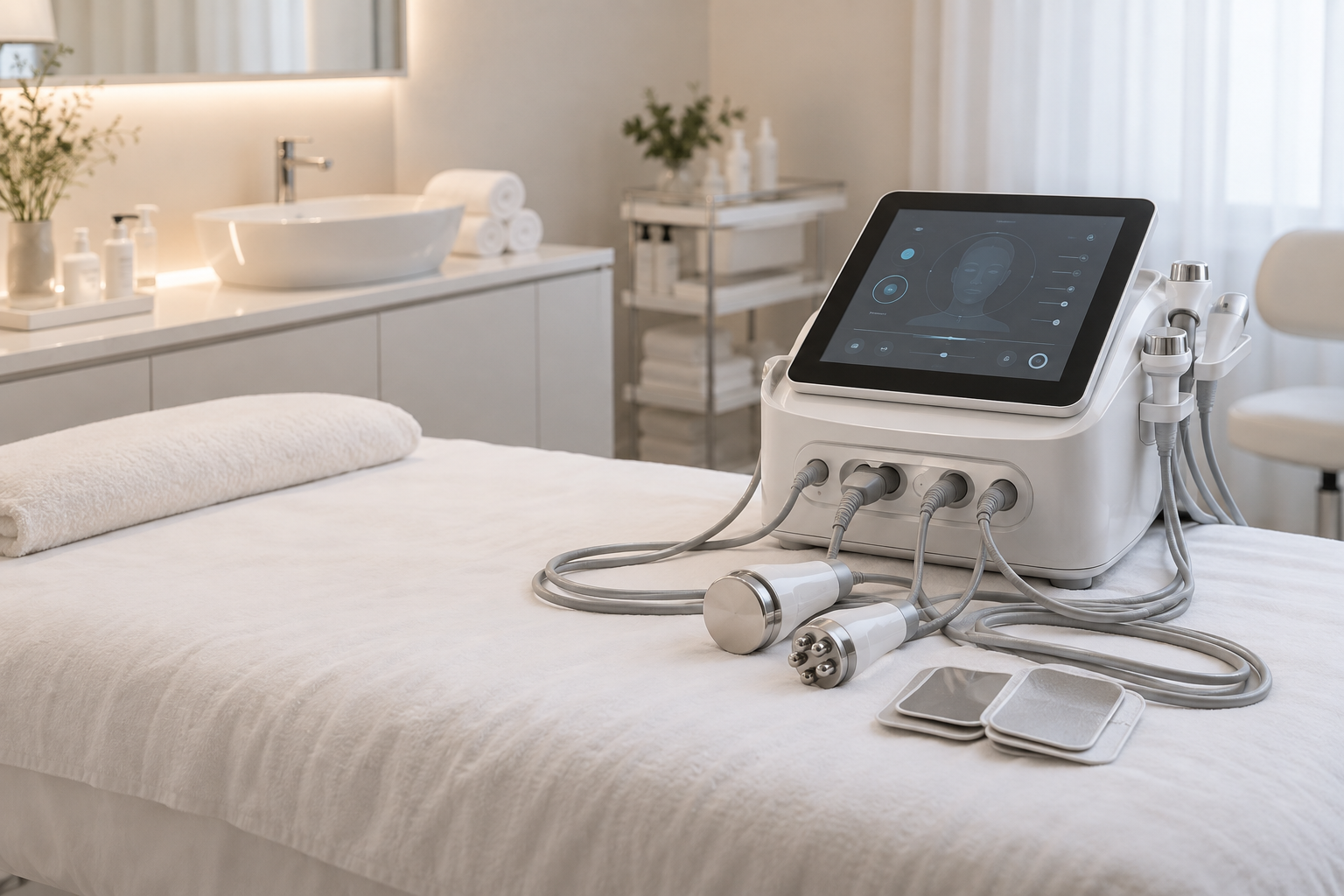
Facial machines that pair muscle stimulation with radiofrequency are no longer a single category. Suppliers now ship at least three distinct muscle-stimulation approaches under similar-sounding names — PEMF, EMS, and HIFES — each combined with RF in a different way, at a different price point, and in a different physical format. For a salon, med spa, or distributor comparing quotes, the marketing language often blurs these differences. The buying decision should not be based on which acronym sounds most advanced. It should be based on output level, footprint, session workflow, and whether your team and client base can actually use the extra capability often enough to justify it.
This guide compares the three muscle-stimulation formats current in RESCUPL's own facial care line — PEMF-based triple energy, EMS-based dual energy, and HIFES-based dual energy — so buyers can ask sharper questions before ordering.
The short answer: match the technology to your service tier, not the acronym
A compact, handheld HIFES + monopolar RF unit suits a mobile practitioner or a studio adding its first facial energy device with limited room space and budget. A mid-tier, patch-based PEMF + thermal + electrical platform suits a studio that wants a stationary, multi-zone system with a lower entry price than a flagship unit. A higher-output, patch-based EMS + RF platform with adjustable electromagnetic intensity suits a higher-volume clinic or med spa that wants the strongest muscle-stimulation ceiling and is prepared to support the larger footprint, price, and training that come with it.
None of these formats is a universal upgrade over the others. They differ in intensity range, session format, and the physical space and investment they require — not in a simple "better to worse" ranking.
What PEMF facial technology does
Pulsed Electromagnetic Field (PEMF) technology generates magnetic pulses that pass through the skin to trigger muscle contractions, without direct electrical contact. In RESCUPL's RET-Face Beauty Machine, PEMF is one of three energies delivered together: pulsed electromagnetic stimulation (200 μs pulse duration) for muscle contraction, 1 MHz RF thermal energy for dermal heating, and 40 mA electrical energy described by the manufacturer as supporting cellular metabolism. The system uses 6 adhesive patches placed across the face and neck, a 10.4-inch touchscreen, and a stationary chassis (52 × 56 × 51 cm, 34 kg) built for a fixed treatment room rather than mobile use.
The commercial case for this format is a multi-zone, hands-relatively-free session: once patches are placed, several facial areas can be stimulated in the same session without the operator holding a handpiece against each zone individually. That can shorten active operator time per client compared with a handheld system, though total appointment time still depends on setup, patch placement, and aftercare.
What EMS facial technology does
Electromagnetic Muscle Stimulation (EMS), as implemented in RESCUPL's RET-Face EMS RF Face Beauty Machine, also uses patches and pulsed electromagnetic energy, but at a materially higher stated intensity ceiling — up to 1.8 Tesla, versus the PEMF platform above, alongside 1 MHz RF and the same 200 μs pulse duration and 40 mA electrical energy. It also uses 6 patches and a larger 15.6-inch touchscreen, but the chassis is built and shipped as a larger, heavier professional unit (packed weight 84 kg in its flight case).
The commercial case for choosing the higher-Tesla EMS format over the PEMF format above is a stronger stated muscle-stimulation ceiling for studios that specifically want to sell an intensive facial muscle-toning service, at a correspondingly higher price and footprint. It does not add a technology the PEMF unit lacks — both use patches, both add RF — the difference buyers are paying for is adjustable output range and the higher end of that range.
What HIFES facial technology does
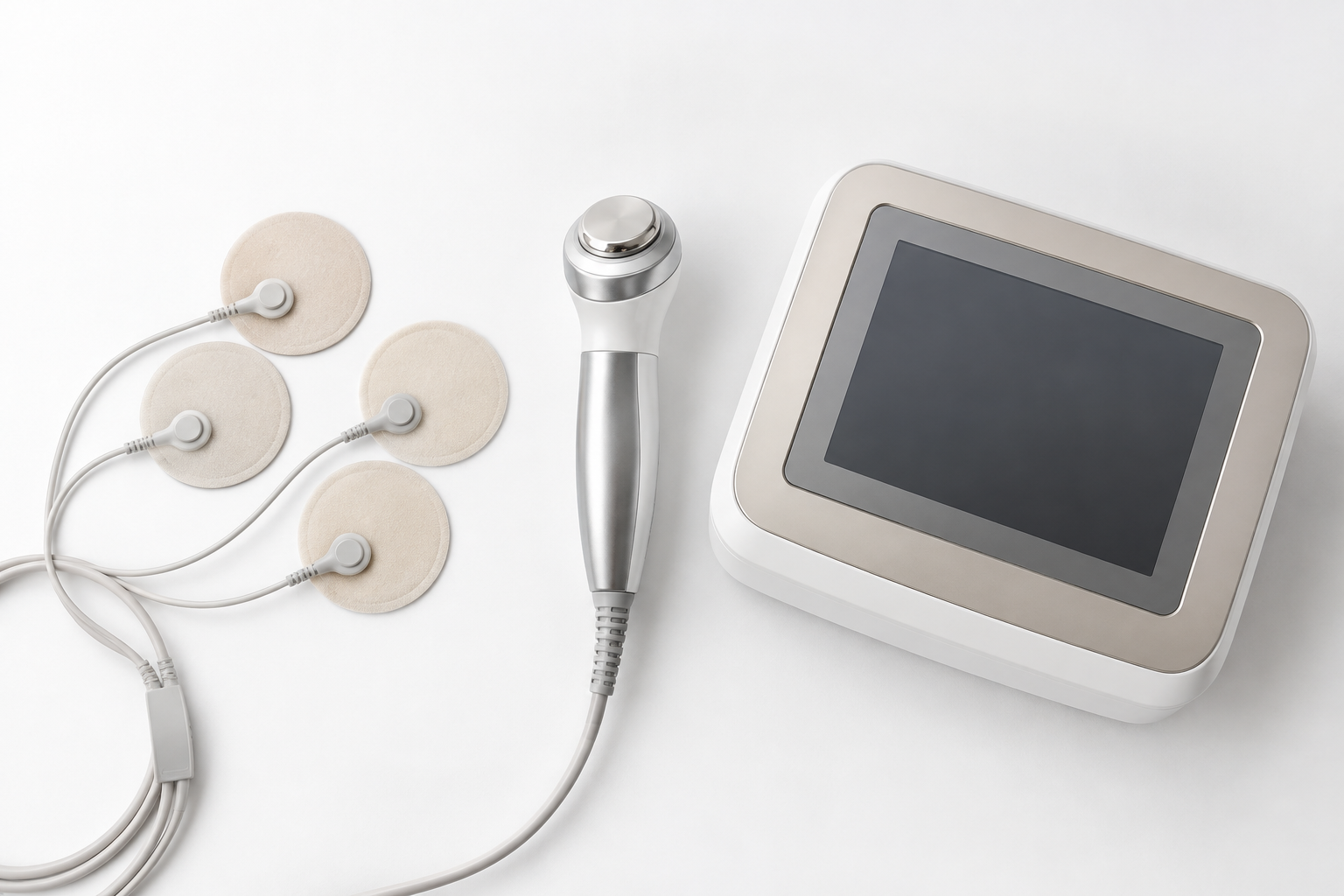
High-Intensity Facial Electromagnetic Stimulation (HIFES), used in RESCUPL's EMRF Facial Skin-Firming Machine, pairs electromagnetic muscle stimulation with monopolar RF across a wider adjustable frequency range (1–4 MHz) than the two patch-based units above. Rather than a 6-patch, room-based format, this platform is built around a more compact footprint — a 15-inch touchscreen, 100–200 W of system power, and a flight case sized at 40 × 43 × 42 cm weighing 13.5 kg, roughly a sixth of the packed weight of the EMS platform.
The commercial case here is portability and a lower entry price alongside a wider RF frequency range for varying penetration depth by area. It is a fit for practitioners who need a system that travels between rooms or locations, or for a studio testing demand for combined muscle-stimulation and RF facial services before committing to a stationary flagship unit.
PEMF vs. EMS vs. HIFES: side-by-side comparison
| Buying factor | PEMF + Thermal + Electrical (RET-Face Beauty Machine) | EMS + RF (RET-Face EMS RF Face Beauty Machine) | HIFES + Monopolar RF (EMRF Facial Machine) |
|---|---|---|---|
| Muscle-stimulation method | Pulsed electromagnetic field, 200 μs pulse | Electromagnetic muscle stimulation, 200 μs pulse, up to 1.8 Tesla | High-intensity facial electromagnetic stimulation |
| RF component | 1 MHz thermal RF | 1 MHz RF | Monopolar RF, 1–4 MHz adjustable |
| Added modality | 40 mA electrical energy (cellular metabolism, per manufacturer) | None beyond EMS + RF | None beyond HIFES + RF |
| Application format | 6 adhesive patches | 6 adhesive patches | Compact system (confirm handpiece/probe count with supplier) |
| Interface | 10.4-inch touchscreen | 15.6-inch touchscreen | 15-inch touchscreen |
| Footprint / weight | Stationary chassis, 34 kg | Larger chassis, 84 kg packed | Portable flight case, 13.5 kg |
| List price (reference) | $2,499 | $4,599 | $1,399 |
| Best-suited buyer | Mid-tier studio wanting multi-zone sessions at a moderate price | Higher-volume clinic or med spa wanting the strongest stated output ceiling | Mobile practitioner or studio testing demand with limited space or budget |
This table reflects the manufacturer specifications published on each RESCUPL product page at the time of writing. Configurations and pricing can change — confirm the current specification sheet before quoting a client or placing an order.
Compare the client and appointment experience
Clients frequently ask for "the RF facial that also lifts," without knowing which underlying technology that refers to. Your consultation should identify what the client actually wants — a muscle-toning result, a firming result, or both — before recommending a specific machine's service, and should not promise a specific outcome that the manufacturer's documentation does not support.
Session structure differs by format. A 6-patch system (PEMF or EMS) can address multiple facial zones in parallel once patches are placed, which may reduce active operator handling time but adds patch placement, hygiene between clients, and patch/consumable cost to the appointment. A compact HIFES + RF system built around a handheld or probe-based application typically requires the operator to work zone by zone, which can extend active treatment time but avoids patch consumable costs and suits a smaller treatment footprint.
Whichever platform you choose, do not copy a supplier's session count, intensity level, or "Tesla" figure directly into public marketing copy without checking the exact model documentation and the requirements of your local market.
When each platform is the better first purchase
Choose the HIFES + monopolar RF format when your studio is testing demand for combined facial muscle-stimulation and RF services, has limited treatment room space, needs a system that can move between locations, or wants the lowest entry price among the three formats before committing further capital.
Choose the PEMF + thermal + electrical format when your studio wants a stationary, multi-zone, 6-patch system at a mid-tier price, and values the added cellular-stimulation claim as part of a broader facial renewal service description — while still verifying that claim against the manufacturer's documentation rather than presenting it as guaranteed.
Choose the EMS + RF format when your business already has proven demand for facial muscle-toning services, can support the largest footprint and price of the three, and wants the highest stated electromagnetic output ceiling for a flagship service tier or for clinics positioning themselves at the premium end of the local market.
The costs buyers often miss
Equipment price is only the first line in a facial energy-device budget. Build a per-session estimate using:
Full session cost = equipment allocation + patch or tip consumables + staff time + room time + cleaning and preparation + payment fees + maintenance allowance + marketing allocation
For patch-based systems (PEMF and EMS formats), confirm whether patches are single-use or reusable, how many are used per session, and their replacement cost and lead time. For the compact HIFES + RF format, confirm probe or handpiece contact-gel consumption and any tip replacement schedule. Also confirm whether the quotation includes the handpiece or patch set, power cable, carrying case, starter consumables, user documentation, and training — a lower headline price may exclude items needed to run the service on day one.
What to inspect before ordering a facial muscle-stim + RF machine
Ask the supplier for a model-specific answer to each of these before comparing prices:
- What is the exact muscle-stimulation technology and its adjustable intensity range?
- What RF frequency or frequencies are available, and are they adjustable by treatment area?
- How many patches, probes, or handpieces are included, and what do replacements cost?
- What is the unit's footprint and packed weight, and does it fit your treatment room or mobile setup?
- What training is provided, and is it available in your market's language?
- Which documents cover setup, cleaning, maintenance, and suitability notices?
- What warranty applies to the main unit, patches/handpieces, screen, and power components?
- How are replacement parts and consumables ordered after the first shipment?
- Can the supplier provide a sample unit or a verified demonstration before a bulk order?
- Does the current specification sheet match what is published on the supplier's website, or has the model been updated?
If the answer is only marketing copy, keep asking. A credible purchase decision needs the actual configuration and operating documents.
Build a tiered facial service menu responsibly
A studio offering more than one of these formats should make the difference clear to clients rather than implying one is simply "stronger" in every respect. Describe each service by what it does — multi-zone patch session, higher-output muscle stimulation, or portable combined treatment — and let appointment length, price, and client goals guide the recommendation. Avoid presenting any single format as a guaranteed or universal result, and route final technical and regulatory wording for your target market through the manufacturer before publishing it.
Final decision checklist
Before buying, confirm that:
- you have identified real client or market demand for facial muscle-stimulation plus RF services;
- the unit's footprint, weight, and power supply fit your treatment room or mobile setup;
- patches, probes, or tips and their replacement terms are documented in writing;
- staff training covers the exact model, not general "EMS facial" or "RF facial" terminology;
- the price model includes the full appointment cost, not just the equipment line;
- public claims match the equipment documents and your local market's regulations;
- the supplier has confirmed warranty, support, and troubleshooting details;
- a sample or single-unit test is possible before a larger order;
- you know whether your next step is a retail purchase, distributor quote, or OEM/ODM private-label discussion.
Conclusion
PEMF, EMS, and HIFES are not tiers of the same technology — they are three different ways of pairing facial muscle stimulation with RF, each suited to a different room footprint, budget, and service volume. The right first purchase is the one that matches demand you can already see in your business, not the unit with the highest advertised output number.
If you are comparing facial muscle-stimulation and RF machines for a studio, clinic, or distribution business, review the EMRF Facial Skin-Firming Machine, RET-Face Beauty Machine, and RET-Face EMS RF Face Beauty Machine to compare current configurations, or browse the full RF Beauty Equipment range. Distributors and private-label buyers can review OEM/ODM Services, while studios ready to discuss a purchase can contact RESCUPL with their market, service menu, and expected volume. For related technology context, see RF vs. HIFU vs. Microneedling, EMS Body Sculpting Machines: Technology, Uses, and Buying Checklist, and RF Microneedling vs. Traditional Microneedling for Professional Studios.
Frequently asked questions
Is EMS facial technology stronger than PEMF facial technology?
The RET-Face EMS RF Face Beauty Machine lists a higher stated electromagnetic intensity ceiling (up to 1.8 Tesla) than the PEMF-based RET-Face Beauty Machine, but "stronger" on a spec sheet does not automatically mean a better fit for your business. Match the output level to real client demand, room setup, and budget rather than choosing by the highest number alone.
What is HIFES, and how is it different from EMS?
HIFES (High-Intensity Facial Electromagnetic Stimulation) and EMS both use pulsed electromagnetic energy to trigger facial muscle contractions. In RESCUPL's current catalogue, the practical difference buyers should evaluate is the physical format and RF frequency range each model ships with, not the acronym — confirm the exact specification for each unit before comparing.
Can a patch-based facial machine be used on more skin types than a handheld one?
Skin-type suitability depends on the exact device settings, energy levels, and manufacturer suitability notices, not on whether the unit uses patches or a handpiece. Always follow the specific model's documentation and consult the manufacturer for guidance on any particular skin type or condition.
Do these machines replace facial RF microneedling services?
No. PEMF, EMS, and HIFES combined with surface RF address muscle tone and dermal heating without needle penetration. RF microneedling is a separate category that adds controlled needle depth. Some studios offer both as distinct services — see our RF Microneedling vs. Traditional Microneedling guide for that comparison.
How much footprint does a 6-patch facial machine need compared to a compact unit?
The RET-Face Beauty Machine and RET-Face EMS RF Face Beauty Machine are built as stationary chassis units (34 kg and 84 kg packed, respectively) suited to a fixed treatment room. The EMRF Facial Machine ships in a 13.5 kg flight case designed for portability. Confirm your actual treatment room dimensions and power supply against each unit's listed specifications before ordering.
Does RESCUPL offer OEM or ODM versions of these facial machines?
RESCUPL's OEM/ODM service page describes custom support for configuration, branding, language, interface, packaging, samples, and quality checks. Confirm the exact technology configuration, documentation, minimum order quantity, timeline, and target-market requirements in writing before committing.
Related Equipment
- EMRF Facial Skin-Firming Machine — HIFES + Monopolar RF — Compact, portable facial muscle-stimulation and RF platform for mobile practitioners or studios testing demand.
- RET-Face Beauty Machine — PEMF + thermal + electrical 6-patch system for stationary, multi-zone facial sessions at a mid-tier price.
- RET-Face EMS RF Face Beauty Machine — Higher-output EMS + RF flagship platform for high-volume clinics and med spas.
- RF Beauty Equipment — Full range of radiofrequency systems for skin tightening, collagen support, and body firming.
- OEM/ODM Services — Custom branding, interface language, packaging, and private-label project support.
Continue reading
- RF vs. HIFU vs. Microneedling: Which Skin Tightening Technology Is Right for Your Salon?
- EMS Body Sculpting Machines: Technology, Uses, and Buying Checklist
- RF Microneedling vs. Traditional Microneedling for Professional Studios
- RF Microneedling and Exosome Serums: A B2B Buyer's Guide to Product-Delivery Protocols
Related Equipment